Climate change could open a whole different area in Canada to farming, says newly published research.
But Evan Fraser of the University of Guelph, a co-author of the international study, warns that simply turning northern forests into waving wheat fields would sow disaster.
"Canada is actually holding a good card when it comes to climate change, and one of the potentially positive changes is a longer growing season in our backyard," he said. "There is an interesting opportunity to generate food in a world that needs more.
"(But) there's some very serious environmental consequences."
Fraser and his colleagues looked at temperature and precipitation projections for large swaths of the globe currently unsuitable for growing crops. They found that, if only those two factors are considered and current international greenhouse gas policies continue, climate change could by 2060 open up land equal to about 30 per cent of that now under cultivation.
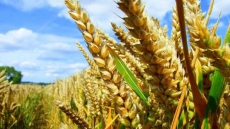
The big winners would be Canada and Russia, which could each see more than four million square kilometres of boreal forest become arable land that might be able to grow cold-tolerant plants such as potatoes, wheat, maize and soy.
That would make the 650,000 square kilometres Canada now harvests look like a farmyard.
It would also be great news for a hungry planet that some studies suggest needs to increase food production by 70 per cent within 30 years.
There's a catch. Simply plowing the new land would release vast amounts of carbon to the atmosphere.
Fraser calculates that, globally, the top metre of the frontier soils could unleash up to 117 billion tonnes of greenhouse gases — about 119 years worth of all emissions in the United States.
"If we clear a lot of land and plow a lot of soil, what we could see is a huge release of carbon dioxide," he said. "For Canada, a large-scale conversion of land in the North to agriculture would eliminate any chance we have as a country of meeting our Paris commitments."
The study doesn't account for how much land climate change could make unfarmable. The effect on lakes, rivers and wetlands of agricultural conversion is also unknown. Impact on biodiversity — for example, caribou herds or the billions of birds that depend on the boreal forest for nesting — has not been measured.
Fraser points out the land that could be transformed isn't empty either. It's the home for thousands of Indigenous people in Canada and around the world.
"We have to be mindful of the fact that these are the homes of people. Any land-use decisions and any opportunity that results has to be done very explicitly with Aboriginal people at the centre of it."
If farming in northern latitudes seems far-fetched, remember the Amazon, said Fraser.
"Thirty years ago, we didn't think the Amazon would be converted to farms. Then a plot was cleared, and another little plot was cleared, and over a 20-year period, we now have a massive land-use change that's had huge environmental and cultural impacts."
He said the paper is preliminary and much more needs to be done to understand the possibilities and consequences of Arctic agriculture. Berry crops or caribou husbandry might be both sustainable and culturally appropriate, he suggested.
Still, Fraser said, some are already considering bigger things.
"There are casual conversations with policy-makers or casual conversations with industry ... thinking, 'Canada's going to have this warmer growing season. We can do agriculture farther North.'"
The Northwest Territories has already adopted an agricultural strategy to increase the amount of food grown locally.
Yes, but, said Fraser.
"If we're thinking of developing strategies for taking advantage of these new, longer growing seasons, we really have to do it in a way that's mindful of the environment."