Thursday, January 22, 2026
ADVT 
National

COVID in all regions of Canada as Nunavut sees 1st case

Darpan News Desk The Canadian Press, 30 Apr, 2020 10:38 PM
  • COVID in all regions of Canada as Nunavut sees 1st case

COVID-19 has now spread to every region in Canada, with Nunavut reporting its first case on Thursday, as Ontario reported its largest one-day climb in fatalities and the country's budget officer predicted a staggering $252-billion deficit. The case in northern Nunavut was identified in the 1,600-strong largely Inuit community of Pond Inlet on Baffin Island. The territory's chief public health officer, Dr. Michael Patterson, said a rapid response team was on its way to the community to help manage the situation.

"No-one wants this virus; no-one brought this virus to Nunavut on purpose; no-one deserves to be shamed or blamed," Premier Joe Savikataaq said. "Now is the time for patience, kindness and staying at home."

Word of the first case in the northern territory came as Ontario passed the 1,000-death mark. Another 86 people had died, for a total of 1,082, although the overall jump in new cases was relatively modest. Quebec reported 98 new deaths — most of them in long-term care homes — for a total of 1,859.

Meanwhile, the cost of propping up the economy during a pandemic that has prompted unprecedented restrictions on people and business was thrown into stark relief on Thursday when Parliament's budget watchdog pegged the deficit at a quarter of a trillion dollars. The figure, according to the office, was based on an expectation the economy would shrink 12 per cent this year.

In response to the crisis, the federal government has opened its spending taps in an effort to keep the system from total collapse. The report by budget officer Yves Giroux takes into account almost $146 billion in spending measures announced so far, and says even that might not be enough if the economy is slow to recover.

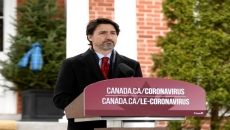
Much of Prime Minister Justin Trudeau's daily briefing was taken up by questions about the crash of a Canadian military helicopter during a NATO training exercise off the coast of Greece. At least one crew member — Sub-Lt. Abbigail Cowbrough — was killed and five others were missing.

However, Trudeau did say the government's priority was to support those Canadians who have taken a financial hit because of the anti-pandemic measures. Those restrictions, he said, would allow the economy to "come roaring back" once the epidemic has been curtailed.

"We need Canadians to stay home," Trudeau said. "Our focus needs to be on how we get through right now."

The restrictions, which have grounded much of the world's commercial aviation, have also had a profound impact on Canada's airports. Some have resorted to terminal closures and layoffs, while at least six regional facilities have lost scheduled passenger service altogether.

The organization that speaks for 100 airports across the country said they expected losses of around $2 billion this year. The Canadian Airports Association for government help to keep them aloft until demand returns.

Vancouver's airport authority said it would start offering voluntary layoffs to its 500 staff, with layoffs expected to follow.

As provinces look to get on the road to post-pandemic normalcy, the country's chief public health officer acknowledged people were getting antsy to get out of their homes. While the COVID-19 curve had been "a little flat" this week, Dr. Theresa Tam warned of still significant challenges in settings such as long-term care homes.

Ontario Premier Doug Ford also said he understood people's anxiety about getting back to work and normalcy. Doing so, he said, would happen as quickly as possible but only in a safe and measured manner with public health considerations in the forefront.

"We're on the path to reopening the economy," Ford said. "There's a light at the end of the tunnel."

Prince Edward Island, which has had 27 cases in all and reported no new ones Thursday, said it was still not the time for non-essential travel to the province. Newfoundland and Labrador, which also announced no new cases, said it had reached a turning point and a start to reopening would happen next month if the positive trend continues.
MORE National ARTICLES

Ottawa helping guide, but not dictating, provincial reopening plans: Trudeau

Ottawa helping guide, but not dictating, provincial reopening plans: Trudeau
With Canada's two most populous provinces poised to outline plans for a gradual return to normalcy, Prime Minister Justin Trudeau said Monday that Ottawa will help guide, but not dictate, how provinces and territories should start easing restrictions. Ontario and Quebec together account for more than 80 per cent of the country's COVID-19 cases.    

Ottawa helping guide, but not dictating, provincial reopening plans: Trudeau

Crisis lines face volunteer, cash crunch even as COVID-19 drives surge in calls

Crisis lines face volunteer, cash crunch even as COVID-19 drives surge in calls
Despite a surge in demand due to COVID-19, many distress centres across Canada are dangerously close to folding thanks to major declines in both volunteers and revenue. Stephanie MacKendrick, CEO of Crisis Services Canada, which runs the only national suicide-specific helpline in Canada, says her organization relies on a network of approximately 100 community distress centres across the country to field calls from people.

Crisis lines face volunteer, cash crunch even as COVID-19 drives surge in calls

Conservatives gear up to grill government in modified return of House of Commons propose and oppose: Tories

Conservatives gear up to grill government in modified return of House of Commons propose and oppose: Tories
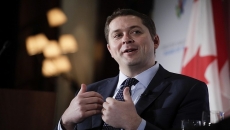
Conservative Leader Andrew Scheer laid out Monday the numerous lines of inquiry his party intends to follow this week as a modified version of a House of Commons sitting gets underway. They include the state of the nation's emergency supply stockpile, the mishmash of federal economic benefit programs that allow some to fall through the cracks and to what extent the minority Liberals are backstopping provincial efforts to reopen their economies, Scheer said.

Conservatives gear up to grill government in modified return of House of Commons propose and oppose: Tories

Learning to live with COVID-19 requires permanent fixes to vulnerable settings

Learning to live with COVID-19 requires permanent fixes to vulnerable settings
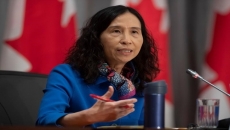
Canada's chief public health officer warned Monday there is still a lot we don't know about the virus that causes COVID-19, but said stopping this pandemic or preventing a future one will require more than just physical distancing and handwashing. Dr. Theresa Tam said we simply do not know yet whether someone who has had COVID-19 will be immune from getting it again, or how long that immunity will last.

Learning to live with COVID-19 requires permanent fixes to vulnerable settings

B.C. university creates institute to take microscope-telescope view of pandemic

B.C. university creates institute to take microscope-telescope view of pandemic
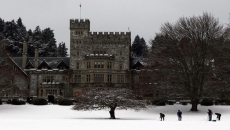
The COVID-19 pandemic has placed the world at a tipping point that's challenging social, political, economic and environmental structures, says the director of a new academic research institute at British Columbia's Royal Roads University. Dr. Thomas Homer-Dixon said Monday the pandemic is an event with the power to cause those structures to fall like dominos or shift radically to new paths.

B.C. university creates institute to take microscope-telescope view of pandemic

Drugs and cash seized from a Whalley area residence in Surrey

Drugs and cash seized from a Whalley area residence in Surrey
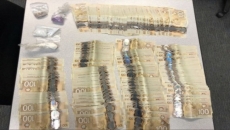
Illicit drugs and cash have been seized from a residence in the Whalley area following an investigation by the Surrey RCMP. The investigation began on March 5th, 2020 by the Surrey RCMP Community Response Unit (CRU). CRU observed suspicious activity consistent with drug trafficking at a residence in the 11400 block of 124 street.     

Drugs and cash seized from a Whalley area residence in Surrey