Thursday, January 22, 2026
ADVT 
National

COVID in all regions of Canada as Nunavut sees 1st case

Darpan News Desk The Canadian Press, 30 Apr, 2020 10:38 PM
  • COVID in all regions of Canada as Nunavut sees 1st case

COVID-19 has now spread to every region in Canada, with Nunavut reporting its first case on Thursday, as Ontario reported its largest one-day climb in fatalities and the country's budget officer predicted a staggering $252-billion deficit. The case in northern Nunavut was identified in the 1,600-strong largely Inuit community of Pond Inlet on Baffin Island. The territory's chief public health officer, Dr. Michael Patterson, said a rapid response team was on its way to the community to help manage the situation.

"No-one wants this virus; no-one brought this virus to Nunavut on purpose; no-one deserves to be shamed or blamed," Premier Joe Savikataaq said. "Now is the time for patience, kindness and staying at home."

Word of the first case in the northern territory came as Ontario passed the 1,000-death mark. Another 86 people had died, for a total of 1,082, although the overall jump in new cases was relatively modest. Quebec reported 98 new deaths — most of them in long-term care homes — for a total of 1,859.

Meanwhile, the cost of propping up the economy during a pandemic that has prompted unprecedented restrictions on people and business was thrown into stark relief on Thursday when Parliament's budget watchdog pegged the deficit at a quarter of a trillion dollars. The figure, according to the office, was based on an expectation the economy would shrink 12 per cent this year.

In response to the crisis, the federal government has opened its spending taps in an effort to keep the system from total collapse. The report by budget officer Yves Giroux takes into account almost $146 billion in spending measures announced so far, and says even that might not be enough if the economy is slow to recover.

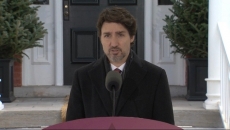
Much of Prime Minister Justin Trudeau's daily briefing was taken up by questions about the crash of a Canadian military helicopter during a NATO training exercise off the coast of Greece. At least one crew member — Sub-Lt. Abbigail Cowbrough — was killed and five others were missing.

However, Trudeau did say the government's priority was to support those Canadians who have taken a financial hit because of the anti-pandemic measures. Those restrictions, he said, would allow the economy to "come roaring back" once the epidemic has been curtailed.

"We need Canadians to stay home," Trudeau said. "Our focus needs to be on how we get through right now."

The restrictions, which have grounded much of the world's commercial aviation, have also had a profound impact on Canada's airports. Some have resorted to terminal closures and layoffs, while at least six regional facilities have lost scheduled passenger service altogether.

The organization that speaks for 100 airports across the country said they expected losses of around $2 billion this year. The Canadian Airports Association for government help to keep them aloft until demand returns.

Vancouver's airport authority said it would start offering voluntary layoffs to its 500 staff, with layoffs expected to follow.

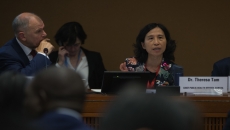
As provinces look to get on the road to post-pandemic normalcy, the country's chief public health officer acknowledged people were getting antsy to get out of their homes. While the COVID-19 curve had been "a little flat" this week, Dr. Theresa Tam warned of still significant challenges in settings such as long-term care homes.

Ontario Premier Doug Ford also said he understood people's anxiety about getting back to work and normalcy. Doing so, he said, would happen as quickly as possible but only in a safe and measured manner with public health considerations in the forefront.

"We're on the path to reopening the economy," Ford said. "There's a light at the end of the tunnel."

Prince Edward Island, which has had 27 cases in all and reported no new ones Thursday, said it was still not the time for non-essential travel to the province. Newfoundland and Labrador, which also announced no new cases, said it had reached a turning point and a start to reopening would happen next month if the positive trend continues.

MORE National ARTICLES

Horgan tells workers stay home if sick after COVID-19 outbreak at chicken plant

Horgan tells workers stay home if sick after COVID-19 outbreak at chicken plant
B.C. Premier John Horgan says people who are sick must stay away from work after an outbreak of COVID-19 at a chicken processing plant in Vancouver. Horgan said Wednesday workers should not go to work when they are sick because they fear losing wages, and that he was planning a meeting with Labour Minister Harry Bains and WorkSafe BC officials to discuss sick pay provisions.

Horgan tells workers stay home if sick after COVID-19 outbreak at chicken plant

Search for missing B.C. woman prompts homicide fears, second death

Search for missing B.C. woman prompts homicide fears, second death
Police are releasing more details about a British Columbia woman they fear may be the victim of a homicide. Metro Vancouver's Integrated Homicide Investigation Team says 45-year-old April Parisian was last heard from on March 28 and was declared missing earlier this month.

Search for missing B.C. woman prompts homicide fears, second death

Reports of hate crimes are up in Vancouver: police

Reports of hate crimes are up in Vancouver: police
An assault on a 92-year-old Asian man with dementia in Vancouver is being investigated as a hate crime and police say they have recently noticed an increase in reports of hate-motivated incidents. Vancouver police say the man has "severe dementia" and wandered into a convenience store on March 13 when another man yelled racist remarks that included comments about COVID-19.    

Reports of hate crimes are up in Vancouver: police

More signs COVID-19 is slowing in Canada; students to get federal help

More signs COVID-19 is slowing in Canada; students to get federal help
Chief Public Health Officer Dr. Theresa Tam said Canada was making progress in slowing the epidemic but warned against letting down its guard. The focus, Tam said, must be placed on stopping outbreaks in places like seniors homes and in other places where vulnerable populations live together in close quarters. How exactly Canada gets on the road to normalization will largely depend on the provinces, Prime Minister Justin Trudeau said on Wednesday. However, the closure of the Canada-U.S. border will stay in place until May 21st at least, he said.

More signs COVID-19 is slowing in Canada; students to get federal help

Prime Minister Justin Trudeau defends not creating universal COVID-19 benefit, announces student aid

Prime Minister Justin Trudeau defends not creating universal COVID-19 benefit, announces student aid
As he announced yet another emergency financial aid package Wednesday — this one aimed at students — Prime Minister Justin Trudeau defended his decision not to create a universal benefit that would ensure no Canadians affected by COVID-19 fall through the cracks. His focus for specific help Wednesday was students, announcing a $9-billion suite of programs for students whose education and job prospects are disrupted by the novel coronavirus.  Trudeau says his government's approach has been to try to target its emergency financial assistance in stages to those who need it most, rather than to everyone at once, including those who don't need it.      

Prime Minister Justin Trudeau defends not creating universal COVID-19 benefit, announces student aid

What BC is doing to fight COVID-19

What BC is doing to fight COVID-19
B.C. declared a provincial state of emergency on March 18, a day after announcing a public health emergency, and it has been extended to April 28. The measure gives the province authority to take any action necessary to protect people and communities, including charging people who ignore public health orders.

What BC is doing to fight COVID-19