Saturday, July 4, 2026
ADVT 
National

COVID testing a concern for Point Roberts, Wash.

Darpan News Desk The Canadian Press, 14 Oct, 2021 10:05 AM
  • COVID testing a concern for Point Roberts, Wash.

VANCOUVER - COVID-19 testing requirements for Canadians driving home from the United States could only prolong the hardships for the tiny coastal town of Point Roberts, Wash., community leaders say.

Point Roberts is disconnected from the rest of the state by water, requiring residents to drive through Metro Vancouver to get to Washington state's mainland.

Brian Calder, president of the Point Roberts Chamber of Commerce, said that before COVID-19, the community would see about 1.5 million visitors each year, but half of them often spent an hour or less in the town getting cheaper gas, buying groceries or checking on their cabins or boats.

When the U.S. border reopens to vaccinated Canadians, there will be no testing requirement to go south, but Canada requires a negative COVID-19 test to return and Calder said that's a problem for Point Roberts.

Point Roberts only offers testing on Wednesdays and Sundays, which he said would limit Canadian visitors.

He said he's hoping theCanadian government lifts the testing regulation for the town.

"We're a completely unique place in North America and we deserve to be treated uniquely," he said, citing a 87 per cent vaccination rate in the community. "We've been very proactive as a community. The last thing we want is to be conduits of COVID, but we're not being listened to."

Land and sea borders between the U.S. and Canada have been closed to non-essential travel since March 21, 2020, and the closure order was extended every 30 days until Oct. 12, when the White House confirmed it would be officially reopening the border to Canadians next month.

U.S. citizens and permanent residents who are fully vaccinated have been allowed to enter Canada by land since Aug. 9.

Calder said the closure has been "economically devastating" for the town, where 90 per cent of the economy was eliminated because of pandemic travel restrictions.

"It's dependent on Canada, not neighbouring communities in the United States, so when you close that border, we're toast."

Ali Hayton, owner of Point Roberts International Marketplace, the community's only grocery store, said she was excited to hear the border news but remains "guardedly hopeful."

"They've gotten our hopes up before, so I'm hoping it's real this time because we just need our customers back," said Hayton.

In July, Washington Gov. Jay Inslee visited the point and provided Hayton with $100,000 in state funding to help keep her business operating.

"The loss of revenue in the last 19 months is well over $10 million, so the funding did help, but it only scratches the surface," she said. "We've been really struggling, especially since Aug. 9, when they allowed our (American) customers to leave without allowing any Canadians to come back down."

Calder said he estimates it will take two to three years for the local economy to recover should borders remain open and the testing requirement is lifted, but citizens arewary of the border potentially closing again.

"The confidence in our border ability has been dashed and that will undermine what it will now take to bring people back and rebuild the economy," he said. "People come here for calmness, tranquility and recreation. They don't want apprehension and fear, so that's my biggest concern now."

While the U.S. administration has said the land border will reopen in early November, an exact date hasn't been released.

 

MORE National ARTICLES

Sleep struggles: pandemic could impact body's fear response, cause poor sleep

Sleep struggles: pandemic could impact body's fear response, cause poor sleep
Tossing and turning in the middle of the night. Lying awake for lengthy stretches. Waking up groggy. The COVID-19 pandemic seems to be messing with a number of peoples' ability to get a good night's sleep these days. And sleep experts aren't surprised by that.    

Sleep struggles: pandemic could impact body's fear response, cause poor sleep

Here are some of the deadliest mass killings in recent Canadian history:

Here are some of the deadliest mass killings in recent Canadian history:
April 19, 2020: Seventeen people are killed after a man who at one point wore a police uniform and drove a mock-up cruiser travelled across northern Nova Scotia. An RCMP officer is among the dead. Police say the suspected shooter, 51-year-old Gabriel Wortman, was killed after being intercepted by officers in Enfield, N.S.

Here are some of the deadliest mass killings in recent Canadian history:

Those who knew Nova Scotia gunman shocked by rampage

Those who knew Nova Scotia gunman shocked by rampage
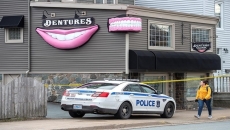
Neighbours and schoolmates of the man responsible for a killing rampage that left at least 19 people dead in northern Nova Scotia were attempting Monday to come to terms with the tragedy.  A 23 year member of the RCMP police force Const Heidi Stevenson was killed, a mother of two, and another officer is recovering from non life threating injuries. 

Those who knew Nova Scotia gunman shocked by rampage

COVID-19 prompts bus driver layoffs, service cuts for Metro Vancouver transit

COVID-19 prompts bus driver layoffs, service cuts for Metro Vancouver transit
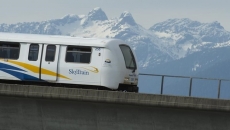
There have been significant layoffs of bus drivers and deep service cuts on buses, SeaBus, SkyTrain and West Coast Express across Metro Vancouver. Nearly 1,500 bus drivers and other transit workers across Metro Vancouver are being laid off as TransLink faces plunging ridership during the COVID-19 pandemic.    

COVID-19 prompts bus driver layoffs, service cuts for Metro Vancouver transit

Demand will fuel B.C. real estate in 2021 after COVID recession: report

Demand will fuel B.C. real estate in 2021 after COVID recession: report
A report from the B.C. Real Estate Association says the 2020 COVID-driven recession will be deep, although it could be shorter than other Canadian economic downturns. The market intelligence report released Monday by the association says it expects home sales to sink 30 to 40 per cent for April 2020. 

Demand will fuel B.C. real estate in 2021 after COVID recession: report

Prime Minister Justin Trudeau confirms border closure, which began on March 21 and was set to expire on Tuesday.

Prime Minister Justin Trudeau confirms border closure, which began on March 21 and was set to expire on Tuesday.
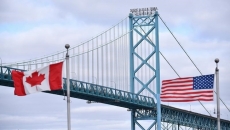
Canadian officials acknowledged some regions of the country could be closer to re-opening parts of the economy than others, but continued to stress a careful approach as the border closure with the hard-hit United States was extended for another 30 days during the COVID-19 crisis. Prime Minister Justin Trudeau confirmed the extension on Saturday for the closure restricting non-essential travel across the border, which began on March 21 and was set to expire on Tuesday.

Prime Minister Justin Trudeau confirms border closure, which began on March 21 and was set to expire on Tuesday.