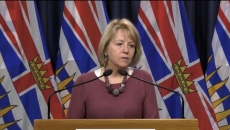
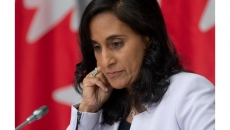
OTTAWA - The federal government will announce changes to pandemic measures at Canada's borders next week, Health Minister Jean-Yves Duclos signalled Friday, while Canada's chief public health officer said the country is looking to more sustainable plans to manage COVID-19.
Currently, the government advises against all non-essential international travel.
Anyone travelling within Canada by plane, passenger train or boat must be vaccinated against COVID-19, and international travellers are subject to COVID-19 test requirements.
Duclos said during a news briefing the worst of the latest wave of the pandemic is now behind Canada, and the government will "continue to tweak," measures accordingly.
Dr. Theresa Tam, the chief public health officer, said due to the infectious nature of the Omicron variant, it's very difficult to stop every case at the border and prevent an infected person from transmitting the virus to someone else.
At the same time, the number of new cases in Canada has dropped to about 11,000 reported daily, though that is an incomplete tally as many jurisdictions have restricted tests to high-risk individuals.
Still, Canada cannot simply decide to live with the virus and remove measures entirely while so many people are still dying of COVID-19 and hospitals are vulnerable to a potentially overwhelming influx of seriously ill people, Duclos said.
There are 130 people dying of COVID-19 daily, Tam said. About 8,700 are being treated for the virus in hospital each day and 1,000 are receiving intensive care, the latest data from the Public Health Agency of Canada shows.
While still high, those figures show that Canada is past the peak of the Omicron wave and provinces can begin to ease COVID-19 restrictions, Tam said.
Provinces must also plan for the future, because the virus will not go away and more variants might emerge with uncertain transmission and severity, she said. Those plans should include testing, public health measures, vaccines and treatments, she said.
Families should also be empowered with tools to make their own decisions based on their own risk tolerance, and reduce their risk using personal protective measures like masks, social distancing and vaccination, she said.
"Though resurgence is still possible, especially as public health measures ease, increasing availability and rapid application of these tools can help to lessen the impact on hospitals," Tam said.
"Moreover, they can help protect our most vulnerable populations and minimize the need for broad restrictive measures going forward."