Friday, December 19, 2025
ADVT 
National

COVID-19 cases will go up as Alberta reopens many activities: health experts

Darpan News Desk The Canadian Press, 11 Jun, 2020 06:26 PM
  • COVID-19 cases will go up as Alberta reopens many activities: health experts

Health experts say it makes sense for Alberta to take the next step in reopening its economy, but warn there will be an uptick in COVID-19 cases due to an inability to physically distance in some situations.

Premier Jason Kenney announced Tuesday that everything from casinos, gyms and arenas to spas, movie theatres and pools will be allowed to reopen starting Friday.

More people will be allowed to book campsites and sit in restaurants at the same time.

Fifty people will be allowed to gather indoors and up to 100 will be able to congregate outside.

Experts both within and outside Alberta said the province's COVID-19 numbers support moving forward and lifting restrictions.

"The most impressive number to me is that we've been doing about 4,000 tests a day and about a half a per cent are positive — this is an incredibly low number," said Dr. Christopher Mody, who's the head of microbiology, immunology and infectious disease with the Cumming School of Medicine at the University of Calgary.

"I don't know anywhere else in the world where ... they are getting that kind of number."

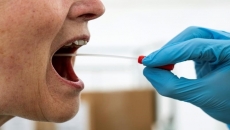
Alberta has said it is among the world leaders in per-capita testing. To find and reduce future outbreaks, people can now be tested for COVID-19 even if they are asymptomatic.

Dr. Colin Furness, an epidemiologist and assistant professor at the Faculty of Information and Dalla Lana School of Public Health at the University of Toronto, said testing is part of Alberta's narrative.

"It's way ahead of everybody on a per capita basis and staying out in front," he said. "It was eye popping."

Furness said he initially felt anxiety when he saw how much Alberta was reopening Friday, but then he looked at how few new cases the province is reporting each day.

Alberta reported 47 new cases Wednesday, bringing its number of active cases to 371. Of those, 42 people are in hospital — including six in intensive care. So far 151 people have died.

Furness said he questions whether the province will be able to scale up its testing even more to deal with the fact it will get more cases.

"You are plowing ahead with major increases in physical contact between people that's obviously quite purposeful," he said. "I'm not going to say it's bad ... but you really want to brace for an uptick in cases.

"You will be successful if you are able to come down like a bag of hammers every time there's a new case, doing the contact tracing and testing really aggressively."

Dr. Stephanie Smith, an infectious disease expert at the University of Alberta, agreed it makes sense for the province to move forward but admitted she's a bit anxious about how it will play out.

"It's confusing," she said. "They're saying you can open up and there's no restrictions on restaurants but you need to maintain physical distancing. It's hard to actually do both of those.

"Rightly or wrongly, my anticipation is that a lot of the physical distancing will disappear."

Smith said she expects to see more cases, but hopes it doesn't result in higher admissions to hospitals and intensive care units.

"I think we can probably weather it."

All three experts said large gatherings with strangers — including in restaurants, places of worship and casinos — are the biggest risk.

They suggested people wear masks indoors where physical distancing isn't as easy.

"Everyone needs to look at how much risk they are willing to take, really," said Smith. "Restaurants are open, but does that mean you should necessarily go? If you are in a higher-risk category ... then it might not be the safest thing to do.

"There's still risk out there."
MORE National ARTICLES

Ottawa helping guide, but not dictating, provincial reopening plans: Trudeau

Ottawa helping guide, but not dictating, provincial reopening plans: Trudeau
With Canada's two most populous provinces poised to outline plans for a gradual return to normalcy, Prime Minister Justin Trudeau said Monday that Ottawa will help guide, but not dictate, how provinces and territories should start easing restrictions. Ontario and Quebec together account for more than 80 per cent of the country's COVID-19 cases.    

Ottawa helping guide, but not dictating, provincial reopening plans: Trudeau

Crisis lines face volunteer, cash crunch even as COVID-19 drives surge in calls

Crisis lines face volunteer, cash crunch even as COVID-19 drives surge in calls
Despite a surge in demand due to COVID-19, many distress centres across Canada are dangerously close to folding thanks to major declines in both volunteers and revenue. Stephanie MacKendrick, CEO of Crisis Services Canada, which runs the only national suicide-specific helpline in Canada, says her organization relies on a network of approximately 100 community distress centres across the country to field calls from people.

Crisis lines face volunteer, cash crunch even as COVID-19 drives surge in calls

Conservatives gear up to grill government in modified return of House of Commons propose and oppose: Tories

Conservatives gear up to grill government in modified return of House of Commons propose and oppose: Tories
Conservative Leader Andrew Scheer laid out Monday the numerous lines of inquiry his party intends to follow this week as a modified version of a House of Commons sitting gets underway. They include the state of the nation's emergency supply stockpile, the mishmash of federal economic benefit programs that allow some to fall through the cracks and to what extent the minority Liberals are backstopping provincial efforts to reopen their economies, Scheer said.

Conservatives gear up to grill government in modified return of House of Commons propose and oppose: Tories

Learning to live with COVID-19 requires permanent fixes to vulnerable settings

Learning to live with COVID-19 requires permanent fixes to vulnerable settings
Canada's chief public health officer warned Monday there is still a lot we don't know about the virus that causes COVID-19, but said stopping this pandemic or preventing a future one will require more than just physical distancing and handwashing. Dr. Theresa Tam said we simply do not know yet whether someone who has had COVID-19 will be immune from getting it again, or how long that immunity will last.

Learning to live with COVID-19 requires permanent fixes to vulnerable settings

B.C. university creates institute to take microscope-telescope view of pandemic

B.C. university creates institute to take microscope-telescope view of pandemic
The COVID-19 pandemic has placed the world at a tipping point that's challenging social, political, economic and environmental structures, says the director of a new academic research institute at British Columbia's Royal Roads University. Dr. Thomas Homer-Dixon said Monday the pandemic is an event with the power to cause those structures to fall like dominos or shift radically to new paths.

B.C. university creates institute to take microscope-telescope view of pandemic

Drugs and cash seized from a Whalley area residence in Surrey

Drugs and cash seized from a Whalley area residence in Surrey
Illicit drugs and cash have been seized from a residence in the Whalley area following an investigation by the Surrey RCMP. The investigation began on March 5th, 2020 by the Surrey RCMP Community Response Unit (CRU). CRU observed suspicious activity consistent with drug trafficking at a residence in the 11400 block of 124 street.     

Drugs and cash seized from a Whalley area residence in Surrey