Tuesday, December 23, 2025
ADVT 
National

COVID-19 study key to tailoring future controls

Darpan News Desk The Canadian Press, 16 Jul, 2020 08:54 PM
  • COVID-19 study key to tailoring future controls

A study of COVID-19 infection rates in British Columbia confirms far more people carry the virus than were tested for it, and public health officials say the findings will help tailor future strategies to control the illness.

Provincial health officer Dr. Bonnie Henry and lead author Dr. Danuta Skowronski with the BC Centre for Disease Control say the serology study determined the level of COVID-19 antibodies in hundreds of blood tests.

Tests, gathered anonymously from Metro Vancouver residents whose blood was being checked for unrelated reasons, revealed eight times more infections than reported cases of COVID-19.

Despite that, both doctors say community transmission rate was low at less than one per cent, which they credit to careful observance of physical distancing and other infection control measures.

Henry says given the scant transmission level, what is now needed is targeted testing to determine who has been most affected by the respiratory illness.

She says testing would include health workers in long-term care, some ethnic groups and certain economically vulnerable populations.

Henry told a news conference in Victoria on Thursday serology testing will help determine if there has been transmission "when cases pop up out of nowhere seemingly, if there has been missed transmission."

She says when an outbreak occurred in Alert Bay off northern Vancouver Island in late April, serology tests were done on "a good proportion" of residents there.

"That gives us a better idea of how this virus is transmitted in community settings so we can more nimbly target outbreaks (elsewhere) as we go into the fall," she says.

Researchers relied on four measures, or assays, to identify COVID-19 antibodies in the blood of test subjects because no single assay is a completely reliable marker, Skowronski says.

So-called neutralizing antibodies are considered the "gold standard" of contact with a particular virus and Skowronski says such antibodies were found in blood tests analyzed in mid-May.

If the study's prevalence rate is applied to the whole provincial population, it would mean about 28,000 people have had the novel coronavirus, while 3,149 cases of COVID-19 have been confirmed, supporting the low transmission rate.

"The flip side of that, of course, is that we cannot rest on our laurels, we cannot assume we are in the clear, because it also means there is still substantial residual susceptibility in the population," says Skowronski.

Henry says researchers are unsure how much protection COVID-19 antibodies may provide to those who have been exposed to the virus, or how long any protection might last.

"This study does not address that question," says Skowronski.

"It does, however, very clearly say that we do not have sufficient immunity in the population to prevent subsequent waves."

That means it will come down to individual and collective measures of British Columbians to continue to keep this virus at bay, Skowronski says.

A government news release issued Wednesday said British Columbia recorded 21 new cases of COVID-19 and no new deaths by July 15.

MORE National ARTICLES

Search for missing B.C. woman prompts homicide fears, second death

Search for missing B.C. woman prompts homicide fears, second death
Police are releasing more details about a British Columbia woman they fear may be the victim of a homicide. Metro Vancouver's Integrated Homicide Investigation Team says 45-year-old April Parisian was last heard from on March 28 and was declared missing earlier this month.

Search for missing B.C. woman prompts homicide fears, second death

Reports of hate crimes are up in Vancouver: police

Reports of hate crimes are up in Vancouver: police
An assault on a 92-year-old Asian man with dementia in Vancouver is being investigated as a hate crime and police say they have recently noticed an increase in reports of hate-motivated incidents. Vancouver police say the man has "severe dementia" and wandered into a convenience store on March 13 when another man yelled racist remarks that included comments about COVID-19.    

Reports of hate crimes are up in Vancouver: police

More signs COVID-19 is slowing in Canada; students to get federal help

More signs COVID-19 is slowing in Canada; students to get federal help
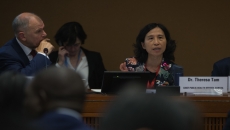
Chief Public Health Officer Dr. Theresa Tam said Canada was making progress in slowing the epidemic but warned against letting down its guard. The focus, Tam said, must be placed on stopping outbreaks in places like seniors homes and in other places where vulnerable populations live together in close quarters. How exactly Canada gets on the road to normalization will largely depend on the provinces, Prime Minister Justin Trudeau said on Wednesday. However, the closure of the Canada-U.S. border will stay in place until May 21st at least, he said.

More signs COVID-19 is slowing in Canada; students to get federal help

Prime Minister Justin Trudeau defends not creating universal COVID-19 benefit, announces student aid

Prime Minister Justin Trudeau defends not creating universal COVID-19 benefit, announces student aid
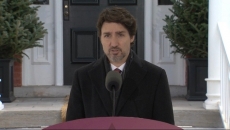
As he announced yet another emergency financial aid package Wednesday — this one aimed at students — Prime Minister Justin Trudeau defended his decision not to create a universal benefit that would ensure no Canadians affected by COVID-19 fall through the cracks. His focus for specific help Wednesday was students, announcing a $9-billion suite of programs for students whose education and job prospects are disrupted by the novel coronavirus.  Trudeau says his government's approach has been to try to target its emergency financial assistance in stages to those who need it most, rather than to everyone at once, including those who don't need it.      

Prime Minister Justin Trudeau defends not creating universal COVID-19 benefit, announces student aid

What BC is doing to fight COVID-19

What BC is doing to fight COVID-19
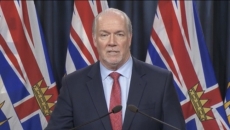
B.C. declared a provincial state of emergency on March 18, a day after announcing a public health emergency, and it has been extended to April 28. The measure gives the province authority to take any action necessary to protect people and communities, including charging people who ignore public health orders.

What BC is doing to fight COVID-19

Feds scramble to bring stranded Canadian travellers home from India PM: Canadians stranded in India need more help

Feds scramble to bring stranded Canadian travellers home from India PM: Canadians stranded in India need more help
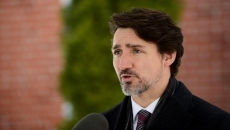
Prime Minister Justin Trudeau says 20,000 Canadian travellers stranded abroad have been repatriated to Canada. But he says many more flights are needed to bring back large numbers of Canadians from India in particular.

Feds scramble to bring stranded Canadian travellers home from India PM: Canadians stranded in India need more help