Monday, May 4, 2026
ADVT 
National

Crime severity index dropped four per cent last year, Statistics Canada says

Darpan News Desk The Canadian Press, 22 Jul, 2025 10:52 AM
  • Crime severity index dropped four per cent last year, Statistics Canada says

The national statistics agency says the volume and severity of police-reported crime in Canada decreased four per cent last year, after three annual increases in a row.

Statistics Canada says non-violent crime had a significant effect on the decline in the overall crime severity index in 2024.

The non-violent crime severity index — including such crimes as property and drug offences — dropped six per cent last year, following a nine per cent increase from 2021 to 2023.

The agency says the violent crime severity index decreased one per cent in 2024 and had a comparatively smaller effect on the overall picture.

That particular index had risen for three previous consecutive years and had increased 15 per cent over that period.

The crime severity index was developed to address the limitations of a police-reported crime rate that is driven by high-volume — but less serious — offences.

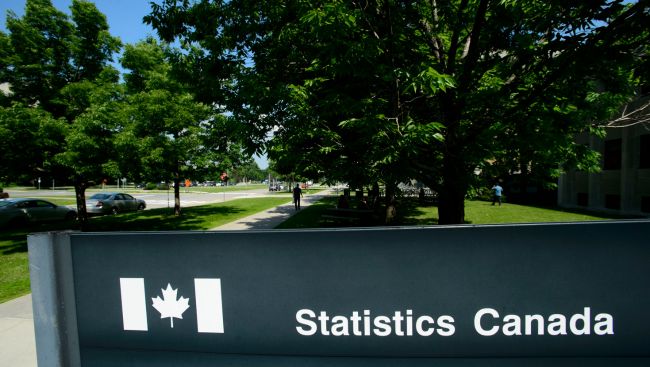
Picture Courtesy: THE CANADIAN PRESS/Sean Kilpatrick

MORE National ARTICLES

Canadians should expect AI-enabled foreign meddling in election: cybersecurity centre

Canadians should expect AI-enabled foreign meddling in election: cybersecurity centre
In a new report, the Canadian Centre for Cyber Security says it expects individuals affiliated with the Chinese government will continue to target diaspora communities, pushing narratives favourable to Beijing's interests on social media platforms. Cybercriminals are also likely to take advantage of election-related opportunities to perpetrate scams, says the centre, which is an arm of Canada's cyberspy agency, the Communications Security Establishment. 

Canadians should expect AI-enabled foreign meddling in election: cybersecurity centre

B.C. to get about $3.7 billion in tobacco lawsuit settlement

B.C. to get about $3.7 billion in tobacco lawsuit settlement
British Columbia Attorney General Niki Sharma says B.C.'s share of a landmark settlement for health damages from the big tobacco firms will be about $3.7 billion. It's part of a $32.5-billion Canadian settlement between JTI-Macdonald Corp., Rothmans, Benson & Hedges and Imperial Tobacco Canada Ltd. and their creditors after more than five years of negotiations.

B.C. to get about $3.7 billion in tobacco lawsuit settlement

B.C. poised to toll U.S. trucks driving to Alaska through province in tariff response

B.C. poised to toll U.S. trucks driving to Alaska through province in tariff response
British Columbia will introduce legislation in the coming days that would give it the ability to levy fees on commercial trucks travelling from the United States through the province to Alaska, Premier David Eby said.  The move against Alaska-bound trucks is part of a series of responses the province is planning after the "unprecedented attack" from the United States that put a 25 per cent tariff on many Canadian goods.

B.C. poised to toll U.S. trucks driving to Alaska through province in tariff response

Canada halts second tariff wave after Trump announces pause

Canada halts second tariff wave after Trump announces pause
Finance Minister Dominic LeBlanc says Canada has suspended a second wave of retaliatory tariffs after U.S. President Donald Trump signed an executive order to pause some duties.

Canada halts second tariff wave after Trump announces pause

Former Canadian Olympic athlete added to FBI's 10 most wanted fugitives list

Former Canadian Olympic athlete added to FBI's 10 most wanted fugitives list
Ryan James Wedding is wanted for allegedly leading an organized crime group that moved large shipments of cocaine from Colombia through Mexico and California to Canada and other locations in the United States.

Former Canadian Olympic athlete added to FBI's 10 most wanted fugitives list

Shots over the bow: Why provinces are using liquor leverage in trade war with U.S.

Shots over the bow: Why provinces are using liquor leverage in trade war with U.S.
What they all have in common is the "currently unavailable" designation, having been yanked from sale by British Columbia's government in retaliation for U.S. President Donald Trump's tariffs on Canadian imports. Calling time on U.S. alcohol has been a popular move among Canadian provincial and territorial governments looking for ways to fight back in the trade war. 

Shots over the bow: Why provinces are using liquor leverage in trade war with U.S.