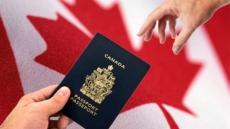
Recently released documents indicate the federal government has reservations about restricting international trade in endangered species — more of them than almost any other government on Earth.
The papers show that Canada has opted out of nearly every resolution to protect endangered species taken at last year's meeting of the Convention on International Trade in Endangered Species (CITES). Delegates from 180 countries voted to extend protections to 76 plant and animal species from soft-shelled turtles to tropical hardwoods.
Canada, however, filed "reservations" against all those motions, meaning Canadian trade in those species will continue as normal.
"It's unprecedented," said Shirley Fink of the International Fund for Animal Welfare. "I can't think of any explanation for it.
"I've been told no other country has ever taken such an action."
The protections were voted on in March 2013 at the last CITES convention in Bangkok. According to a document released earlier this fall, Canada chose to opt out of all but one of the motions that upgraded species protections.
Canada's 76 reservations, all filed in 2013, dwarf those of other nations. Over the entire 39-year history of the treaty, Iceland has filed 22 reservations; Japan 18 and the United Kingdom eight. The United States has filed none.
Few of the species Canada declined to protect have significant domestic value. A small East Coast fishery exists for the porbeagle shark, but Canada does not harvest manatees, manta rays or ebony.
Environment Canada spokesman Danny Kingsberry said the reservations are temporary and the protections will eventually come into law.
"Canada, as with many other parties to the convention, requires additional time to make the necessary regulatory changes," he said in an email. "These reservations are technical in nature, not substantive, and were made to allow Canada sufficient time to amend its domestic legislation to reflect the changes."
But the text of the agreement says reservations are "a unilateral statement that (a country) will not be bound by the provisions of the Convention relating to trade in a particular species."
As well, Fink said, Canada has previously managed to produce regulations well within a 90-day grace period allowed under the treaty.
"As far as I'm aware, this has never been a problem for Canada," she said. "There is no logical explanation for Canada to place reservations on all of these species, and no plausible excuse for a 20-month delay in updating our legislation."
The government has also failed to follow through with a promise last August to update its wild animal and plant trade regulations, said the animal welfare fund.
Canada's stance baffles its international partners, said Fink.
"For Canada to opt out of its obligations under CITES for every single species that was listed, when we don't even have a commercial interest in the species, it has no logical explanation as far as anyone can tell.
"It's something that's been noticed in the international conservation community — why has Canada done this?"
Canada has been fighting a rearguard action at CITES over polar bears. It has been working to stop the organization from further restricting trade in polar bear parts.
Support for Canada's position, however, has been declining.
In 2010, CITES considered banning all trade in polar bear parts and the European Union voted in a single bloc with Canada against it. In 2013, after major European countries including the United Kingdom and Germany said they opposed Canada's polar bear hunt, the EU simply sat on its hands.