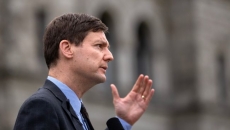
Q1. Minister Bailey, you’ve described Budget 2026 as a “serious” budget. For everyday British Columbians, what does that mean in practical terms?
Budget 2026 is absolutely a serious budget for serious times. For British Columbians, it means we are making careful choices to protect what matters most. We are keeping B.C. one of the lowest-taxed provinces for working families while protecting core public services, like health care and education: hiring the doctors, nurses, and healthcare workers we need, and teachers and counsellors in our kids’ schools.
Q2. The deficit is projected to spike to a record $13.3 billion—a 38 per cent increase year-over-year. Why should residents feel confident that this deficit is manageable?
It’s important to understand that the projections in the budget are just that–projections. Based on those projections, we are limiting new spending to critical services and targeted investments to grow the economy. We are moderating our capital plan and reviewing our programs to ensure we’re making the best use of every dollar. We are finding avenues to increase revenue and making careful, targeted investments in skills training and major projects to ensure the long-term success of B.C.’s economy. This work is helping us bring down our deficit.
Q3. You’ve raised the base income tax rate for the lowest bracket, impacting roughly 60 per cent of taxpayers. Why was this the right time to increase taxes when affordability remains a top concern?
Global uncertainty is slowing growth everywhere. High costs, global instability, and volatile commodity prices are putting pressure on public finances. To protect public services people rely on, we are increasing the rate of the first income tax bracket by less than 0.6 percentage points —5.06% to 5.60%. We have been mindful to offset the cost for British Columbians with lower incomes through an increased tax reduction credit, and even with this change, middle-income British Columbians will continue to have among the lowest taxes in the country.
Q4. B.C. was once operating in surplus. Critics argue that the current deficit is the result of government spending decisions. How do you respond to those who say this fiscal situation is self-inflicted?
A lot has changed since then. We have helped people with costs through eliminating the carbon tax, while investing in the infrastructure people need, and that has impacted our deficit. At the same time, economic conditions have changed worldwide, with trade conflicts leading to uncertainty that has affected all jurisdictions. In Budget 2026, we are limiting new spending to critical services and targeted investments to grow the economy as we focus on a sustainable fiscal future. We have also introduced new revenue measures that are expected to grow over the three-year fiscal plan.
Q5. Business groups have expressed concern that higher PST on services and rising costs will discourage investment and deepen what they call an “entrepreneurial drought.” What’s your message to B.C.’s business community?
I know that many businesses are struggling right now, with a slower economy and tariffs having a major impact. Through this PST change, businesses will see small price increases, but we have been working diligently since forming government in 2017 to create an economic environment that allows businesses to succeed. Businesses are saving big with the elimination of the carbon tax, and Budget 2026 features tax credits and more measures to support B.C. businesses.
Q6. Infrastructure projects, including long-term care facilities and hospital expansions, are being delayed. How do you ensure that “re-pacing” projects doesn’t compromise essential services for growing communities?
After years of building up infrastructure to close gaps and strengthen services, we are adjusting the pace of our capital plan to continue building the schools, hospitals, and transit people need in a sustainable way. We remain committed to delivering urgently needed infrastructure and will be working to better sequence and deliver these projects.
Q7. Property owners will see increases in the additional school tax and speculation and vacancy tax. How do these measures balance revenue generation with concerns about housing affordability and investor confidence?
Housing has always been a top priority for our government. People in B.C. need homes they can afford, but too many people face high costs driven by housing speculators and profiteers. The additional school tax is specific to residential properties that are over $3 million, and Budget 2026 includes changes to help ensure homes aren’t sitting empty or underused, but are available for people to rent or buy. In fact, housing investments in this budget are nearly five times what they were in 2016, demonstrating our continued commitment to delivering the homes people need.
Q8. You’ve said B.C. will remain one of the lowest-taxed provinces for middle- and working-class families. How do you reconcile that with the fact that the majority of tax filers will pay more next year?
It’s true, our province has some of the lowest taxes in the country for those with middle incomes, and that’s not changing. More than 40% of taxpayers will actually see savings because we are increasing the B.C. Tax Reduction Credit to offset the tax change for lower-income British Columbians.
Q9. If economic growth slows further or revenues fall short of projections, are additional tax increases or spending cuts on the table?
Our goal, always, is to find ways to improve on these projections and reduce the deficit further. That said, we expect that B.C.’s full potential is not fully captured yet. Even with streamlined permitting and investments in training skilled workers, major projects can take years to come online and begin generating revenue. The investments B.C. is making today will pay off in the years to come, even if they are not fully reflected in this fiscal plan.
Q10. Looking ahead, what concrete benchmarks should British Columbians watch for to know whether your plan to reduce the deficit “over time” is actually working?
A benchmark I always keep top of mind is our debt-to-GDP ratio. While we still compare favorably to other provinces, we still have more work to do to bring that down. We will provide regular updates on our progress towards our fiscal goals through quarterly financial reports and future budgets.