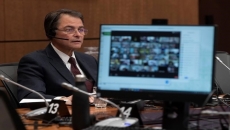
"There is no better place than in-class learning. Having students return to the classroom helps to minimize learning gaps and provide them with important academic, social and emotional supports.”

Why was there an urgency to re-open schools, keeping in mind it will be an extraordinaryschool year?
There is no better place than in-class learning. Having students return to the classroom helps to minimize learning gaps and provide them with important academic, social and emotional supports. The strict safety plans in place, which include enhanced cleaning protocols, frequent hand hygiene, and requiring students and staff to stay home when ill, are designed to reduce the risk of transmission of COVID-19 as well as colds and flu. An orientation week starting on September 8th, will allow staff and students to adjust to their new routines, find out about their learning groups, and practice safety protocols. This will allow time for educators and staff to plan their new routines before students will be welcomed back to class for their own orientation by September 10th.
What do you have to say to the parents who believe we should have held off on opening schools with the upcoming flu season and an expected spike in Covid cases?
The Provincial Health Officer is fully supportive of bringing students back to school next week. BC has strict health and safety measures in place, with $45.6 million in new funding for 1.5 million non-medical masks, additional handwashing stations, physical barriers and cleaning supplies, as well as hiring more custodians, loaning technology and supporting students with complex needs. This additional funding will provide school districts with the opportunity to purchase additional PPE if needed, install plexiglass barriers, purchase cleaning equipment such as foggers, improve ventilation systems and hire even more custodians to increase cleaning frequency.
Should all parents have the option of keeping their children at home and engaging in online learning if that feels safer to them?
To better support families with medical or health concerns, it is expected that school districts will be flexible and work with families to provide learning options that keep children connected to their school community. We directed school districts to contact all families to confirm if their child is attending school class, or if they require a remote learning option. Some districts have already developed or expanded remote learning programs and we have given school districts the flexibility and certainty to find options that work for families.
The Surrey District Parents Advisory Council have written an open letter calling for a third option allowing students to study online from home without losing their spot in the school they are enrolled in by September 30th. So what is being done for the Surrey school district?
The Surrey school district has introduced a transition plan option for both elementary and high school students. This includes the authority for all school boards to expand remote learning programs to additional grades, as well as the tools they need to increase their existing programs to meet demand. This support will ensure students maintain their learning while absent from school.
Visit: www.surreyschools.ca/covid19/backtoschool
How does the Ministry plan to tackle the safety concerns from teachers and parents as they feel the current plan falls short on clarity and stricter COVID-19 guidelines such as masks and physical distancing?
The Ministry of Education has convened a K-12 Education Restart Health and Safety Working Group, with representation from the Ministry of Health, teachers, school leaders, parents and Indigenous rights holders, to develop provincial COVID-19 health and safety guidelines for K-12 schools. These guidelines align with public health advice from the PHO and the BC Centre for Disease Control, and provide clear and detailed guidance on masks, physical distancing, cleaning and disinfecting, illness and self-assessment protocols, hand hygiene and other measures to protect students and staff. We continue to be guided by the advice of Dr. Bonnie Henry and her team.
With a surge in cases in BC over the past few weeks - what kind of COVID-19 numbers do you need to see before shutting down schools?
Under the updated health and safety guidelines, masks will be required for staff, middle and secondary students in high traffic areas such as buses and in common areas such as hallways, or anytime outside of their learning group whenever physical distancing cannot be maintained. Even when wearing a mask, staff and students will still be required to maintain physical distance from people outside of their learning group. Efforts will be put in place to ensure there is not crowding, gathering or congregating of people from different learning groups in a school setting.
What will be the protocol for kids who are sick, with a spike in cases expected during the Fall with a second wave and the flu season?
A lot of thought and consideration was put into the planning for the return of in-class learning in June. I heard from many parents and educators who spoke about how important the return to classes was for so many children and families.
We are learning from what happened in June to come up with plans for September that will be able to ensure the best learning environments for all students no matter what the circumstances.
How will the one-time federal funding of $242 million dollars be spent?
• To build on the Province’s $45.6 million investment to support a safe restart for BC schools, there has be an additional $242.36 million one-time funding from the Federal Government.
• Funding will be allocated to public school districts based primarily on student enrolment.
• Many school districts have developed or are developing additional remote options and this funding will now allow school districts to implement these programs.
• The funding will also support school districts to hire and train more teachers and support staff for remote learning; purchase additional software licences, electronic course materials and textbooks; purchase computers or tablets; and create wi-fi hubs and internet access in remote and Indigenous communities.
School Districts and independent schools can also use the funding to:
• Increase school staff and cover salary costs for additional hours needed to meet health and safety guidelines in schools;
• Improve air systems in schools;
• Increase access to hand hygiene in schools;
• Install plexiglass and other barriers in schools and purchase additional cleaning supplies and PPE as needed;
• Cover additional transportation costs to have fewer students on buses and support alternate transportation strategies;
• Open up more space and cover the cleaning and additional staff costs for before and after school care to ensure students can remain within their learning groups.
Now that there is indication of remote learning and hybrid models depending on the school districts, is there enough time to bring in these changes?
For instance, in Surrey, Grades K-9 will attend class full-time while Grade 10-12 students will attend class every day in the morning and one day a week in the afternoon, with remote learning available
when they are not in class. This is a great example of what’s already being done to further support students, and we look forward to seeing many more. All districts have released their back to school plans and have been contacting parents to determine their needs and discuss options moving forward.
What does this unprecedented school year in terms of equal access to education mean for students who may not be starting the school year in the classroom?
The Ministry of Education has given school districts the flexibility and certainty to find options that work for families.This includes the authority for all school boards to expand remote learning programs to additional grades, as well as the tools they need to increase their existing programs to meet demand. The school system needs to be there for students, and we are here to support the school system.
Photo: Courtesy of BC GOV