1. The recent B.C. Supreme Court ruling recognizing Aboriginal title over urban land in Richmond has sparked major public concern. What’s your initial reaction to this landmark decision?
The court ruling has understandably created an emergency for Richmond residents. Premier David Eby still refuses to admit his government failed to argue the extinguishment of Aboriginal titles regarding private property—a strategic directive he himself implemented as Attorney General in 2019. The NDP has failed to protect private property rights, and homeowners now face uncertainty about whether they even own their homes. This ruling sets a dangerous precedent for BC and Canada.
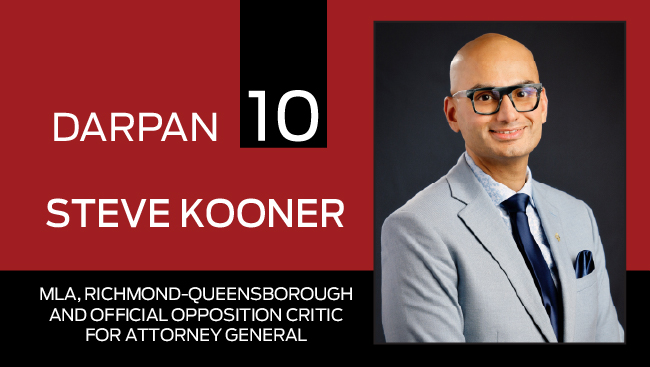
2. As the BC Conservatives’ Attorney General Critic, what do you see as the most pressing implications of this ruling for property owners in Richmond and across B.C.?
Numerous homes worth millions may now be “not saleable” as lawyers are suggesting any future transfer of land in the Aboriginal title area will require indigenous consent and government compensation in the form of taxpayer dollars. Meanwhile, we have also heard reports of major banks refusing mortgages in the affected area. The NDP has failed to protect homeowners in Richmond and across BC.
3. Many homeowners are confused and anxious about the security of their titles. What would you say to residents who fear losing their property rights?
Homeowners have a right to be angry. Decades of hard work, mortgages, and property taxes cannot end in limbo. Premier David Eby and the NDP have misled the public and have left people in the dark for years. Only Conservatives are fighting to end this uncertainty with a primary objective of restoring fairness for homeowners.
4. Do you believe the provincial government’s response—appealing the decision—is the right course of action? What more, if anything, should be done?
Appealing the decision is the bare minimum. A simple move to appeal does not reverse years of ideological decisions that put private property at risk in the first place. The NDP must also admit the initial mistake of refusing to argue Aboriginal title extinguishment in private property cases and must take real action to protect homeowners. British Columbians and Canadians deserve non-negotiable property rights enshrined in law.
5. How should the province strike the right balance between advancing reconciliation and protecting the rights of existing property owners?
Reconciliation cannot mean throwing homeowners under the bus, and sacrificing property rights must never be an option on the table. The NDP has repeatedly chosen a path of radical ideology with no endgame over fairness and common sense. British Columbia needs a balanced approach that acts in the best interests of indigenous people while making sure hardworking families aren’t forced into uncertainty, unsellable homes, or mortgage refusals.
6. Do you believe clearer provincial or federal legislation is needed to define how Aboriginal titles interact with private property rights?
Yes. This case highlights how urgently British Columbia and Canada need clearer provincial and federal legislation defining how Aboriginal title interacts with private property. Without it, governments can hide behind courts and leave families exposed. British Columbians and Canadians need clear property rights enshrined in law, not ever-changing rules based on reckless political virtue signaling.
7. What kind of long-term legal precedent do you think this ruling could set, not just for Richmond but for other parts of Canada where Aboriginal title claims may overlap with urban or private land?
The Cowichan court case sets a dangerous precedent that has the potential to directly affect many households across British Columbia and Canada in the near future. 95% of the land in British Columbia has land claims to it. If the government continues refusing to argue Aboriginal title extinguishment in private property cases, private property will continue to be threatened.
8. If similar cases emerge in other municipalities, what safeguards or legislative steps would you like to see to protect both Indigenous rights and private ownership?
British Columbians and Canadians need legislation passed at the highest level that establishes a non-negotiable right to private property. Indigenous interests must be considered, but homeowners must never again be blindsided by a government that hides risks and refuses to defend property rights.
9. At a broader level, what message do you think this case sends about the state of reconciliation and property rights in British Columbia today?
The current message today is confusion caused by the NDP government. Reconciliation should build trust in our province, not sow division and chaos. Instead, the Province’s mismanagement has fueled anger and has been reported to have caused mortgage refusals and property tax uncertainty. British Columbia must return to a path that respects indigenous interests without sacrificing the fundamental security of people’s homes.
10. Looking ahead, how do you think this decision—and its eventual appeal—will shape B.C.’s real estate market, investor confidence, and community relations?
Investor confidence depends entirely on certainty. And right now, this certainty is gone. We have heard reports that: banks are refusing mortgages, properties are becoming unsellable, and home values are being threatened. Until this appeal is satisfactorily resolved and Premier David Eby reverses his ideological stance, markets and communities across the province will continue to feel the consequences of this NDP-inflicted chaos.