U.S. health officials issued more ominous warnings about COVID-19's dangerous Delta cousin Friday just as Canada finally started floating the prospect of letting fully vaccinated American visitors back into the country as early as mid-August.
It made for a discordant pair of messages: Canada musing openly about easing travel restrictions on U.S. citizens at the same time as the Delta variant is threatening to undermine hard-won progress against the pandemic south of the border.
"This is becoming a pandemic of the unvaccinated," Dr. Rochelle Walensky, the director of the U.S. Centers of Disease Control and Prevention, told a briefing Friday.
The CDC is looking at a seven-day average of about 26,300 new cases per day, an increase of a whopping 70 per cent over the previous weeklong period, Walensky said. Daily COVID-19 deaths are also up by about 26 per cent, she added.
"We are seeing outbreaks of cases in parts of the country that have low vaccination coverage, because unvaccinated people are at risk. And communities that are fully vaccinated are generally faring well."
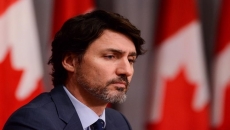
In a call with provincial and territorial leaders, Prime Minister Justin Trudeau made it clear Thursday that the next exemption would apply only to U.S. citizens and permanent residents who are fully vaccinated. He offered no clues as to how would-be travellers would prove it.
"The prime minister noted that, if our current positive path of vaccination rate and public health conditions continue, Canada would be in a position to welcome fully vaccinated travellers from all countries by early September," Trudeau's office said in a readout of the call.
"He noted the ongoing discussions with the United States on reopening plans, and indicated that we could expect to start allowing fully vaccinated U.S. citizens and permanent residents into Canada as of mid-August for non-essential travel."
The White House has been clear it has no plans to introduce any sort of national vaccination credential, prompting questions about how all of this is going to work.
"We'll continue to put public health first," said Jeff Zeints, the co-ordinator of the White House's COVID-19 response, when asked Friday when international travel might resume.
"Any decision about opening international travel will be guided by our public health and medical experts. And they'll be looking at many metrics, including case rates, vaccination rates, and the prevalence of any variants, including the Delta variant."
Rep. Brian Higgins, the New York congressman who has been leading the charge for months in urging the two countries to ease the travel limits, was buoyant Friday about Trudeau's comments.
But he said the Biden administration now needs to rethink its own position on the issue of vaccine credentials, since it appears such a system will be "essential" in order for international travel to be allowed to resume — at least where Canada is concerned.
"This is a public health crisis. This is a virus that is highly contagious, and highly lethal, and we have been reminded of this every single day for the past 16 months," Higgins said in an interview.
"A verification system is just common sense at a time of crisis. And those people who have done the right thing, either by themselves, by their family, by their neighbours or by their binational neighbours, that should be acknowledged, that should be recognized, and it should be celebrated."
Interestingly, the distribution of people in the U.S. who have embraced the COVID-19 vaccines versus those who remain hesitant appears to break down along starkly political lines.
Vaccination rates are highest in traditionally Democratic strongholds — places like Vermont, Massachusetts, Connecticut and D.C. — and lowest in predominantly Trump-friendly Republican states like Mississippi, Alabama, Wyoming and North Dakota.
About 80 per cent of eligible Canadians have received at least one dose of a vaccine, and about 54 per cent are fully vaccinated. In the U.S., the rates are just 65 per cent and 56 per cent, respectively, for Americans over the age of 12.
"The data speaks for itself: 99.5 per cent of people who are in hospitals because of COVID are unvaccinated," White House press secretary Jen Psaki said Friday. "It is important for people to understand that the vaccine is safe, it will protect them, and it is as simple as that."
President Joe Biden is scheduled to get an update in the coming days from the various working groups that are exploring the question of when and how to resume international travel, she added.
"We'll continue to put public health first," Psaki said. "We must be vigilant, particularly about the spread of variants, and we'll reopen when health and medical experts expect it is safe to do so."
The mutual travel restrictions at the Canada-U.S. border, in place since March 2020, are due for renewal on Wednesday. The readout also noted that the group discussed working together on vaccine credentials and a system to allow Canadians "to travel internationally with confidence."
For some, however, the resumption of travel can't come soon enough.
"We are very close to losing the entire summer travel season," said Mike McNaney, president and CEO of the National Airlines Council of Canada.
"We look forward to urgent engagement with the federal government over the coming days and the release of a detailed action plan."
.jpg "Tiff Macklem new Bank of Canada governor")