Canada is on the cusp of hitting its first national vaccination target, but chief public health officer Dr. Theresa Tam says the Delta variant of the virus that causes COVID-19 might mean the country has to up its vaccine game again.
Federal modelling done in April and May suggested that if 75 per cent of eligible Canadians — those 12 years old and above — had at least one dose of a COVID-19 vaccine, and 20 per cent had two, provinces could safely begin easing restrictions on public movement without overwhelming hospitals again.
When 75 per cent of eligible people are fully vaccinated, the modelling suggested personal measures like physical distancing and wearing masks could also begin to loosen.
Tam says the variants used to develop those models didn't include Delta, which is the most infectious one tracked in Canada to date, believed to cause more severe illness, and is expected to become the dominant variant circling.
"If we model the Delta variant now and put that into that model ... it does mean that even higher vaccination coverage would be even better at protection against the hospitalizations and overwhelming the health system," said Tam.
Delta was first identified in India last fall, but was only designated a variant of concern by the World Health Organization in mid-May.
She says knowing that one dose is proving to be less effective against Delta, but that two doses are doing very well, it is more important than ever to aim for full vaccination as quickly as possible.
"Should we aim for higher," she asked. "Yes, I think we should. As I said, shoot for higher, shoot for gold, shoot for the stars. That gives us a better buffer for managing the COVID-19 situation."
Canada is set to reach part of the first target — 75 per cent of eligible people having their first dose — sometime in the next 24 hours, and 20 per cent with both doses likely by Sunday.
No province has crossed both thresholds yet, though most have already started to loosen restrictions.
Ontario, which reported fewer than 300 cases Tuesday for the first time since early September, moved out of almost three months of lockdown June 11 but with very limited changes. That includes patio dining but not in-person, non-essential retail can reopen at 15 per cent capacity, and private outdoor gatherings went from a maximum of five people to 10.
Quebec, which reported fewer than 200 cases for the ninth day in a row Tuesday, is now allowing small, indoor private gatherings everywhere, and allowing bars to open indoors at half capacity.
Quebec, British Columbia and New Brunswick are the only provinces already above the 75 per cent marker for first doses among eligible people.
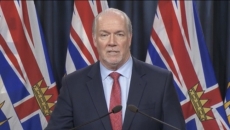
British Columbia, one of three provinces already above 75 per cent with one dose, moved another step in reopening Tuesday, allowing indoor venues like movie theatres and banquet halls to reopen with up to 50 people, as well as indoor religious services and high-intensity indoor fitness classes.
Alberta, which is one of two provinces where at least 20 per cent of eligible people are fully vaccinated, opened indoor venues like movie theatres and libraries last week. It is the only province not yet above 70 per cent with first doses, but is almost there.
Tam said the variant should be making everyone more cautious about easing restrictions until at least 75 per cent of eligible Canadians are fully vaccinated.
"I am providing a word of caution that between now and those goalposts, we have to be as careful as we can," she said.
She said cautious, staged reopenings, which leave lots of room to monitor an increase in case counts and detect surges of variants like Delta, will be critical.
Data on the Delta variant remains somewhat elusive. Health Canada officials said two weeks ago it would be included on the national website tracking variants of concern, but it still isn't there.
Delta is a subtype of the variant first known as B.1.617. As of June 2, Health Canada said 926 cases of B.1.617 and its two subtypes had been confirmed. It hasn't yet provided an updated figure.
There should be enough vaccine delivered to Canada get two doses to 75 per cent of eligible Canadians by mid-July, even though Procurement Minister Anita Anand said Pfizer informed her Tuesday its first two shipments in July will be smaller than planned.
Anand said the company will still ship 9.1 million doses of the Pfizer-BioNTech vaccine in July, but most of them won't come until closer to the end of the month.