Despite Canada's recent landmark deal with China on reducing canola tariffs, new research shows the major Prairie crop remains a vulnerable export.
The analysis from The Simpson Centre for Food and Agricultural Policy at the University of Calgary says canola is overreliant on two major markets: China and the United States.
Both countries absorb nearly 90 per cent of Canadian canola exports worth billions of dollars, and options are limited to send the crop elsewhere, the research paper says.
"We don't want to have the same market concentration and keep the sector vulnerable to retaliatory tariffs or trade policy changes," lead researcher Farzana Shirin said in an interview Monday.
The paper, released earlier this month, comes as Canada recalibrates its trading relationship with China.
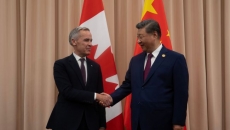
Last week, Prime Minister Mark Carney made a deal that will see China significantly reduce tariffs on Canadian canola seed — and at least temporarily remove tariffs on canola meal — in exchange for Ottawa making concessions on Chinese electric vehicle duties.
While Shirin said the agreement is welcome, canola still suffers from what she calls underlying structural vulnerabilities.
"You can't just pick a market and decide to go for that as other barriers are in place," said Shirin, an agricultural economist at the university.
The research paper identified various problems that prevent additional canola from being exported to other nations.
It says the European Union has restrictions on genetically modified products, essentially shutting out Canadian canola. Most of the crop grown in Canada is genetically modified.
The paper also says other countries have limited infrastructure to crush the crop into oil, which prevents their ability to process canola seed at a larger scale.
In Canada, transportation bottlenecks have made it difficult for Canadian companies to handle increased volumes of processed oil, it says.
Shirin said Canada's export facilities are primarily designed for seeds, not oil. The infrastructure will need to be upgraded if Canada wants to diversify its canola exports and tap into the growing biofuel market, she added.
Shirin said Canada should be able to get around Europe's genetically modified standards if the oil is used for biofuel.
"That's one new market that also aligns with the push for domestic capacity building and production of oil, as opposed to focusing on the seed and seed exports," she said.
The report says the U.S. is Canada's biggest consumer of canola oil, followed by Mexico and China. As for seed, China is the biggest importer, followed by Japan and Mexico.
Along with better export infrastructure, Canada should also build more canola crushers, Shirin said. However, she noted some planned crushing facilities — all in Saskatchewan — have either been cancelled or delayed due to higher costs and economic uncertainty.
Rick White, president of the Canadian Canola Growers Association, said in a recent interview that Canada needs to streamline regulations so more canola seed can be used for domestic biofuels.
White said Canada's existing biofuels capacity is not using as much Canadian canola as it could.
"We have to be a little more selfish and not be importing other stuff instead of canola," he said.
Picture Courtesy: THE CANADIAN PRESS/Jeff McIntosh