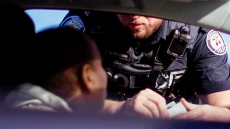
VANCOUVER — Police across Canada will be testing three saliva-based roadside devices on suspected drug-impaired drivers after a team of scientists studied how they detect the presence of drugs such as marijuana.
Doug Beirness, vice-chairman of the Drugs and Driving Committee within the professional organization of The Canadian Society of Forensic Science, said the Mounties and the Ontario government funded their research, which was completed last year.
"What we were interested in was can you use oral fluid screening at the side of the road to assess recent drug use? The answer to that was yes."
Beirness said two of the drug-detecting devices, the Draeger Drug Test and the Drugwipe, are manufactured in Germany and the other is called the Alere, which is made in Britain.
The next step, before any of the devices can be approved in Canada, is for police officers to test them in the field in various jurisdictions, said Beirness, adding that a representative from the Justice Department attends their committee meetings.
The RCMP confirmed Thursday that its plans involve testing so-called oral fluid drug screening devices, which are similar to breathalyzers used to detect the presence of alcohol.
"Such devices can aid in the identification and apprehension of drug-impaired drivers and are becoming increasingly commercially available and are currently being used in other countries," the force said in a statement.
"The research project will help determine if roadside oral fluid drug screening devices have potential for use in drug-impaired driving enforcement in Canada. Legislative changes will have to take place before such devices can be approved for use in Canada."

The Mounties said surveys and research suggest drug-impaired driving is becoming as prevalent as driving under the influence of alcohol.
Officers using the device at the roadside would ask drivers to stick out their tongues as a sample of saliva is taken with an instrument similar to a tongue depressor.
Beirness, who co-authored a 2015 report on cannabis use and driving for the Canadian Centre on Substance Abuse, said the devices would help provide police with evidence that could lead to convictions.
Currently, police who suspect drug-impaired driving use a standard sobriety test that includes looking at a driver's eyes and asking the person to walk and turn and stand on one leg.
Suspected drivers can also be examined by a specially trained police officer called a drug recognition expert and be given a blood test.
A drug-screening device would be another tool in an officer's arsenal, with saliva test results available in about five minutes, Beirness said.
"It's an objective measurement, and they can take that and say, 'Aha, you are over the limit, now you're going downtown,'" Beirness said.
"We know from studies that have been done, both roadside surveys, studies in hospitals and studies of fatalities that cannabis is involved in a larger proportion of crashes. If we're going to enforce the law we have to have everything at our disposal to help us do that."
At least two other devices developed in Canada to detect THC, the main psychoactive ingredient in pot, test a suspected driver's breath, the same as breathalyzers for alcohol, but neither has been tested by police.
Abe Verghis, spokesman for Alcohol Countermeasure Systems Corp., in Toronto, said the company distributes the German-made Drugwipe, which is among the three devices to be tested by police.
"What we're pushing for is, have roadside saliva testing administered," he said. "This technology's been around for decades. It's been used in Europe for around 10 years and it's worked well. It's been used in Australia as well. They're well ahead of where Canada is."
Verghis said the Drugwipe is already being used in a pilot project by police in Colorado.