A woman wearing a fabric mask on her face walks in downtown Vancouver, on Thursday, April 16, 2020. Infectious disease experts say provinces looking to relax restrictions related to COVID-19 need to consider their neighbours in those decisions. THE CANADIAN PRESS/Darryl Dyck DD A woman wearing a fabric mask on her face walks in downtown Vancouver, on Thursday, April 16, 2020. Infectious disease experts say provinces looking to relax restrictions related to COVID-19 need to consider their neighbours in those decisions. THE CANADIAN PRESS/Darryl Dyck DD
Infectious disease experts say provinces looking to relax restrictions related to COVID-19 need to consider their neighbours.
Prince Edward Island, where the caseload is low, is aiming to ease measures put in place to slow the spread in late April and reopen businesses in mid-May.
The Saskatchewan government is to outline a plan Thursday for how some businesses and services could be allowed to resume next month if the number of cases stays low.
Dr. Craig Jenne, an infectious disease researcher at the University of Calgary, said easing restrictions in one province could present challenges for others.
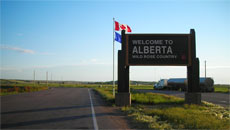
"Many provinces in Canada have no hard borders," he said in an interview with The Canadian Press. "Alberta, Saskatchewan, Manitoba — we are not exactly islands where we can cut off travel between provinces.
"We are going to have to make sure we're on the same page with this."
As of Wednesday, Saskatchewan had recorded 326 cases, including four deaths, but less than 20 per cent of cases were considered active.
The province's chief medical health officer has said any easing of restrictions would have to be done carefully.
Next door, in Alberta, there are more than 3,000 cases, including 66 deaths.
Dr. Stephanie Smith, an associate professor in infectious diseases at the University of Alberta, said it may make sense for provinces with a low number of cases to consider letting up on COVID measures.
"When they do that, the most important thing is that they still have an ability to identify new cases and new contact tracing," she said. "(They need) really robust testing and tracing so that you can identify any new patients and make sure they are actually self-isolating.
"It's important in terms of ensuring you don't get into an uncontrolled situation again."
Jenne added that outbreaks in High River, Alta., and several long-term care homes show how quickly a situation can change once the novel coronavirus starts spreading.
"As soon as we let our vigilance down in screening and isolation ... we will see a spike back in Canadian communities, we will see an increase in cases, we will see an increase in hospitalizations and, unfortunately, we will see an increase in deaths once these hotspots start popping up."
For example, an outbreak at Imperial Oil's Kearl oilsands project in northeastern Alberta has been linked to cases in Saskatchewan, British Columbia, New Brunswick and Nova Scotia.
"This virus does not travel in the air," said Jenne. "It travels on people and the more people move between provincial borders and even within their own community, this is how this virus gets around."
Jenne and Smith said that's why social distancing has been so effective in reducing the number of cases in Canada.
Each province and territory has different approaches for how to limit the spread of COVID-19.
Manitoba has set up checkstops on major highways to help inform travellers about public health measures in place.
Some jurisdictions such as New Brunswick and the northern territories have restricted non-residents from entering or require anyone who comes into the province to self-isolate for up to 14 days.
Valorie Crooks, a geographer who specializes in health services research at Simon Fraser University, said it would be difficult to control movement across provincial boundaries.
"It raises a whole lot of questions about how you enforce and what kinds of abilities you have to enforce measures you put in place," she said.
Crooks added that it would be easier to protect populations in the North or on Canada's islands, but it's simply not practical to patrol every road between provinces.
Both infectious disease experts said closing the border with the United States has been an effective tool, but Jenne noted it's not a perfect solution.
"It has to be done in concert with everything else, including high levels of screening, contract tracing and self-isolation within communities," said the professor.
"Closing a border alone is really a false sense of security if it's not coupled with enhanced measures."
This report by The Canadian Press was first published April 23, 2020