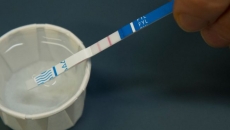
As a rare strain of Ebola virus continues to spread in the Democratic Republic of Congo and Uganda, here's what Canadians need to know.
ARE THERE DIFFERENT TYPES OF EBOLA?
Yes. There are a few strains of viruses that cause Ebola disease. The most common are the Ebola virus, also called the Zaire strain, and Sudan virus, said Dr. Isaac Bogoch, an infectious diseases specialist at the University Health Network in Toronto.
The type of Ebola causing the outbreak that's happening right now is called the Bundibugyo virus.
"Most outbreaks associated with Ebola virus have been with the Zaire strain of Ebola virus. And that's where most of the research has been focusing on vaccinations and therapeutics," Bogoch said, noting that Canada's National Microbiology Lab helped pioneer the first Ebola virus vaccine.
But one of the troubling things about the Bundibugyo outbreak is that there are no therapeutics or vaccines proven to work on that strain, he said.
WHAT ARE THE SYMPTOMS?
Symptoms are similar for all strains of Ebola and can start with fever, fatigue, muscle pain, headache and sore throat, according to the World Health Organization.
That can progress to vomiting, diarrhea, abdominal pain, rash and impairment of kidney and liver function.
Internal and external bleeding, including blood in the gums or in stool, can also happen, but not as often as other symptoms.
"There's a perception, I think, that bleeding is a common symptom, but that is actually less frequent and really occurs at that late stage (of disease)," said Meaghan Thumath, an assistant professor of public health and emergencies at the University of British Columbia who worked with the World Health Organization during another Ebola outbreak in the Democratic Republic of Congo in 2019.
One of the challenges in diagnosing Ebola is that several of the symptoms also happen in other infectious diseases such as malaria, typhoid fever and meningitis, so diagnostic testing is vital.
HOW DOES EBOLA SPREAD?
The incubation period for Ebola is two to 21 days. People with Ebola are not contagious until they have symptoms, said Trish Newport, a Canadian who works as an emergency manager for Doctors Without Borders.
Ebola virus is spread through contact with bodily fluids.
"People with Ebola get very sick. So it can be in the vomit, diarrhea, blood (and) respiratory secretions," Bogoch said.
"The people who tend to get infected with Ebola virus sadly are family members of infected individuals who are directly caring for a close contact (or) health-care providers who either don't have access to appropriate PPE (personal protective equipment) or are not using their PPE appropriately if there's a breach," he said.
Ebola can also be spread when burying people who have died from the virus if loved ones touch the body without proper precautions.
HOW IS EBOLA TREATED?
Monoclonal antibodies that help the body fight off disease can treat the Zaire strain, Bogoch said, but have not been proven to work in people infected with the Bundibugyo strain.
There are also vaccines that can be given to someone exposed to the Zaire strain to either head off infection or at least reduce the severity of illness — but again, those haven't been tested with Bundibugyo.
"The mainstay of treatment is supportive care," Bogoch said.
"That means you need a good hospital, you need good medical management, you need fluid and electrolyte replenishment because sadly, one of the features of Ebola virus is terrible nausea, vomiting, diarrhea, organ dysfunction, and occasionally hemorrhage. And you just need to replace the fluids and electrolytes meticulously ... over a prolonged period of time."
IS THERE A VACCINE IN THE WORKS FOR BUNDIBUGYO EBOLA VIRUS?
GAVI, the Vaccine Alliance and other partners are working to assess ways to accelerate development of candidate vaccines that are in the research and development phase — but it could be months before doses are ready for clinical trials.
GAVI funds the stockpile of Ebola vaccines currently licensed for use against Zaire Ebola and said in a news release that there are "currently no licensed vaccines for BVD (Bundibugyo virus disease)."
"Considering the extremely limited available evidence on cross-protection against non-Zaire species, any decision to use this vaccine in the current BVD outbreak will require further assessments and will occur in accordance with WHO guidance," the news release issued Thursday said.
"(It could be used) only with the explicit informed consent and understanding of affected communities that the benefit of the vaccine against BVD is currently unknown."
IF THERE WERE AN EBOLA CASE IN CANADA, WOULD WE BE READY?
There has never been an Ebola case in Canada.
On Wednesday, Ontario's health ministry said it was testing someone who had recently returned from East Africa "out of an abundance of caution."
Officials did not disclose which type of Ebola the patient in Ontario was being tested for, or where in the region they travelled to.
A spokesperson for the Public Health Agency of Canada said samples from the test were expected to arrive Thursday at the National Microbiology Laboratory in Winnipeg.
If there was a case of Ebola in Canada, both Bogoch and Thumath said the country's public health and hospital systems would be well-equipped to handle it.
But one of the most important ways for Canadians to protect themselves from Ebola is to invest in stopping its spread elsewhere, they said.
"The longer outbreaks last and the larger they get, the higher the probability there is for international dissemination," Bogoch said.
"The risk is small. But it's not zero per cent and the longer this goes and the larger this gets, the risk goes up."
Thumath said global outbreaks matter, no matter where in the world we live.
"As we know, infectious diseases don't respect borders," she said.
"In North America, I think there's a perception like, 'oh, these (outbreaks) only happen over there,' but rapid containment is so crucial for global health security. And so the best thing we can do is to share our experts, to share our resources, and make sure it's contained."