Tuesday, April 21, 2026
ADVT 
National

Eby called changes to Indigenous law 'non-negotiable,' but series of backdowns ensued

Darpan News Desk The Canadian Press, 20 Apr, 2026 06:32 PM
  • Eby called changes to Indigenous law 'non-negotiable,' but series of backdowns ensued

The British Columbia government's efforts to mitigate the impact of the Declaration on the Rights of Indigenous Peoples Act has resulted in a series of climbdowns in the face of opposition from First Nations.

Here's how it has played out:

Nov. 28, 2019: The Declaration on the Rights of Indigenous Peoples Act, known as DRIPA, is unanimously adopted by the B.C. legislature. It is intended to reflect the United Nations Declaration on the Rights of Indigenous Peoples, which says governments should obtain "free, prior and informed consent" from Indigenous peoples on legislation that affects them.

Nov. 23, 2021: Then-attorney general David Eby introduces changes to the Interpretation Act, which governs how legislation is implemented in B.C. The changes say "every act and regulation must be construed as being consistent with the declaration (DRIPA)."

Dec. 5, 2025: The B.C. Court of Appeal issues a ruling on the so-called Gitxaala mineral rights case. It says B.C.’s mineral claims regime is inconsistent with UNDRIP, and that DRIPA must be "properly interpreted" to incorporate UNDRIP into B.C.'s laws "with immediate legal effect."

Jan. 20, 2026: Eby says DRIPA needs to be amended in light of the Gitxaala ruling, saying it has created confusion about the declaration act. First Nations leaders later reject the idea of any changes to the act.

April 1: Eby says amending DRIPA in light of the Gitxaala ruling is "non-negotiable," and that the province faces significant legal liabilities if it is not changed.

April 2: The government changes course, dropping the plan to amend DRIPA in favour of a three-year suspension of its key elements, in order to give the Supreme Court of Canada time to rule on the government's appeal of the Gitxaala case. First Nations meet Eby and accuse him of "absolute betrayal" and colonialism. Eby says the suspension bill will be a confidence vote, meaning his government, which has a one-seat majority, falls if it fails.

April 8: Eby says the three Indigenous legislators in the NDP caucus will support the DRIPA suspension.

April 10: Grand Chief Stewart Phillip says his wife, MLA Joan Phillip, doesn't support the suspension bill.

April 13: The government drops plans to imminently table the suspension act and says that when it is tabled — some time during the current legislative session — it will not be a confidence vote.

April 19: First Nations leadership sources say the government plans to table the suspension bill on April 20. They vow to protest and urge MLAs to reject it. Hours later, the government backs down again and announces the suspension bill will not be tabled in the current legislative session. Eby meets First Nations leaders and a leaked document shows the government is now proposing to work with First Nations on how to implement DRIPA.

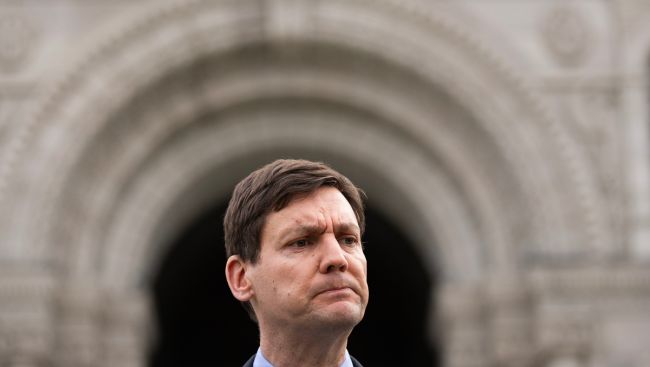
Picture Courtesy: THE CANADIAN PRESS/Chad Hipolito
MORE National ARTICLES

Alberta's governing UCP to revisit proposed riding changes before next election

Alberta's governing UCP to revisit proposed riding changes before next election
Alberta's governing United Conservatives are looking to take another run at redrawing provincial riding boundaries – a move the Opposition NDP calls a cynical backdoor scheme to rig the October 2027 general election.

Alberta's governing UCP to revisit proposed riding changes before next election

In a B.C. industrial zone, a new link forged in Canada's crucial lithium supply chain

In a B.C. industrial zone, a new link forged in Canada's crucial lithium supply chain
Nestled in a series of unassuming industrial buildings in Delta, B.C., among companies specializing in plumbing supplies, ladders and fitness equipment, sits North America's first electrochemical lithium refining facility.

In a B.C. industrial zone, a new link forged in Canada's crucial lithium supply chain

B.C. tables another First Nation treaty ratification, but overlap concerns persist

B.C. tables another First Nation treaty ratification, but overlap concerns persist
The Kitselas First Nation in northwestern B.C. has reached a major milestone in its treaty process as the province tabled legislation to ratify the agreement, in the second such achievement for a First Nation in as many days.

B.C. tables another First Nation treaty ratification, but overlap concerns persist

Canadian astronaut Jeremy Hansen and NASA crewmates to hold news conference

Canadian astronaut Jeremy Hansen and NASA crewmates to hold news conference
Canadian astronaut Jeremy Hansen and his NASA crewmates are set to take part in a news conference on Thursday after the historic Artemis II lunar mission.

Canadian astronaut Jeremy Hansen and NASA crewmates to hold news conference

U.S. leads interest by wide margin in getting Canadian citizenship by descent

U.S. leads interest by wide margin in getting Canadian citizenship by descent
A new law expanding eligibility for Canadian citizenship led to an initial uptick in applications from a handful of countries including the United States, the United Kingdom and Mexico.

U.S. leads interest by wide margin in getting Canadian citizenship by descent

Rehana Din Appointed President and CEO of PavCo, Succeeding Ken Cretney

Rehana Din Appointed President and CEO of PavCo, Succeeding Ken Cretney
The BC Pavilion Corporation (PavCo) has announced the appointment of Rehana Din as its new President and Chief Executive Officer, effective May 9, 2026. She will succeed longtime CEO Ken Cretney, who is set to retire on May 8 after 18 years with the organization, including 12 years at the helm.

Rehana Din Appointed President and CEO of PavCo, Succeeding Ken Cretney