Friday, December 19, 2025
ADVT 
National

Economy shrunk 0.2% in February, StatCan estimates 1.5% annualized growth for Q1

Darpan News Desk The Canadian Press, 30 Apr, 2025 11:12 AM
  • Economy shrunk 0.2% in February, StatCan estimates 1.5% annualized growth for Q1

The Canadian economy shrunk in February, but economists say bad weather was likely the larger culprit than uncertainty related to the trade war with the U.S.

Statistics Canada said Wednesday that real gross domestic product decreased 0.2 per cent in February after the economygrew 0.4 per cent in the first month of 2025. It also said that early signs suggest there was moderate growth in March.

The contraction was driven by a 0.6 per cent decline forgoods-producing industries, as the mining, quarrying, and oil and gas extraction sector, along with construction, contributed most to the decrease.

Following two consecutive monthly increases, the former was down 2.5 per cent and became the largest detractor from growth. Construction, which was down half a percentage point, fell for the first time in four months.

Services-producing industries edged 0.1 per cent lower inFebruary as contractions in transportation and warehousing, along with real estate, rental and leasing, were partially offset by a rise in finance and insurance.

CIBC economist Andrew Grantham called February's decline unexpected, but said it was likely driven more by harsh weather than tariff uncertainty, as poor winter conditions hurt sectors such as mining, oil and gas, transportation and real estate.

StatCan said transportation and warehousing declined 1.1 per cent in February after two straight monthly gains, as the sector was hurt by major snowstorms that hit Central and Eastern Canada and storms passing through B.C.

Transit, ground passenger, scenic and sightseeing transportation fell 3.4 per cent in the month, while rail transportation was down 5.6 per cent amid commuter train cancellations and capacity and speed reductions by rail carriers.

Meanwhile, manufacturing was a "bright spot," said Desjardins managing director Royce Mendes, noting that activity may have picked up "as a result of increased demand from U.S. buyers trying to get ahead of tariffs."

The manufacturing sector rose 0.6 per cent in February, increasing for the second month in a row, largely driven by durable-goods manufacturing industries. Machinery manufacturing grew 5.9 per cent and contributed most to the increase in that category.

StatCan's early estimates indicate real GDP increased 0.1 per cent in March amid gains in mining, quarrying, and oil and gas extraction, retail trade and transportation and warehousing.

The agency said the annualized growth rate for the first quarter based on the March flash estimate is 1.5 per cent.

"Adding it up, the overall Q1 growth rate was a snick below the (Bank of Canada's) estimate, but in line with our call, so no major drama here," said BMO Capital Markets chief economist Douglas Porter in a note.

"The real drama now begins, with the tariffs much more of an issue in Q2, and the U.S. economy also now facing much heavier weather of its own. We would be surprised if GDP manages to grow in Q2."

Michael Davenport, senior economist at Oxford Economics, added the global trade war is expected to push Canada's economy into a recession beginning in the second quarter.

"The Liberal election win means significant new fiscal stimulus is on the way, but it won't begin to support the economy until (the second half of the year), and we don't think it will be enough to prevent a downturn," he said.

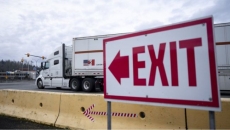
Picture Courtesy: THE CANADIAN PRESS/Sean Kilpatrick

MORE National ARTICLES

Shots over the bow: Why provinces are using liquor leverage in trade war with U.S.

Shots over the bow: Why provinces are using liquor leverage in trade war with U.S.
What they all have in common is the "currently unavailable" designation, having been yanked from sale by British Columbia's government in retaliation for U.S. President Donald Trump's tariffs on Canadian imports. Calling time on U.S. alcohol has been a popular move among Canadian provincial and territorial governments looking for ways to fight back in the trade war. 

Shots over the bow: Why provinces are using liquor leverage in trade war with U.S.

Trudeau aiming to secure extension to 2031 for signature $10-a-day child-care program

Trudeau aiming to secure extension to 2031 for signature $10-a-day child-care program
The federal government is trying to secure extensions through to 2031 for its national $10-a-day child-care program ahead of an expected election. Prime Minister Justin Trudeau announced today that 11 provinces and territories have agreed to extend the deals that give those jurisdictions billions of dollars to cut child-care fees for families.

Trudeau aiming to secure extension to 2031 for signature $10-a-day child-care program

Truckers scramble for new routes as tariffs bring shipments to a halt

Truckers scramble for new routes as tariffs bring shipments to a halt
Trucking companies are halting shipments, mulling layoffs and scrambling for new routes as tariffs wreak havoc on cross-border trade. The lead-up to U.S. President Donald Trump's sweeping 25 per cent tariff on Canadian imports as well as retaliatory duties from Canada that took effect Tuesday prompted a surge in deliveries over the past two months as shippers raced to beat the deadline.

Truckers scramble for new routes as tariffs bring shipments to a halt

Here's the latest as the U.S. imposes tariffs on goods from Canada and Mexico

Here's the latest as the U.S. imposes tariffs on goods from Canada and Mexico
U.S. President Donald Trump has imposed tariffs on imports from Canada and Mexico — a 25 per cent across-the-board levy, with a lower 10 per cent charge on Canadian energy — triggering a continental trade war. Here is the latest news (all times eastern):

Here's the latest as the U.S. imposes tariffs on goods from Canada and Mexico

Trump announces one-month pause on Mexican tariffs, no move on Canada

Trump announces one-month pause on Mexican tariffs, no move on Canada
U.S. President Donald Trump says Mexico will get a one-month pause on tariffs for imports under the Canada-U.S.-Mexico Agreement on trade. In a social media post, Trump says he made the decision after speaking with Mexican President Claudia Sheinbaum today, adding Mexico has worked with the U.S. on border security.

Trump announces one-month pause on Mexican tariffs, no move on Canada

B.C. signs $670-million pharmacare agreement with federal government

B.C. signs $670-million pharmacare agreement with federal government
The British Columbia and federal governments have signed a four-year, $670-million pharmacare agreement, giving universal access to contraceptive and diabetes medications. The plan will support nearly 550,000 B.C. residents with diabetes and provide 1.3 million people with a range of contraceptives.

B.C. signs $670-million pharmacare agreement with federal government