Some doctors and bioethicists are raising concerns about a Toronto hospital's partnership with a company founded by U.S. billionaire Elon Musk.
University Health Network announced earlier this month that two quadriplegic Canadian patients had received Musk’s Neuralink brain implants as part of a study testing the safety and effectiveness of the wireless device.
While critics see virtue in the clinical trial's goals of giving autonomy to people who are paralyzed, they object to a Canadian hospital working with a Musk-owned company in the wake of devastating cuts to life-saving health programs, which he spearheaded. Other ethicists say if this technology could improve the lives of patients, that should be prioritized.
Dr. Raghu Venugopal, an emergency physician at University Health Network, posted on social media earlier this month that “Canadian MDs should never collaborate with Elon Musk.”
He said Musk “destroyed” the U.S. government’s foreign aid funding, which a recent study in The Lancet medical journal estimated could result in 14 million deaths over the next five years.
For several months earlier this year, Musk headed the U.S. government's efforts to slash spending that included ending most of the government's foreign aid through USAID, which runs a wide range of programs, such as distributing HIV medication, vaccinating people against polio and working to eliminate malaria.
The Lancet research estimated USAID programs saved over 90 million lives over the past two decades.
University of Toronto bioethicist Kerry Bowman said he would argue Musk’s "profoundly destructive” role in setting back these major strides in global health-care access should have been a consideration in this partnership, and that it makes him "very uncomfortable and concerned ethically."
The tension of public-private partnerships is not new, but the divisive nature of U.S. politics has added another layer of complexity. Recently, Ontario Premier Doug Ford cancelled a partnership with Musk’s internet provider Starlink because of U.S. tariffs on Canadian goods.
University Health Network executive vice president of science and research Brad Wouters said he recognizes the "complexities" of partnering with Musk in the wake of his involvement in cuts to global health funding and said that Neuralink selected UHN for the CAN-PRIME study beforehand.
“We determined that it is in the best interest of patients and science to participate in this collaboration,” Wouters said in a statement Monday.
“After careful consideration and approval of the study protocol by regulatory bodies, we determined that participating in this trial aligns with our responsibility to pursue the next frontier in care for patients with limited options.”
University Health Network is the first site outside of the United States to test Neuralink's brain implant with permission to recruit six participants who have either been paralyzed by a spinal cord injury or who have Amyotrophic Lateral Sclerosis (ALS).
Ultra-thin electrode threads were implanted into the brains of two Canadian patients and within minutes, they were able to translate neural signals into actions, controlling a computer cursor with their thoughts, the lead neurosurgeon said after the procedures on Aug. 27 and Sept. 3 at Toronto Western Hospital.
Wouters said the hospital network complies with ethical standards set by independent research ethics boards and Health Canada for all clinical trials.
Despite these regulatory green lights, Bowman said he is also concerned about the U.S. company’s lack of transparency about its medical research. He said Neuralink acts more as a corporation, posting videos and testimonials on its website instead of information on its results and failures.
He said he could not find information on the risks of the invasive procedure, such as what happens if the device degrades or gets infected, or how they obtain consent and select participants, which he said is usually easy to look up for a clinical trial. Bowman said he could only find a medical journal article authored by Elon Musk in 2019.
Neuralink did not respond to a request for comment.
“What happens is the private enterprise, and not all of them maybe, but it really pulls you outside of the normal medical sphere. There's layers of concern with this,” Bowman said.
The first person to receive a Neuralink brain implant in the United States last year has said publicly that the device started slipping out of his brain weeks after the surgery, but that he's since stabilized and that it has still been worthwhile.
Bowman said there are other biotech companies conducting clinical trials on brain-computer interface (BCI) devices, aiming to allow people with quadriplegia to control external devices with their thoughts, and questions why UHN wouldn't consider working with them. New-York based Synchron and China's Neuracle Neuroscience have clinical trials underway.
UHN did not say whether it considered working with other companies, but said that Neuralink approached the hospital network because of its leadership in neurosurgery and biomedical research.
Neuroethics Canada director Judy Illes said Musk politics should not have any bearing on the clinical trial. While she said the global health cuts are troubling, they should be “compartmentalized” from Neuralink’s research in Canada.
“One has specifically to do with research ethics and clinical trials, and the other has to do with global health policy,” Illes, a University of British Columbia neurology professor, said.
“Otherwise, to use the old metaphor, we might be throwing the baby out with the bath water,” she said.
Ethicist Arthur Schafer said the debate ultimately boils down to doctors’ Hippocratic Oath to protect their patients and prevent harm.
“If the technology turns out to be safe and effective, then doctors should not hesitate to give patients access to the technology despite the fact that the founder and major shareholder of Neuralink is the odious Elon Musk,” said Schafer, founding director of the Centre for Professional and Applied Ethics at the University of Manitoba.
But if there are other companies at the same stage of development as Neuralink that would have the same results for patients, Schafer said it would be fair to consider Musk’s involvement.
“I think it it is possible for a physician to indulge his or her ethical reservations about Mr. Musk and his role in slashing public health and in cutting back, causing potentially millions of deaths, helping to destroy USAID – if it would be in no way disadvantageous to one's patients,” Schafer said.
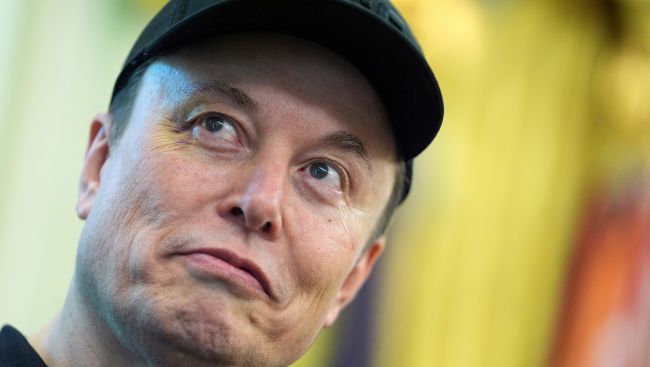
Picture Courtesy: AP Photo/Evan Vucci