Friday, June 26, 2026
ADVT 
National

Evacuation orders due to B.C. wildfires drop

Darpan News Desk The Canadian Press, 01 Sep, 2021 12:36 PM
  • Evacuation orders due to B.C. wildfires drop

The number of wildfires burning in British Columbia has remained steady in the range of 225 as the number of properties on evacuation order and on alert dropped in the latest statistics released by the provincial government.

Emergency Management BC says 18 evacuation orders covered 3,537 properties as of Tuesday evening, a drop of 217 from the day before.

Residents of another 6,051 properties were told to be ready to leave on short notice as 68 evacuation alerts remained in place, down by 22 from Monday.

Updates posted online by the BC Wildfire Service show cooler temperatures and higher relative humidity have helped firefighting crews across much of the province.

The service says 15 fires of note were either highly visible or posed a potential threat to public safety, though it has reported little or no growth at several major fires in recent days, including the destructive Lytton Creek and White Rock Lake blazes.

The emergency operations centre for the central Okanagan says assessments of neighbourhoods directly affected by the 830-square-kilometre White Rock Lake fire along the western banks of Okanagan Lake should be complete by Thursday.

It says preliminary assessments have confirmed that 78 properties in the Estamont and Killiney Beach areas sustained significant damage, in addition to properties destroyed in the community of Monte Lake on the fire's opposite flank.

The centre says risk assessments will determine when evacuated residents can safely return home to their properties. Not all residents will be able to return home at the same time, it adds.

The B.C. government says 1,563 wildfires have scorched 8,653 square kilometres of land since the season began on April 1, eclipsing the 10-year average.


MORE National ARTICLES

Here are some of the deadliest mass killings in recent Canadian history:

Here are some of the deadliest mass killings in recent Canadian history:
April 19, 2020: Seventeen people are killed after a man who at one point wore a police uniform and drove a mock-up cruiser travelled across northern Nova Scotia. An RCMP officer is among the dead. Police say the suspected shooter, 51-year-old Gabriel Wortman, was killed after being intercepted by officers in Enfield, N.S.

Here are some of the deadliest mass killings in recent Canadian history:

Those who knew Nova Scotia gunman shocked by rampage

Those who knew Nova Scotia gunman shocked by rampage
Neighbours and schoolmates of the man responsible for a killing rampage that left at least 19 people dead in northern Nova Scotia were attempting Monday to come to terms with the tragedy.  A 23 year member of the RCMP police force Const Heidi Stevenson was killed, a mother of two, and another officer is recovering from non life threating injuries. 

Those who knew Nova Scotia gunman shocked by rampage

COVID-19 prompts bus driver layoffs, service cuts for Metro Vancouver transit

COVID-19 prompts bus driver layoffs, service cuts for Metro Vancouver transit
There have been significant layoffs of bus drivers and deep service cuts on buses, SeaBus, SkyTrain and West Coast Express across Metro Vancouver. Nearly 1,500 bus drivers and other transit workers across Metro Vancouver are being laid off as TransLink faces plunging ridership during the COVID-19 pandemic.    

COVID-19 prompts bus driver layoffs, service cuts for Metro Vancouver transit

Demand will fuel B.C. real estate in 2021 after COVID recession: report

Demand will fuel B.C. real estate in 2021 after COVID recession: report
A report from the B.C. Real Estate Association says the 2020 COVID-driven recession will be deep, although it could be shorter than other Canadian economic downturns. The market intelligence report released Monday by the association says it expects home sales to sink 30 to 40 per cent for April 2020. 

Demand will fuel B.C. real estate in 2021 after COVID recession: report

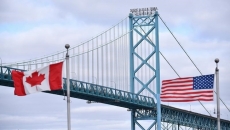
Prime Minister Justin Trudeau confirms border closure, which began on March 21 and was set to expire on Tuesday.

Prime Minister Justin Trudeau confirms border closure, which began on March 21 and was set to expire on Tuesday.
Canadian officials acknowledged some regions of the country could be closer to re-opening parts of the economy than others, but continued to stress a careful approach as the border closure with the hard-hit United States was extended for another 30 days during the COVID-19 crisis. Prime Minister Justin Trudeau confirmed the extension on Saturday for the closure restricting non-essential travel across the border, which began on March 21 and was set to expire on Tuesday.

Prime Minister Justin Trudeau confirms border closure, which began on March 21 and was set to expire on Tuesday.

Feds pledge $306M aid for Indigenous businesses suffering COVID-19 losses

Feds pledge $306M aid for Indigenous businesses suffering COVID-19 losses
Prime Minister Justin Trudeau says the government will provide $306 million in funding to help small and medium-sized Indigenous businesses suffering the economic effects of the COVID-19 pandemic. 

Feds pledge $306M aid for Indigenous businesses suffering COVID-19 losses