Monday, December 22, 2025
ADVT 
National

Event planners across Canada rethinking security practices following Vancouver attack

Darpan News Desk The Canadian Press, 30 Apr, 2025 11:26 AM
  • Event planners across Canada rethinking security practices following Vancouver attack

Event organizers across Canada say they're combing over their security practices in the wake of Saturday night's deadly attack on a Vancouver street festival, hoping to fill any gaps to protect attendees.

Politicians are also turning their attention to the issue, with British Columbia Premier David Eby saying he would call an independent commission to gather information about how other regions handle festival safety.

Eby says he wants to ensure residents of his province feel safe going out to community events this summer, despite the van attack at the Lapu Lapu Day festival that claimed 11 lives and injured dozens more.

Kelly Kurta, executive director the Greater Victoria Festival Society, says she got in touch with police and the fire department on Sunday morning to make sure there wasn't more they could do to secure the upcoming Victoria Day Parade.

She says their plans were already fairly comprehensive, but they might bring in more vehicles to barricade parade routes.

She says security can be costly: roughly 75 per cent of her budget goes to "risk management."

"You prepare, you anticipate, but nobody could have imagined what happened last Saturday," she said. "Nobody."

The tragedy's reach extends beyond the West Coast, with the CEO of industry group Festivals and Events Ontario saying he too is looking at safety issues after Saturday.

Dave MacNeil says those in the business always re-evaluate their procedures after an event is targeted.

That's mostly because they want to keep their clientele safe but also because insurers require robust security plans.

"We have to sit down and really look at it through the lens of what else could possibly happen, what could possibly go wrong. And every time something like that happens, wherever it is around the world, it always comes back to impact all of us," MacNeil said.

He said the high cost of security can make hosting large events difficult.

"Risk management is one of those things that's making it harder and harder to execute events," he said. "It's what's making them more and more expensive to execute, to insure."

Last year, the City of Toronto announced the Special Events Stabilization Initiative, a funding program meant to cover some expenses related to health, safety and security, including fire and paramedic services, and "hostile vehicle mitigation," which is a security measure meant to lower the threat of a criminal or terrorist attack.

The money was a one-time grant for organizers hosting events in an outdoor public space in 2024.

City spokeswoman Laura McQuillan pointed to that fund when asked about festival security, but didn't immediately say whether it would return in 2025.

She said that all event organizers are required to arrange a traffic management plan that includes barricades and "road closed" signs, as well as event marshals and security in those places.

"While hostile vehicle mitigation measures are not a formal requirement for every event, the City and its partners identify and assess potential threats during the event planning process, including identifying high-risk events where hostile vehicle mitigation measures should be implemented," McQuillan wrote in an email.

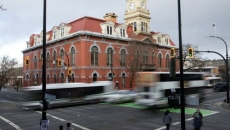
Picture Courtesy: THE CANADIAN PRESS/Sean Kilpatrick

MORE National ARTICLES

Here's the latest as the U.S. imposes tariffs on goods from Canada and Mexico

Here's the latest as the U.S. imposes tariffs on goods from Canada and Mexico
U.S. President Donald Trump has imposed tariffs on imports from Canada and Mexico — a 25 per cent across-the-board levy, with a lower 10 per cent charge on Canadian energy — triggering a continental trade war. Here is the latest news (all times eastern):

Here's the latest as the U.S. imposes tariffs on goods from Canada and Mexico

Trump announces one-month pause on Mexican tariffs, no move on Canada

Trump announces one-month pause on Mexican tariffs, no move on Canada
U.S. President Donald Trump says Mexico will get a one-month pause on tariffs for imports under the Canada-U.S.-Mexico Agreement on trade. In a social media post, Trump says he made the decision after speaking with Mexican President Claudia Sheinbaum today, adding Mexico has worked with the U.S. on border security.

Trump announces one-month pause on Mexican tariffs, no move on Canada

B.C. signs $670-million pharmacare agreement with federal government

B.C. signs $670-million pharmacare agreement with federal government
The British Columbia and federal governments have signed a four-year, $670-million pharmacare agreement, giving universal access to contraceptive and diabetes medications. The plan will support nearly 550,000 B.C. residents with diabetes and provide 1.3 million people with a range of contraceptives.

B.C. signs $670-million pharmacare agreement with federal government

Another earthquake felt on B.C.'s south coast, third in two weeks

Another earthquake felt on B.C.'s south coast, third in two weeks
Another earthquake has shaken Victoria, becoming at least the third felt in British Columbia's capital in less than two weeks. Earthquakes Canada says the magnitude 3.9 earthquake occurred about 58 kilometres south of Victoria, at 4:18 p.m. on Wednesday.

Another earthquake felt on B.C.'s south coast, third in two weeks

Eby says B.C. making contingency plans to reduce reliance on U.S. electricity

Eby says B.C. making contingency plans to reduce reliance on U.S. electricity
British Columbia Premier David Eby says the government is making contingency plans to reduce the province's reliance on electricity from the United States after the start of the continental trade war. The premier said B.C. had been forced into contingency planning after Ontario Premier Doug Ford threatened to cut off electricity it provides three border states, resulting in concerns the U.S. could respond in kind.

Eby says B.C. making contingency plans to reduce reliance on U.S. electricity

Three-year-old child dies in pedestrian accident in Chilliwack

Three-year-old child dies in pedestrian accident in Chilliwack
RCMP in Chilliwack say a three-year-old child has died in a "tragic motor vehicle collision." Police say the child was a pedestrian at the intersection of Vedder and Petewawa roads when he or she was hit on Wednesday. 

Three-year-old child dies in pedestrian accident in Chilliwack