
Sunday, June 7, 2026
ADVT 
National

Executive public servants returning to the office on a full-time basis today

Darpan News Desk The Canadian Press, 04 May, 2026 10:30 AM
  • Executive public servants returning to the office on a full-time basis today

Starting today, executives in the federal public service are expected to work on-site in the office five days a week.

The Treasury Board announced the change to remote work rules in February and said all other employees will have to be in the office four days a week as of July 6.

The new directive applies only to public servants working in the core departments and agencies under Treasury Board, though some separate agencies, like the Canada Revenue Agency and the National Research Council, have said they intend to follow the same approach.

Most public servants were told to work remotely when the COVID-19 pandemic began in March 2020, and core federal employees have been working three days in-office since September 2024, after the standard increased from two days.

Federal unions have fought the government's back-to-office directives and some have filed unfair labour practice complaints.

The Treasury Board website says there were 9,340 executives working for the federal government as of the end of March 2025, out of 357,965 public servants.

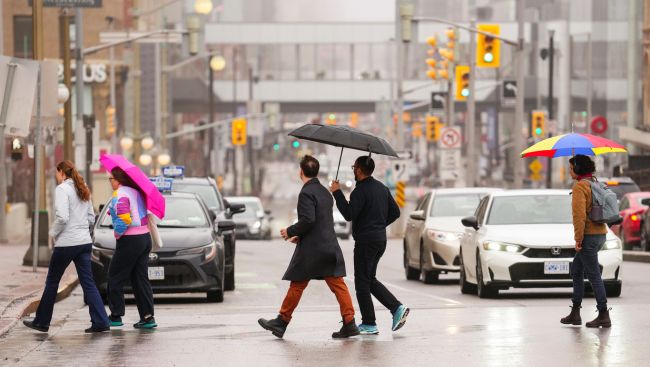
Picture Courtesy: THE CANADIAN PRESS/Sean Kilpatrick

MORE National ARTICLES

The B.C. ombudsperson investigates complaints that some students are being sent home

The B.C. ombudsperson investigates complaints that some students are being sent home
Ombudsperson Jay Chalke says his office will examine the complaints that those children from kindergarten to Grade 12 have received little to no instruction. Chalke says the roles of the Ministry of Education and the school districts will also be assessed.

The B.C. ombudsperson investigates complaints that some students are being sent home

Trudeau cabinet to meet on inauguration day to discuss Trump tariff threat

Trudeau cabinet to meet on inauguration day to discuss Trump tariff threat
Prime Minister Justin Trudeau and the federal cabinet are set to gather near the nation's capital next week as Donald Trump celebrates inauguration day in Washington. Trudeau's office says a cabinet retreat has been set for Jan. 20 and 21 to talk about defending Canadian interests in the face of Trump's tariff threat.

Trudeau cabinet to meet on inauguration day to discuss Trump tariff threat

Advocate criticizes B.C.'s lack of support for families needing Down syndrome care

Advocate criticizes B.C.'s lack of support for families needing Down syndrome care
Tamara Taggart told an inquest into Florence Girard's death that parents and caretakers are under heavy financial pressure to provide services such as speech therapy, which can be life-altering for people with Down syndrome.

Advocate criticizes B.C.'s lack of support for families needing Down syndrome care

Liberals prefer Mark Carney over Chrystia Freeland as next leader, poll suggests

Liberals prefer Mark Carney over Chrystia Freeland as next leader, poll suggests
A new poll suggests that Liberal supporters prefer Mark Carney as their next leader over a field of potential candidates. Polling firm Leger surveyed around 1,500 people over the weekend, asking who they think should replace Justin Trudeau as leader of the governing party.

Liberals prefer Mark Carney over Chrystia Freeland as next leader, poll suggests

Champagne bows out of Liberal leadership race

Champagne bows out of Liberal leadership race
Industry Minister François-Philippe Champagne and former B.C. premier Christy Clark both bowed out of the running for the federal Liberal leadership on Tuesday. Champagne announced at an event in Toronto that he will not enter the race, saying he plans to remain focused on his current job.

Champagne bows out of Liberal leadership race

Ecotour grizzlies less likely to encounter conflict with humans, B.C. study suggests

Ecotour grizzlies less likely to encounter conflict with humans, B.C. study suggests
Grizzly bears that visited ecotourism areas along a river on the province's central coast were less likely than others to encounter conflict with people in communities downstream, a new study by British Columbia-based researchers has found.

Ecotour grizzlies less likely to encounter conflict with humans, B.C. study suggests