
Saturday, July 4, 2026
ADVT 
National

Fact File: Posts falsely claim Canada revoked China's equal trade status

Darpan News Desk The Canadian Press, 11 Dec, 2025 11:52 AM
  • Fact File: Posts falsely claim Canada revoked China's equal trade status

Chinese language posts that appeared on social media the past few weeks claimed Canada was one of 32 countries to revoke China's "most favoured nation" trade status on Dec. 1. 


The claim originates from a 2021 rumour that conflates most favoured nation status with "generalized system of preference" certificates, which China stopped issuing to Canada and other countries on Dec. 1 that year. 


China remains a most favoured nation by Canada, meaning it is entitled to equal treatment as a trading partner.


THE CLAIM


Since November, several Chinese language posts across western social media claimed Canada was one of 32 countries to revoke China's "most favoured nation" status. 


Most favoured nation refers to a trade principle that entitles trading partners to equal status. Countries that trade as World Trade Organization members are required to provide the same trade benefits to all countries, with some exceptions. 


An image posted to the X platform, formerly Twitter, and multiple times on Facebook claimed Canada is one of 32 countries that removed China's most favoured nation trade status as of Dec. 1.
Similar claims appeared several times on Threads, as well as YouTube. 


THE FACTS


A keyword search of the Chinese language text shows this isn't the first time the claim appeared online. 


In 2021, Hong Kong-based HKBU Fact Check reported on the claim, which seemingly originated from a Facebook post. The post made an identical claim about 32 countries removing China's most favoured nation status on Dec. 1. 


However, a further keyword search shows the original announcement made by the General Administration of Customs China that references the 32 countries.


In the announcement, the customs agency said it would stop issuing generalized system of preference (GSP) certificate of origins for goods exported to 32 countries, including Canada and the European Union. 


The certificates grant preferential tariffs to imports from developing countries, according to the World Trade Organization. 


The Chinese customs agency said some countries pulled their GSP treatment for China over the years, since rapid economic development meant China was no longer considered a low-income country. The agency said it would stop issuing GSP certificates of origin to the 32 countries on Dec. 1. 


A 2021 article from China Briefing discussed the confusion over the announcement, noting the 32 countries stopped giving China GSP status over several years and not all at once. Canada removed its version of the GSP for China and 71 other countries as of Jan. 1, 2015. 


China and Canada are both part of the World Trade Organization, and remain entitled to most favoured nation status. China remains on Canada's list of countries afforded that status. 


Canada removed most favoured nation status from Russia and Belarus on March 2, 2022 in response to the Russian invasion of Ukraine, and imposed a general tariff of 35 per cent to most goods.

However, it made an exception for cobalt-60, a radioactive isotope used in some medical goods, as the government said it was unable to source enough elsewhere. 

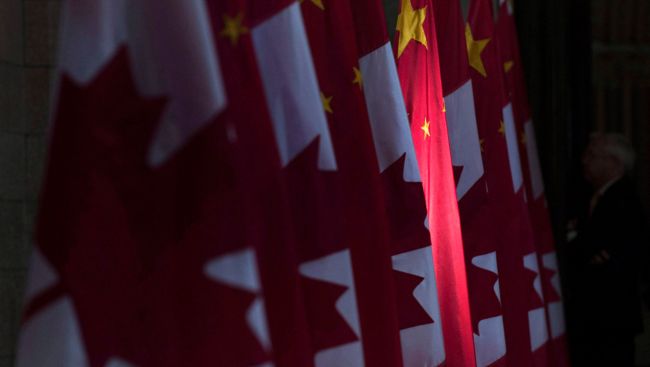
Picture Courtesy: THE CANADIAN PRESS/Adrian Wyld

MORE National ARTICLES

Former minister Marco Mendicino not running in next election

Former minister Marco Mendicino not running in next election
Mendicino says in a statement posted on social media that he has disagreed with the direction of the federal government, particularly when it comes to Canada's foreign policy on the Israel-Hamas war. 

Former minister Marco Mendicino not running in next election

Canada set to preside over G7 in 2025 — what that means and what's at stake

Canada set to preside over G7 in 2025 — what that means and what's at stake
Canada is set to take over the presidency of the G7 in 2025, leading a forum of seven of the world's most advanced economies at a time of political instability at home and around the world. Here's a look at what hosting the G7 means, and what's at stake.

Canada set to preside over G7 in 2025 — what that means and what's at stake

Feds watering down key promise: gun-control group

Feds watering down key promise: gun-control group
A leading gun-control group is accusing the Liberal government of watering down a promise to ensure firearms are properly scrutinized before entering the Canadian market. The government recently published proposed regulations aimed at ensuring all gun makes and models for sale in Canada are known to the federal firearms registrar.

Feds watering down key promise: gun-control group

Possible scenarios that could play out in Ottawa as the Liberal government teeters

Possible scenarios that could play out in Ottawa as the Liberal government teeters
With MPs set to return to the House of Commons on Jan. 27, the Liberal grip on power appears tenuous. The NDP, which has been a steady ally of the minority government since the 2021 election, is no longer planning to support the Liberals.

Possible scenarios that could play out in Ottawa as the Liberal government teeters

China slams Canada human-rights criticism as 'hypocritical farce of double standards'

China slams Canada human-rights criticism as 'hypocritical farce of double standards'
China is accusing Canada of hypocrisy for criticizing Beijing's human-rights record, pointing to issues faced by Indigenous Peoples. The blowback comes after Ottawa sanctioned eight Chinese officials it accuses of "grave human rights violations" against ethnic and religious minorities, and voiced concern about democracy in Hong Kong.

China slams Canada human-rights criticism as 'hypocritical farce of double standards'

Canada primed for more severe wildfire days, driven by dry forest fuel: study

Canada primed for more severe wildfire days, driven by dry forest fuel: study
Canadian forests are increasingly primed for severe, uncontrollable wildfires, a study published Thursday said, underlining what the authors described as a pressing need to proactively mitigate the "increased threat posed by climate change." The study by Canadian researchers, published in the peer-reviewed journal Science, looked at Canadian fire severity from 1981 to 2020. 

Canada primed for more severe wildfire days, driven by dry forest fuel: study