Monday, December 22, 2025
ADVT 
National

Federal deficit could hit $256 billion, PBO says in new report

Darpan News Desk The Canadian Press, 18 Jun, 2020 05:44 PM
  • Federal deficit could hit $256 billion, PBO says in new report

The parliamentary budget officer says in a new report that this year's federal deficit could hit $256 billion due to the COVID-19 pandemic.

The result, posted this morning, is the combination of an estimated total of $169 billion in federal spending on emergency aid and a historic drop in economic output.

The budget office estimates the economy could shrink by 6.8 per cent in 2020, the weakest showing since 1981 and double the record of 3.2 per cent shrinkage in 1982.

The overall deficit figure is only $3.8 billion higher than budget officer Yves Giroux's previous predictions, which his report says is due to a better economic outlook in the second half of the year that offsets some new spending.

Previously, Giroux estimated the economy could shrink by 12 per cent in 2020.

Giroux stresses that the figures are the outcome of one of many possible scenarios and not a certain forecast.

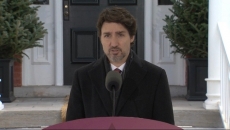
The report comes one day after Prime Minister Justin Trudeau promised to deliver a "snapshot" of federal finances on July 8 that will provide short-term spending estimates.

Trudeau warned the document won't provide a longer-term outlook because of what the government says is the uncertainty about where the economy will go in the coming months and years — all of which rests on the path of the pandemic.

The Liberals have been under pressure from opposition parties to release a fiscal update or a budget that was shelved due to the pandemic. The government had originally planned to release a budget in late March.

Since then, MPs have approved emergency spending to provide aid to Canadians who have lost their jobs or had their hours slashed, and financing to businesses shuttered due to public health restrictions.

Giroux is also releasing updated cost estimates for two of the cornerstone programs the Liberals rolled out and are now revamping — the Canada Emergency Response Benefit, and the federal wage-subsidy program.

The budget office now estimates the $2,000-a-month CERB will cost the government $61.1 billion, but pull in $7.7 billion when recipients are taxed on the income next year.

The Liberals have promised to extend the benefits so recipients can receive 24 weeks instead of the current 16, and previously revised the budget for the program to $60 billion.

When the Finance Department increased the cost of the CERB, it also lowered the cost for the wage-subsidy program from to $45 billion from $73 billion based on the take-up rate among businesses.

Giroux's office estimates the wage subsidy to cost the treasury $55.6 billion.

MORE National ARTICLES

COVID kills dozens more nursing home residents; emergency payouts top $22.4B

COVID kills dozens more nursing home residents; emergency payouts top $22.4B
Dozens more deaths in long-term care homes were reported Friday as new figures indicated the extent of the economic dislocation caused by isolation measures aimed at mitigating the spread of the highly contagious COVID-19 virus. The latest government figures showed more than seven million people had applied for the $2,000-a-month Canada Emergency Response Benefit, with the federal government having paid out $22.4 billion close to the amount budgeted.

COVID kills dozens more nursing home residents; emergency payouts top $22.4B

U.S. seals the deal on USMCA, says trade agreement can now take effect July 1

U.S. seals the deal on USMCA, says trade agreement can now take effect July 1
The United States has cleared the way for its long-awaited trade agreement with Canada and Mexico to go into effect July 1. The U.S. notified its North American trading partners today that it has finished the domestic housekeeping work called for in the agreement, a step the other two countries completed earlier this month.

U.S. seals the deal on USMCA, says trade agreement can now take effect July 1

Poultry plant in Coquitlam, B.C., closed by health authority over COVID-19

Poultry plant in Coquitlam, B.C., closed by health authority over COVID-19
A poultry processing plant in Coquitlam, B.C., has been closed by Fraser Health after an outbreak of COVID-19 among its workers. The health authority says two workers at the facility operated by Superior Poultry Processors Ltd. have tested positive for the virus and all employees have been screened.

Poultry plant in Coquitlam, B.C., closed by health authority over COVID-19

Expectant mothers to get financial help: Feds

Expectant mothers to get financial help: Feds
Expectant mothers who have been left out of a key COVID-19 emergency-aid program will receive financial help, and will qualify for federal benefits when they go on maternity leave, says Canada's employment minister. Pregnant women who applied for employment insurance at the outset of the pandemic have found that they weren't automatically transferred over to the Canada Emergency Response Benefit when it became available earlier this month.

Expectant mothers to get financial help: Feds

Trudeau unveils rent relief for small businesses hurt by COVID-19

Trudeau unveils rent relief for small businesses hurt by COVID-19
The federal government is providing rent relief to businesses that can't afford to pay their landlords at a time when their operations are seriously curtailed or shut down due to the COVID-19 pandemic. The federal help, expected to lower rent by 75 per cent for affected small businesses, will be provided in partnership with the provinces and territories, which have jurisdiction over rents.

Trudeau unveils rent relief for small businesses hurt by COVID-19

Nova Scotia mass shooter had unlicensed guns: police

Nova Scotia mass shooter had unlicensed guns: police
Police say the man who went on a murderous rampage through five Nova Scotia communities was likely using unlicensed firearms, and investigators are trying find out how he obtained illegal weapons.

Nova Scotia mass shooter had unlicensed guns: police