OTTAWA - Last year’s federal election cost an estimated $630 million — more than the estimated $502-million bill for the 2019 poll — partly because of extra costs associated with the pandemic, according to Elections Canada.
The official report on last September's election outlined multiple obstacles those running the election had to overcome because of COVID-19, including finding people to staff polling stations.
The report revealed that many First Nations communities had no polling station at all on election day.
Of around 635 First Nations communities in Canada, only 57 per cent were assigned a polling station on their reserve. In some remote communities, the nearest polling station was a great distance away and inaccessible.
Elections Canada says it has apologized to voters in three fly-in Indigenous communities near Kenora, Ont., after they turned up to vote and found there was no polling station.
Susan Torosian, executive director at Elections Canada, said she was "deeply sorry" that some Indigenous electors could not vote. She said at a briefing on Monday that Elections Canada would carry out a review to make sure Indigenous voters, regardless of their location, have the chance to vote next time.
The Elections Canada report says it had trouble finding staff for polling stations. In Toronto, 15 electoral districts had 448 fewer polling stations than last time in total.
To help recruitment, it gave a pay raise to election-day staff, who were responsible for enforcing social distancing rules and sanitizing surfaces.
The report says that some were subject to abuse at polling stations, including voters who objected to wearing masks, and in some cases the police were called
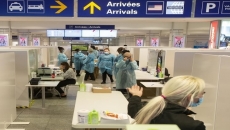
COVID-19 meant that many schools and community centres were not available as polling stations on election day, forcing Elections Canada to find alternative voting venues, including smaller sites, which led to queues of voters outside.
The difficulty finding polling sites also led to delays sending out voter information cards. Usually voter cards would have been posted at the end of August, but most were posted a week later.
Around 26.4 million cards were mailed just before advance polls, and an additional 1 million were mailed by Sept. 15.
"Delays in mailing resulted primarily from the short election period and difficulties in finding suitable polling places," the report said.
In Brampton East, in Ontario, 70 per cent of cards, with information on when and where to vote, were not mailed until after advance polling opened. Elections Canada let voters in Brampton East vote at advance polls without presenting their card, because of the error.
In its preparations for a pandemic election, Elections Canada overestimated the number of people who would vote by mail-in ballot, predicting at first that up to 5 million Canadians might do so.
Of the 17.2 million people who did vote, 16 million voted in person. Over 5.8 million people — a record number — voted at advance polls before election day.
A record number of people also voted by mail in their own riding on polling day. But fewer than last time mailed in their vote from abroad and from outside their ridings.
There were a number of administrative problems involving mail-in ballots, including from prisoners voting from jails, and ballots that were put in the wrong place and not counted.
There were also problems with election materials in a few ridings, including misprints with incorrect lists of candidates.
Despite these issues, Elections Canada made efforts to ensure voters in Nunavut could access information. Elections agents translated materials, including the list of candidates, into Inuktitut, the Inuit language spoken by 70 per cent of residents.