The federal government has announced a new industry-led alliance aimed at growing the skilled workforce for Canada’s mining industry, which is struggling to fill key jobs.
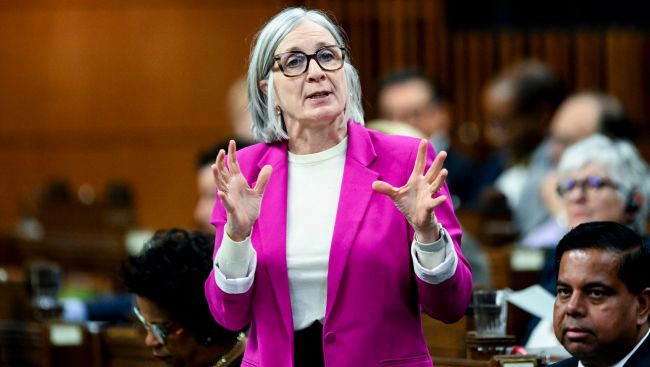
Jobs Minister Patty Hajdu made the announcement Thursday in southwestern Nova Scotia, saying the new body, dubbed the mining and minerals workforce alliance, is part of Prime Minister Mark Carney’s drive to build a more independent economy.
“They have a labour shortage … in many areas of the country,” Hajdu said in an interview, referring to the mining industry. “They cannot find the kinds of professionals they need.”
The minister said the industry and other skilled trades are facing “a negative net popularity with youth.”
The mining industry, Hajdu said, needs support to enter into partnerships with trainers, institutions, unions and even secondary high schools "to streamline talent that would consider going into this industry … and increase the positive reputation of the industry."
“These are good quality, solid careers and too few Canadians know about them. Too few young Canadians are choosing mining as a career, and the mining alliance is going to change that," she said.
On another front, Hajdu said the alliances will try to streamline provincial certification requirements for mining professionals to make it easier for them to work in other provinces.
The new body is the first of six workforce alliances to be established, all of them devoted to addressing labour market challenges. First announced in September, Ottawa has since committed $81 million in funding over five years.
Hajdu said these alliances are needed to help Canada also respond to supply chain disruptions, rapid technological change and the economic burden caused by U.S. tariffs.
“We have seen the shocks to our economy as a result of the tariff war with the United States,” Hajdu said. “Canadians expect us to move quickly.”
The minister said the mining alliance will be led by the Mining Industry Human Resources Council and supported by the Mining Association of Canada. According to Ottawa’s plan, these two organizations will bring together a network of employers, labour groups, post-secondary institutions, Indigenous partners and under-employed groups to develop a workforce strategy.
Among other things, they will co-ordinate public and private investments in skills development. As well, the federal government says a key goal is to build what it calls “sustainable talent pipelines.”
Ryan Montpellier, executive director of the Mining Industry Human Resources Council, said that as demand grows for critical minerals, more workers will be needed to get them to market.
“The need for a skilled, adaptable and inclusive workforce has never been greater,” he said in a statement. “This collaboration ensures that the people who power our sector have the skills, opportunities and support they need to succeed.”
In 2024, Canada’s mining sector contributed $112 billion to the country’s GDP and directly employed about 438,000 workers.
Meanwhile, the government says other alliances will soon be created for advanced manufacturing; energy and electricity; transportation and supply chains; housing and construction; and a sector the government refers to as the “care economy.”
Picture Courtesy: THE CANADIAN PRESS/Spencer Colby