Canada's first national pay-equity commissioner is having her term extended amid delays getting new pay-equity legislation into action.
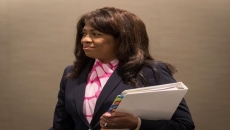
Karen Jensen was appointed a year ago to the Canadian Human Rights Commission with a mandate to help establish a new pay-equity division in preparation for the new law to take effect in 2020. She was to officially become the pay-equity commissioner as soon as the law was in force.
But Labour Minister Filomena Tassi said Friday it is taking a bit longer to get the regulations in place for the Pay Equity Act and that it won't happen now until 2021.
"COVID-19 as you know has presented some challenges," said Tassi.
Consultations for the proposed pay-equity rules ended in June 2019, but when COVID-19 hit in March, Tassi's department became mostly consumed with the health and safety of workers during the pandemic.
"Having said that, this remains a priority and we're looking forward to full implementation of the act by next year," she said. "It will be in force by next year."
Cabinet last week issued an order to extend Jensen's appointment to reflect the delay.
A right to equal pay for equal work was enshrined in the Canadian Human Rights Act in 1977, but a national law to require federally regulated employers to actively pursue pay equity did not get passed until December 2018.
Jensen is to help employers implement the needed changes, ensure workers know their rights and help resolve disputes.
On average in Canada, women earn 12 per cent less than men, the third largest gender pay gap among G7 countries and the seventh largest in the OECD. On an hourly basis, that is a difference of $3.87.
Statistics Canada shows in some fields the pay disparity is greater than the norm, such as in education and social service jobs, where on average females earn 81 cents for every $1 earned by men. In manufacturing and utility jobs, the average pay for women is 75 cents for every $1 earned by men.
The gap is smallest in health-care fields and natural and applied sciences.