Sunday, December 28, 2025
ADVT 
National

Federal workers to get Phoenix compensation

Darpan News Desk The Canadian Press, 10 Jul, 2020 07:25 PM
  • Federal workers to get Phoenix compensation

Federal employees stand to collect up to $2,500 each in cash payments for "pain and suffering" resulting from the government's failed Phoenix pay system under an agreement reached with the country's biggest civil-service union.

The settlement comes as government workers scramble to get emergency benefits out to individual Canadians and businesses affected by the economic crisis that has flowed from the COVID-19 pandemic.

The lump-sum payments are contained in a side deal reached late Thursday alongside a tentative contract settlement for about 70,000 civil servants that includes average annual wage increases of 2.11 per cent over a three-year term.

The Public Service Alliance of Canada said the payments are compensation for the problems caused to federal workers by the broken Phoenix pay system, which created underpayments, overpayments or in some cases no pay cheques for tens of thousands of government employees.

"After four years of stress, uncertainty, and financial hardships because their employer couldn't pay them correctly or on time, our members will finally be compensated for the Phoenix pay disaster," PSAC national president Chris Aylward said in a statement.

The compensation agreement affects about 140,000 PSAC members but could also affect members of other unions that last year agreed to compensation of five days of cashable leave.

PSAC, Canada's biggest civil service union, had rejected that settlement, calling the five extra vacation days "meagre."

The other unions may benefit from the PSAC deal, however, because their agreements included clauses that would provide their members with compensation equal to whatever PSAC was able to negotiate.

The PSAC agreement, which does not require ratification by its members, would see general damages paid to federal public service employees working for a range of government departments between 2016 and 2020.

It also includes compensation for the late implementation of collective agreements during those years caused by the Phoenix pay system.

Compensation totals $1,000 for employees working in the fiscal year 2016-17 and $500 in each of the following three years.

Beyond the lump sum, government employees who suffered severe losses due to the Phoenix pay system, such as losing their homes, cars or investments, or who had their credit ratings harmed, can claim damages.

When conceived in 2009, the Phoenix system was supposed to streamline the public service payroll and save taxpayers more than $70 million annually.

But after its launch in 2016, more than half of civil servants experienced pay problems, forcing the government to hire extra staff and set up satellite pay centres across the country in an effort to chip away at problem cases.

As of June 24, the backlog of problem files had been reduced to 125,000 financial transactions beyond normal workload, according to the public service pay centre dashboard, which tracks pay issues.

The most recent estimated cost of stabilizing Phoenix was pegged at more than $1 billion, not including the amount it will take to create, test and launch a new pay system that works.

Separately, PSAC and the Treasury Board Secretariat, which is responsible for negotiating contracts with federal employees, said they had reached a tentative settlement late Thursday for about half of PSAC's members.

The three-year deal for program and administrative services group employees includes wage increases of 2.8 per cent in the first year, followed by 2.2 per cent in the second and 1.35 per cent in the final year.

The tentative agreement applies to close to 84,000 federal employees, including non-unionized workers, according to Treasury Board.

It also contains new provisions for caregiver leave, extended parental leave, and up to 10 days of domestic violence leave.

Details on when a ratification vote will be held are expected next week.
MORE National ARTICLES

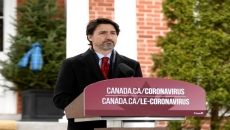
Ottawa helping guide, but not dictating, provincial reopening plans: Trudeau

Ottawa helping guide, but not dictating, provincial reopening plans: Trudeau
With Canada's two most populous provinces poised to outline plans for a gradual return to normalcy, Prime Minister Justin Trudeau said Monday that Ottawa will help guide, but not dictate, how provinces and territories should start easing restrictions. Ontario and Quebec together account for more than 80 per cent of the country's COVID-19 cases.    

Ottawa helping guide, but not dictating, provincial reopening plans: Trudeau

Crisis lines face volunteer, cash crunch even as COVID-19 drives surge in calls

Crisis lines face volunteer, cash crunch even as COVID-19 drives surge in calls
Despite a surge in demand due to COVID-19, many distress centres across Canada are dangerously close to folding thanks to major declines in both volunteers and revenue. Stephanie MacKendrick, CEO of Crisis Services Canada, which runs the only national suicide-specific helpline in Canada, says her organization relies on a network of approximately 100 community distress centres across the country to field calls from people.

Crisis lines face volunteer, cash crunch even as COVID-19 drives surge in calls

Conservatives gear up to grill government in modified return of House of Commons propose and oppose: Tories

Conservatives gear up to grill government in modified return of House of Commons propose and oppose: Tories
Conservative Leader Andrew Scheer laid out Monday the numerous lines of inquiry his party intends to follow this week as a modified version of a House of Commons sitting gets underway. They include the state of the nation's emergency supply stockpile, the mishmash of federal economic benefit programs that allow some to fall through the cracks and to what extent the minority Liberals are backstopping provincial efforts to reopen their economies, Scheer said.

Conservatives gear up to grill government in modified return of House of Commons propose and oppose: Tories

Learning to live with COVID-19 requires permanent fixes to vulnerable settings

Learning to live with COVID-19 requires permanent fixes to vulnerable settings
Canada's chief public health officer warned Monday there is still a lot we don't know about the virus that causes COVID-19, but said stopping this pandemic or preventing a future one will require more than just physical distancing and handwashing. Dr. Theresa Tam said we simply do not know yet whether someone who has had COVID-19 will be immune from getting it again, or how long that immunity will last.

Learning to live with COVID-19 requires permanent fixes to vulnerable settings

B.C. university creates institute to take microscope-telescope view of pandemic

B.C. university creates institute to take microscope-telescope view of pandemic
The COVID-19 pandemic has placed the world at a tipping point that's challenging social, political, economic and environmental structures, says the director of a new academic research institute at British Columbia's Royal Roads University. Dr. Thomas Homer-Dixon said Monday the pandemic is an event with the power to cause those structures to fall like dominos or shift radically to new paths.

B.C. university creates institute to take microscope-telescope view of pandemic

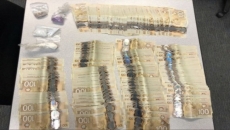
Drugs and cash seized from a Whalley area residence in Surrey

Drugs and cash seized from a Whalley area residence in Surrey
Illicit drugs and cash have been seized from a residence in the Whalley area following an investigation by the Surrey RCMP. The investigation began on March 5th, 2020 by the Surrey RCMP Community Response Unit (CRU). CRU observed suspicious activity consistent with drug trafficking at a residence in the 11400 block of 124 street.     

Drugs and cash seized from a Whalley area residence in Surrey