Tuesday, December 23, 2025
ADVT 
National

Feds add $305M to Indigenous COVID-19 response

Darpan News Desk The Canadian Press, 12 Aug, 2020 07:39 PM
  • Feds add $305M to Indigenous COVID-19 response

The federal government has announced an additional $305 million to help Indigenous Peoples combat COVID-19.

Indigenous Services Minister Marc Miller says the money is meant to help Indigenous communities prepare for emergencies and prevent the spread of the new coronavirus.

He says communities can also use the money for a variety of other measures, including helping elders and vulnerable people, food insecurity, educational and other supports for children and mental health assistance.

The new money will flow through the Indigenous community support fund, bringing the total amount to $685 million this year.

Some funding will also go to First Nations living off-reserve as well as Inuit and Metis people living in urban centres, distributed based on need through an application process.

Miller says Ottawa is committed to ensuring Indigenous leaders have the tools and support they need to implement the various aspects of their pandemic plans.

"This funding will provide crucial support to key community initiatives that strive to prevent, prepare for and respond to COVID-19 in First Nations, Inuit and Metis communities," he said.

"This approach aligns with our commitment to support Indigenous leadership's approaches to community wellness while providing the flexibility to respond to emerging needs, for example in response to an outbreak of COVID-19."

To date there have been 425 confirmed cases of COVID-19 on First Nations reserves, with 34 people hospitalized. Of these, 393 have recovered from the virus. There have also been 17 cases in the Nunavik region in northern Quebec. All have recovered.

The federal government has acknowledged that COVID-19 case counts among Indigenous Peoples do not reflect the true impact on Indigenous communities and individuals, as they only capture statistics from those living on reserves or in Inuit territories. The majority of Indigenous people in Canada live off reserve.

MORE National ARTICLES

Large cruise ships barred from Canadian waters until end of October: Garneau

Large cruise ships barred from Canadian waters until end of October: Garneau
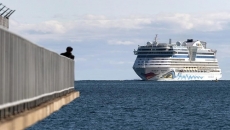
The cruise-ship season in Canada is all but sunk as Ottawa extends its ban on large ships in Canadian waters until the end of October in an attempt to contain COVID-19.

Large cruise ships barred from Canadian waters until end of October: Garneau

N.S. police received warnings in 2011 about man who would become mass killer

N.S. police received warnings in 2011 about man who would become mass killer
A newly released document reveals that in May 2011, police were told the Nova Scotia man who would later kill 22 people in a shooting rampage wanted to "kill a cop" and was feeling mentally unstable.

N.S. police received warnings in 2011 about man who would become mass killer

Canada exploring ways to reunite families divided by COVID-19 border closure

Canada exploring ways to reunite families divided by COVID-19 border closure
Prime Minister Justin Trudeau says the federal government is exploring ways to reunite family members divided by the temporary travel restrictions at the Canada-U.S. border.

Canada exploring ways to reunite families divided by COVID-19 border closure

Hospice's refusal to provide assisted death causes 'anxiety,' says B.C. mayor

Hospice's refusal to provide assisted death causes 'anxiety,' says B.C. mayor
A hospice that has a long history of helping people near death but denies them medical assistance in dying is drawing criticism from the city's mayor in a clash of ideologies that has split its board and raised questions about its future.

Hospice's refusal to provide assisted death causes 'anxiety,' says B.C. mayor

New site is one-stop shop for B.C. workers, farmers, during pandemic

New site is one-stop shop for B.C. workers, farmers, during pandemic
The British Columbia government has created a new online resource to help the province's agricultural sector find workers during the COVID-19 pandemic.

New site is one-stop shop for B.C. workers, farmers, during pandemic

20 bricks of suspected cocaine seized at the Pacific Highway port of entry in British Columbia

20 bricks of suspected cocaine seized at the Pacific Highway port of entry in British Columbia
The CBSA seized 20 bricks of suspected cocaine at the Pacific Highway port of entry Commercial Operations. On May 1, 2020, border services officers conducted an examination on a commercial tractor-trailer and noticed anomalies.

20 bricks of suspected cocaine seized at the Pacific Highway port of entry in British Columbia