Saturday, December 20, 2025
ADVT 
National

Feds continue to add to COVID-19 supply stores to meet future demand

Darpan News Desk The Canadian Press, 02 Jun, 2020 07:10 PM
  • Feds continue to add to COVID-19 supply stores to meet future demand

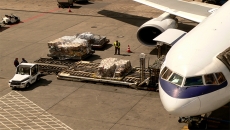
Planes and boats loaded with personal protective equipment and other COVID-19 supplies continue to arrive in Canada as the federal government moves to increase the domestic stockpile of crucial gear.

Procurement Minister Anita Anand said Tuesday that supply chains for essential equipment have stabilized but Canada continues to press to ensure reliable international sources of goods, while increasing domestic production efforts at the same time.

Canada is in the market for hundreds of millions of pieces of equipment, including gowns, gloves, masks, face shields and hand sanitizer.

Anand said the focus continues to be two-fold: meet short-term needs and be ready for a potential increase in future demand.

"As demand goes up, Canada is keeping up," Anand said.

Anand said Tuesday the government is also looking ahead to the day a vaccine becomes available, ordering 37 million syringes. It has not yet been determined when they will arrive.

The numbers for most goods on hand are ticking steadily up, though not for ventilators — as of May 26, only 203 had arrived out of the nearly 40,000 ordered.

Severe forms of COVID-19 often require the use of the assisted-breathing device, and concerns about potential shortages dominated discussions around gear in the early days of the pandemic in Canada.

Anand said the contracts for the ventilators are largely with Canadian companies, and as some companies are retooling to make them, it will be another month before they start arriving.

In their regular procurement updates, the Liberal government has highlighted some of the Canadian companies engaged in production of supplies.

On Tuesday, they singled out The Canadian Shield, from Kitchener, Ont., that has produced 1.2 million face shields so far.

But many of the deals being signed aren't being made public, signed instead under national security provisions that keep the details — including costs — under wraps.

A spokesperson for Anand's department said that if the national security exemption wasn't used, the tenders for the goods would have to remain open for weeks and that just wouldn't be feasible in the current environment.

Making public all the information around what Canada is buying and from who could also risk the supply of the goods, spokesperson Stefanie Hamel said in an email.

"Considering the fierce global competition for the same products, if we were to disclose information about specific contracts or suppliers, we could jeopardize Canada's supply chains for these life-saving products, putting our delivery to Canada and into the hands of front-line health-care workers at risk," Hamel said.

The department said when the risk has passed, the government does intend to provide more information.

MORE National ARTICLES

Canadians trust their family doctor more than the PM on COVID-19, says poll

Canadians trust their family doctor more than the PM on COVID-19, says poll
Canadians trust health professionals like their family doctor first and foremost when it comes to the COVID-19 crisis, a new poll suggests. The poll, conducted by Leger and the Association for Canadian Studies, asked respondents to rate their level of trust in various institutions, including public health officials and politicians.

Canadians trust their family doctor more than the PM on COVID-19, says poll

Two planes from China forced to arrive in Canada empty of supplies: PM

Two planes from China forced to arrive in Canada empty of supplies: PM
OTTAWA - Prime Minister Justin Trudeau says two planes from China were forced to return empty to Canada on Monday, without the protective medical equipment that they were sent there to pick up.

Two planes from China forced to arrive in Canada empty of supplies: PM

More deaths, no benefit from malaria drug in VA virus study

More deaths, no benefit from malaria drug in VA virus study
A malaria drug widely touted by President Donald Trump for treating the new coronavirus showed no benefit in a large analysis of its use in U.S. veterans hospitals. There were more deaths among those given hydroxychloroquine versus standard care, researchers reported.

More deaths, no benefit from malaria drug in VA virus study

Many B.C. businesses uncertain about reopening after COVID passes: survey

Many B.C. businesses uncertain about reopening after COVID passes: survey
A survey of more than 1,000 British Columbia businesses has found that nearly half of those which have remained open during the COVID-19 pandemic believed they could survive for no longer than three more months. The BC Chamber of Commerce, Greater Vancouver Board of Trade, Business Council of B.C. and other partners worked with the Mustel group to survey 1,284 businesses in April.    

Many B.C. businesses uncertain about reopening after COVID passes: survey

Liz Weston: Is your financial adviser really helping you?

Liz Weston: Is your financial adviser really helping you?
Stock market crashes don’t just test investors’ mettle. Abrupt downturns also can reveal what kind of financial adviser you have.   Some people will discover, to their horror, that they’ve been dealing with outright crooks. Ponzi schemes are among the cons that fall apart when markets do, as investors try to pull their money out and discover it’s gone.

Liz Weston: Is your financial adviser really helping you?

Liberals, Bloc, NDP, Greens approve once-a-week sittings in House of Commons

Liberals, Bloc, NDP, Greens approve once-a-week sittings in House of Commons
OTTAWA - The Conservatives' bid to have Parliament sit in person several times a week throughout the COVID-19 pandemic has been thwarted by the combined forces of the governing Liberals and other opposition parties.

Liberals, Bloc, NDP, Greens approve once-a-week sittings in House of Commons