Monday, December 22, 2025
ADVT 
National

Feds lay out guidelines for returning public servants to workplaces

Darpan News Desk The Canadian Press, 22 Jun, 2020 06:12 PM
  • Feds lay out guidelines for returning public servants to workplaces

Canada's roughly 250,000 federal public servants are being primed for an eventual return to their workplaces, though many are expected to continue working remotely for the foreseeable future.

The preparations, which include the distribution of a 30-page guidebook, come as provinces continue easing restrictions imposed due to COVID-19 and more Canadians return to their offices and other places of employment.

The vast majority of federal public servants have been working from home since mid-March, during which time many have been called upon to help roll out huge new support programs for Canadians affected by the pandemic.

In a message to public servants on Monday, Treasury Board President Jean-Yves Duclos, who oversees the bureaucracy as a workforce, said the return to federal worksites would vary based on local conditions and each department's requirements.

"Re-opening access to federal worksites will be gradual and will vary from organization to organization, each according to their own operational circumstances," Duclos said. "As plans unfold, the health and safety of employees will be our priority.

"Planning is being guided by the decisions of public health authorities, including Canada's chief public health officer, and will take into consideration the local public health situation and the nature of the work."

The federal public service has been praised for the speed with which it has rolled out a variety of support programs such as the Canada Emergency Response Benefit during the pandemic.

It has also been criticized for the closure of Service Canada offices across the country since March, particularly as minimum-wage employees in grocery stores and other workplaces continued to work.

There have also been concerns about the impact that working from home has had on the federal access-to-information system along with tasks requiring access to sensitive government material such as military procurement.

Questions have also been raised about whether many public servants will eventually work from home on a permanent basis, reflecting discussions that many other industries are starting to have.

The guidebook released on Monday includes directions to senior management to take into consideration their departments' own requirements as well as the circumstances of individual employees and their families.

"Employees whose work can be done remotely should continue to take advantage of recent investments in IT infrastructure and digital skills, as the work and equipment permit," the guidebook tells federal workers.

"Employees who are considered vulnerable as defined by public health agencies should be supported to continue to work remotely when possible; this includes people with chronic illnesses or are immuno-suppressed (or living with others who qualify)."

The guidebook makes clear that the return to "normal" will take time while leaving open the idea that some federal public servants may end up working from home for good.

Federal departments and agencies are also directed to track and report on cases of COVID-19 among their staff, which includes tracking incidents in which employees refuse to work on safety grounds.

"The information provided by departments and agencies in the COVID-19 tracker will enable decision making on the return to the worksite from a health and safety lens," the guidebook says.

MORE National ARTICLES

Search for missing B.C. woman prompts homicide fears, second death

Search for missing B.C. woman prompts homicide fears, second death
Police are releasing more details about a British Columbia woman they fear may be the victim of a homicide. Metro Vancouver's Integrated Homicide Investigation Team says 45-year-old April Parisian was last heard from on March 28 and was declared missing earlier this month.

Search for missing B.C. woman prompts homicide fears, second death

Reports of hate crimes are up in Vancouver: police

Reports of hate crimes are up in Vancouver: police
An assault on a 92-year-old Asian man with dementia in Vancouver is being investigated as a hate crime and police say they have recently noticed an increase in reports of hate-motivated incidents. Vancouver police say the man has "severe dementia" and wandered into a convenience store on March 13 when another man yelled racist remarks that included comments about COVID-19.    

Reports of hate crimes are up in Vancouver: police

More signs COVID-19 is slowing in Canada; students to get federal help

More signs COVID-19 is slowing in Canada; students to get federal help
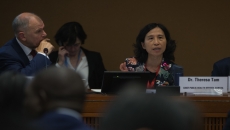
Chief Public Health Officer Dr. Theresa Tam said Canada was making progress in slowing the epidemic but warned against letting down its guard. The focus, Tam said, must be placed on stopping outbreaks in places like seniors homes and in other places where vulnerable populations live together in close quarters. How exactly Canada gets on the road to normalization will largely depend on the provinces, Prime Minister Justin Trudeau said on Wednesday. However, the closure of the Canada-U.S. border will stay in place until May 21st at least, he said.

More signs COVID-19 is slowing in Canada; students to get federal help

Prime Minister Justin Trudeau defends not creating universal COVID-19 benefit, announces student aid

Prime Minister Justin Trudeau defends not creating universal COVID-19 benefit, announces student aid
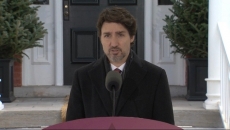
As he announced yet another emergency financial aid package Wednesday — this one aimed at students — Prime Minister Justin Trudeau defended his decision not to create a universal benefit that would ensure no Canadians affected by COVID-19 fall through the cracks. His focus for specific help Wednesday was students, announcing a $9-billion suite of programs for students whose education and job prospects are disrupted by the novel coronavirus.  Trudeau says his government's approach has been to try to target its emergency financial assistance in stages to those who need it most, rather than to everyone at once, including those who don't need it.      

Prime Minister Justin Trudeau defends not creating universal COVID-19 benefit, announces student aid

What BC is doing to fight COVID-19

What BC is doing to fight COVID-19
B.C. declared a provincial state of emergency on March 18, a day after announcing a public health emergency, and it has been extended to April 28. The measure gives the province authority to take any action necessary to protect people and communities, including charging people who ignore public health orders.

What BC is doing to fight COVID-19

Feds scramble to bring stranded Canadian travellers home from India PM: Canadians stranded in India need more help

Feds scramble to bring stranded Canadian travellers home from India PM: Canadians stranded in India need more help
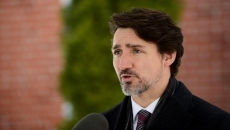
Prime Minister Justin Trudeau says 20,000 Canadian travellers stranded abroad have been repatriated to Canada. But he says many more flights are needed to bring back large numbers of Canadians from India in particular.

Feds scramble to bring stranded Canadian travellers home from India PM: Canadians stranded in India need more help