The federal government has shortchanged provinces on equalization payments under rules put in place after the last economic crisis in the late 2000s, Parliament's spending watchdog says, warning the under-funding may get worse due to COVID-19.
The parliamentary budget officer's review of a decade of federal payments to provinces showed that federal coffers have saved $14.5 billion over that time.
The constitutionally required payments are designed to address shortfalls in provinces' spending capacities so that Canadians have reasonably comparable public services no matter where in the country they live.
A decade ago, the annual calculations were changed to tie payments to three-year averages of nominal gross domestic product (GDP), a measurement of economic output that doesn't account for the pace of inflation and can overestimate economic growth.
Since then, only four provinces have not received any equalization payments: Newfoundland and Labrador, Saskatchewan, Alberta and British Columbia.
Ontario accounted for $8.1 billion of the $14.5 billion in cumulative federal savings, followed by Quebec at $4.6 billion.
Budget officer Yves Giroux said the "growth rule" prevented a "significant increase in payments" that would have otherwise occurred after the 2009 recession, which also suggests the payments fell short of what was needed to help recipient provinces.
Looking ahead, the payments may fall further if nominal GDP takes a nosedive and drags down the moving three-year average, Giroux said.
The federal government's fiscal snapshot from in early July forecast a 6.7 per cent decline in nominal GDP, Canada-wide.
"We're likely to see no growth at all in equalization payments overall for provinces and territories," Giroux said in an interview. "Over the next three years, it's very conceivable that equalization, the program, will under-compensate provinces — maybe not all provinces, but certainly in aggregate."
When Giroux took a look at the fiscal positions of provinces earlier this year, before the COVID-19 pandemic, he found that combined they would collectively have to cut spending, raise taxes, or a combination of the two to fill a $6-billion hole if they want to make their finances sustainable over the long term.
The federal position was better: Giroux said the government could increase spending by $40 billion and still be fiscally sustainable over the coming years.
When that report came out in February, Giroux said the federal government's fiscal room could easily be used to change the way it transfers money to provinces and territories for programs they run.
The pandemic has forced up government spending and collapsed revenues, hiking the federal deficit to $343.2 billion — a budget shortfall that is likely to grow with tens of billions in recently proposed spending, and the Liberals' promising a sweeping plan to green the economy.
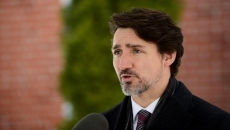
Prime Minister Justin Trudeau pointed to the throne speech when asked Thursday during an interview with a St. John's, N.L., radio station if his government would follow through on a campaign to increase old age security payments by 10 per cent for those over 75.
"We know that people are living longer and worried that their retirement savings are going to run out before they expected them and we need to be there," Trudeau told VOCM Open Line with Paddy Daly.
"That's why we made that commitment and we're standing by that commitment, but obviously right now through the pandemic we're having to recalibrate our various priorities."
Giroux said the Liberals will have to lay out a clear plan to reduce the deficit over time, either in a fall economic update or budget. Liberals have yet to table a budget for this fiscal year, which began in March, citing uncertainties in the pandemic.
"It's clear that the level of deficit that is expected in the current fiscal year, $343 billion, is affordable or sustainable for that year," he said.
"But as I've said before, the government of Canada cannot run that level of deficit for many years without the situation becoming unsustainable."
Provincial finances have not fared much better, which is why Giroux's office is taking the unusual step of updating this fall its view on the fiscal outlook for provincial and federal coffers.
The report last released in February is usually updated every 12 to 18 months, but Giroux said an outlook that takes into account the pandemic will be released in October.