Monday, July 6, 2026
ADVT 
National

Few Canadians support Canada Post privatization, but open to sweeping changes: survey

Darpan News Desk The Canadian Press, 18 Jun, 2025 11:54 AM
  • Few Canadians support Canada Post privatization, but open to sweeping changes: survey

A new survey finds less support among Canadians for the privatization of Canada Postbut many are open to large-scale changes

Survey results from the Angus Reid Institute, released Wednesday, found 59 per cent said they were opposed to the government selling off Canada Post. Meanwhile, 47 per cent of respondents said they were against privatizing some of the Crown corporation. 

The survey also found 64 per cent said it was important that the postal service continue to be publicly owned. 

Canadians were also open to sweeping changes in Canada Post's operations, with 72 per cent saying they would reduce mail delivery to three days a week. 

Additionally, 52 per cent said the Crown corporation should be able to use non-union gig workers for deliveries if it improves cost and quality of service. 

The results were derived from an online survey conducted earlier this month among Canadian adult members of the Angus Reid Forum. 

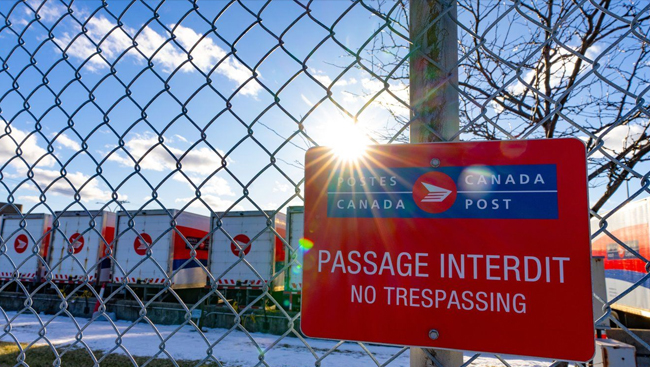
Picture Courtesy: THE CANADIAN PRESS/Christinne Muschi

MORE National ARTICLES

Man arrested after violent carjacking at B.C. airport: RCMP

Man arrested after violent carjacking at B.C. airport: RCMP
A 29-year-old man has been arrested after what police say was a violent carjacking outside the Prince George Airport. Prince George RCMP say the elderly driver suffered serious injuries when the vehicle crashed and he was thrown from the scene.

Man arrested after violent carjacking at B.C. airport: RCMP

B.C. brings in 'bell to bell' school phone ban, as new access rules target protesters

B.C. brings in 'bell to bell' school phone ban, as new access rules target protesters
Cellphone use will be restricted in all British Columbia school districts when pupils return next week, as the province becomes the latest to curtail the use of the devices in classrooms. Premier David Eby says all school districts now have policies in place to ban cellphone use "bell to bell," in line with a government directive announced in April.

B.C. brings in 'bell to bell' school phone ban, as new access rules target protesters

Thousands still out of homes in Manitoba and Saskatchewan due to wildfires

Thousands still out of homes in Manitoba and Saskatchewan due to wildfires
Nearly 3,800 people from First Nations in Saskatchewan and Manitoba remain out of their homes due to nearby wildfires. The Canadian Red Cross says it's supporting more than 2,300 from the remote community of Bunibonibee Cree Nation in northeastern Manitoba, offering lodging, food, transportation and supplies.

Thousands still out of homes in Manitoba and Saskatchewan due to wildfires

4 Mounties injured over the weekend

4 Mounties injured over the weekend
Burnaby R-C-M-P say four Mounties sustained minor injuries as they responded to a report of a man trying to break into a home over the weekend. They say officers arrived to find the 36-year-old suspect yelling incoherently, and when they tried to arrest him, he became aggressive.

4 Mounties injured over the weekend

Fatal truck crash in Sicamous

Fatal truck crash in Sicamous
The driver who died when his tractor trailer crashed over the side of a bridge and plunged into water below has been identified as a 25-year-old man. Sicamous R-C-M-P say they responded to a report of crash at about 6:45 a-m on Saturday, finding the truck was descending down a hill when it struck one end of the bridge, then crossed to the other side and crashed through the guard rail.

Fatal truck crash in Sicamous

How much microplastic is in your coffee? New device by UBC researchers could tell you

How much microplastic is in your coffee? New device by UBC researchers could tell you
Researchers at the University of British Columbia say they've come up with a portable device that can cheaply detect the amount of microplastics in drinks and other liquids. Microplastic particles can be created when things such as plastic cups or utensils degrade, releasing the material into food or drink that could then be ingested or absorbed into the body.

How much microplastic is in your coffee? New device by UBC researchers could tell you