

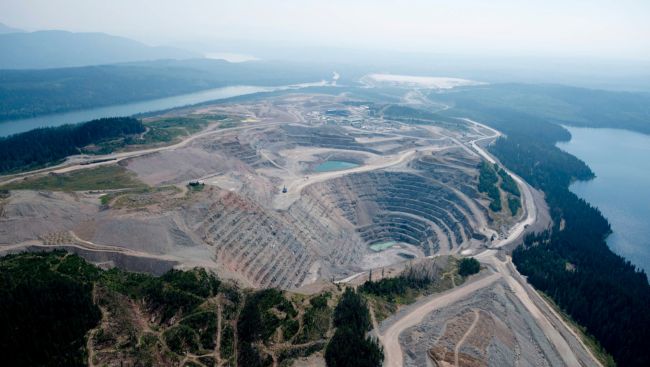
The B.C. Supreme Court has dismissed a First Nation's bid to stop a tailings dam from being raised at the Mount Polley mine site, which suffered a catastrophic dam collapse that spilled millions of litres of waste and water 11 years ago.
The Xatsull First Nation claimed the province's approval of the plan to raise the level of the dam in B.C.'s Interior by four metres was improper and done without "meaningful" consultation with the nation.
But Justice Michael Tammen ruled Wednesday that the provincial government's consultation with the Xatsull was proper.
"I view the consultation here as deep and, importantly, the process employed by the province provided Xatsull with ample opportunity to present their perspective," Tammen said.
The First Nation said in a statement it was disappointed in the ruling.
"This is the same facility that breached and devastated Xatsull's territory in 2014 — the worst mining disaster on record. Its impacts are still harming our nation’s rights, culture and way of life today," it said.
"We will be reviewing the decision as well as exploring our options to determine next steps."
Imperial Metals president Bryan Kynoch told reporters in a conference call Wednesday that the court's finding was an "important decision for the mine."
"Being able to move ahead with the raise helps us keep operations stable and avoid unnecessary interruptions and disruptions," he said.
Raising the dam would allow the mine to continue depositing tailings, but Kynock said they're still awaiting another permit amendment that would extend the life of the mine significantly.
"If that doesn't come soon, we may be put in jeopardy of significantly revising operational plans or even ceasing operation if the amendment process is not expedited," he said. "While today's decision gives us some clarity, we're clearly not out of the woods yet."
He said the company has the support of the Williams Lake First Nation, and it's "worked hard" to negotiate and co-operate with the Xatsull First Nation in the past.
Tammen found the province fulfilled its duty to consult, and said that had he found otherwise, he would not have hesitated to grant the Xatsull's wishes to have the decision approving the plan reconsidered.
Tammen said Mount Polley Mining Corp.'s plan to raise the tailings storage level was "comparatively modest," and the rationale for provincial approval "readily apparent."
The court had been expected to rule on an application for an injunction Wednesday with a decision on the nation's judicial review to follow, but Tammen dismissed the Xatsull's legal challenge outright and found no basis to grant an injunction to stop the plan from moving ahead.
Tammen said raising the dam as proposed "does not increase the scope of operations at the mine, nor does it increase the ecological footprint of ongoing mining operations."
The judge said the tailings dam failed "catastrophically" in 2014, which "has in turn caused widespread and long-lasting environmental damage and corresponding impacts to Xatsull's Aboriginal title, rights, culture, and way of life."
"Xatsull is obviously and understandably extremely concerned with the potential for a further failure and thus has a corresponding interest in ensuring that the mine is being operated in an environmentally responsible and safe manner," he said.
The judge said he didn't want to dismiss, diminish or minimize the "deleterious" effects of the tailings dam failure, which is still the subject of civil litigation and Fisheries Act charges against the company.
Lawyers for Mount Polley and the provincial government claimed the risk of a future tailings dam failure was "speculative," while the judge characterized "it as remote and incapable of even approximate quantification."
The judge ruled that the province's duty to consult relates to only "current government conduct" rather than any past wrongs or failings, and must focus on "adverse impacts" from a specific proposal and not "larger adverse impacts of the project of which it is a part."
Tammen said it was reasonable for B.C.'s environmental assessment office to consider impacts on the First Nation's constitutional rights as a "starting point" during the consultations that happened during the permitting process.
"That process was aimed at the overarching safety and design issues that were at the heart of Xatsull's concerns," the judge said. "If Xatsull asserted other impacts … beyond the risk of further failure of the (tailings storage facility), they had ample opportunity to make those known to the (environmental assessment office), but did not do so."
Chief Rhonda Phillips said earlier this year that the province was allowing the work to proceed without a valid environmental assessment certificate at the site of the spill that sent millions of tonnes of water and tailings into the environment on the nation's territory in B.C.'s Cariboo region.
Phillips had said "meaningful" reform is needed in the aftermath of the 2014 spill because the provincial government is still approving "risky storage methods" while failing to adequately consult the nation.
B.C.'s Environmental Assessment Office said in a statement that it appreciates that the court found the consultation "process was sound."
"We are going to take some time to review the judge’s decision and determine if there is more to learn from this case. We are committed to robust oversight of mining projects and to working co-operatively with First Nations throughout regulatory review processes,'" it said.
This report by The Canadian Press was first published Aug. 6, 2025.
Picture Courtesy:THE CANADIAN PRESS/Jonathan Hayward


