VANCOUVER - The public health communication about COVID-19 that's aimed at Indigenous communities should be tailored and take into account Indigenous experiences, say a health official and a researcher who work with First Nation and Metis communities.
The pandemic has spurred announcements about infectious disease and illness, social distancing and isolation as officials ask the public to help "flatten the curve" to spare the health-care system from becoming overwhelmed.
Such language can cause anxiety for elders who endured Canada's residential school system or so-called Indian hospitals, says Dr. Shannon McDonald, deputy chief medical officer with the First Nations Health Authority in B.C.
The health authority has avoided the word quarantine and used less formal language, such as asking people to "try to stay home" and "make sure you are an arm's length or two away" from other people, she said.
"When we talk about being community-driven and nation-based, we really have to listen to communities about what they have ... what their relationships are and what we need to do to support them."
It's also a priority to help every First Nation in B.C. update its communicable disease emergency response plan. Some have not been reviewed since the outbreak of the H1N1 flu 10 years ago, McDonald said.
A former Canada research chair in environment and health risk communications agrees that messaging should be tailored for different populations and health officials must work with community members who are trusted locally.
Michelle Driedger, a professor in the community health sciences department at the University of Manitoba, said she evaluated the impact of the Manitoba Metis Federation's response to H1N1 and has received almost $500,000 in federal funding to study public health management strategies for the new coronavirus.
The rapid research funding is important, said Driedger, because she and her team will be able to collect data throughout the pandemic, identifying public health messaging that may need to be adjusted to ensure everyone in Canada is informed.
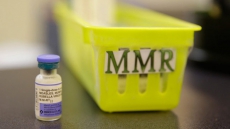
Driedger, who is Metis, said she is particularly interested to see what happens when a vaccine to prevent COVID-19 becomes available. Production delays for the H1N1 flu vaccine led to its delivery being prioritized for rural and remote residents, she said, and in Manitoba that meant the province's public health messaging was aimed at people of Indigenous ancestry.
"The First Nations and Metis citizens that I spoke to were saying, 'Is it like it's being tested on us first to make sure it's safe?'
"There was a great deal of distrust," said Driedger, pointing to the treatment of Indigenous people in Canada's residential schools, sanatoriums and hospitals.
She said when Indigenous and Metis people contracted tuberculosis in the past, many family members did not find out whether their loved ones survived and if they died, where they were buried.
Those fears can persist today, she said, when people from remote communities must leave home for medical treatment.
Tailoring the methods used to share public health messages is also important, said Driedger, adding that remote communities may have limited internet access and cellular service, but many have their own local radio and TV stations.
The First Nations Health Authority in B.C. is preparing radio ads about COVID-19 that are expected to roll out in the coming days on CFNR, a radio station that broadcasts across central and northern B.C. And Indigenous Services Canada has shared scripts for public health announcements in 17 Indigenous languages and dialects.