Friday, June 5, 2026
ADVT 
National

First Nations want more B.C. COVID-19 data

Darpan News Desk The Canadian Press, 15 Sep, 2020 09:27 PM
  • First Nations want more B.C. COVID-19 data

A coalition of First Nations is asking British Columbia's privacy commissioner to compel the Health Ministry to disclose presumptive COVID-19 cases in their communities.

The Heiltsuk, Nuu-chah-nulth and Tsilhqot'in governments said Tuesday they filed the application because the B.C. government refuses to share the information, arguing that poses risk of significant harm to their communities.

Heiltsuk Nation Chief Marilyn Slett said in a statement that having an outbreak before the province will share the information "is reckless and colonial" and goes against the province's promises of reconciliation.

Health Minister Adrian Dix said he met with First Nations leaders on Monday and the ministry has worked with various communities to address matters related to COVID-19 transmission when it occurs.

"There are issues to balance here in terms of people's right to privacy, which is closely connected with their willingness to engage with us in the health-care system," he said.

Similar calls to identify communities with COVID-19 cases have been raised since the beginning of the pandemic by both the Interior Health Authority and the Island Health Authority, Dix said.

"We're just going to continue to work through these issues to ensure that we control the transmission of COVID-19, particularly in Indigenous communities but also in rural and remote communities."

The First Nations said provincial health officer Dr. Bonnie Henry has acknowledged the unique threat COVID-19 poses to remote Indigenous communities, yet the Health Ministry hasn't explained why presumptive COVID-19 cases don't present a risk to them.

Henry told a news conference Monday that the government has been working on the issue, but she also has a responsibility for the protection of personal health information.

"I will say that in many cases, the community will know before we know when somebody is ill and before they go for testing," Henry said. "Where we get notified is when the tests come back positive."

The B.C. Freedom of Information and Privacy Association is supporting the request. Association president Mike Larson said disclosing the information so the First Nations can conduct contact tracing is in the public interest.

The Health Ministry's policy of disregarding First Nations' efforts to govern during the pandemic is wrong, said Judith Sayers, president of the Nuu-chah-nulth Tribal Council.

"We must have access to the same health datasets the B.C. government has, on a government-to-government basis, if we are going to get through this pandemic together."

The First Nations said past pandemics, including smallpox and the Spanish flu, have devastated First Nation communities and taken the lives of their elders.

MORE National ARTICLES

Local restaurants feel squeezed by delivery apps' commission fees

Local restaurants feel squeezed by delivery apps' commission fees
Restaurants struggling to survive during the COVID-19 crisis have turned to take-out and delivery, but the fees charged by food-delivery companies are eating away their bottom line, some operators say. Physical distancing measures have decimated dine-in service, which accounts for most industry revenue, said Mark von Schellwitz, a vice-president of the non-profit Restaurants Canada.

Local restaurants feel squeezed by delivery apps' commission fees

Ottawa helping guide, but not dictating, provincial reopening plans: Trudeau

Ottawa helping guide, but not dictating, provincial reopening plans: Trudeau
With Canada's two most populous provinces poised to outline plans for a gradual return to normalcy, Prime Minister Justin Trudeau said Monday that Ottawa will help guide, but not dictate, how provinces and territories should start easing restrictions. Ontario and Quebec together account for more than 80 per cent of the country's COVID-19 cases.    

Ottawa helping guide, but not dictating, provincial reopening plans: Trudeau

Crisis lines face volunteer, cash crunch even as COVID-19 drives surge in calls

Crisis lines face volunteer, cash crunch even as COVID-19 drives surge in calls
Despite a surge in demand due to COVID-19, many distress centres across Canada are dangerously close to folding thanks to major declines in both volunteers and revenue. Stephanie MacKendrick, CEO of Crisis Services Canada, which runs the only national suicide-specific helpline in Canada, says her organization relies on a network of approximately 100 community distress centres across the country to field calls from people.

Crisis lines face volunteer, cash crunch even as COVID-19 drives surge in calls

Conservatives gear up to grill government in modified return of House of Commons propose and oppose: Tories

Conservatives gear up to grill government in modified return of House of Commons propose and oppose: Tories
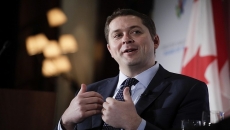
Conservative Leader Andrew Scheer laid out Monday the numerous lines of inquiry his party intends to follow this week as a modified version of a House of Commons sitting gets underway. They include the state of the nation's emergency supply stockpile, the mishmash of federal economic benefit programs that allow some to fall through the cracks and to what extent the minority Liberals are backstopping provincial efforts to reopen their economies, Scheer said.

Conservatives gear up to grill government in modified return of House of Commons propose and oppose: Tories

Learning to live with COVID-19 requires permanent fixes to vulnerable settings

Learning to live with COVID-19 requires permanent fixes to vulnerable settings
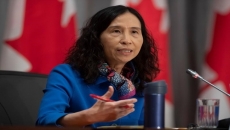
Canada's chief public health officer warned Monday there is still a lot we don't know about the virus that causes COVID-19, but said stopping this pandemic or preventing a future one will require more than just physical distancing and handwashing. Dr. Theresa Tam said we simply do not know yet whether someone who has had COVID-19 will be immune from getting it again, or how long that immunity will last.

Learning to live with COVID-19 requires permanent fixes to vulnerable settings

B.C. university creates institute to take microscope-telescope view of pandemic

B.C. university creates institute to take microscope-telescope view of pandemic
The COVID-19 pandemic has placed the world at a tipping point that's challenging social, political, economic and environmental structures, says the director of a new academic research institute at British Columbia's Royal Roads University. Dr. Thomas Homer-Dixon said Monday the pandemic is an event with the power to cause those structures to fall like dominos or shift radically to new paths.

B.C. university creates institute to take microscope-telescope view of pandemic