Canada hit a new daily record and passed a new milestone for vaccinations this week but will need to up its game to get a single dose to every eligible person by Canada Day.
It's doable on paper but potential barriers loom. Export controls in Europe and India and the risk of production issues for brand-new vaccines are among them, along with ongoing fears that anxious Canadians will reject the troubled Oxford-AstraZeneca vaccine.
The number of people vaccinated with at least one dose topped five million as of Thursday morning, leaving about 27 million people over 16 still needing a first dose. About 1.4 million doses are needed to add kids between 12 and 15, who should soon be eligible to get the Pfizer-BioNTech vaccine after a successful trial concluded this week.
Current projections are that Canada will receive between 32 and 36 million doses of Pfizer, Moderna and the Oxford-AstraZeneca vaccine before June 30.
Provinces and territories injected nearly 220,000 doses of vaccine Wednesday, besting their previous record of 217,000 set five days earlier. They averaged more than 185,000 doses a day over the last seven days, the highest seven-day average to date.
They will need to average somewhere between 310,000 and 330,000 doses a day to get one dose to all Canadians 12 years of age and older over the next three months.
Dr. Howard Njoo, deputy chief public health officer, said almost three in four Canadians over the age of 80 have now received at least one dose, and so have nearly one third of people between 70 and 79 years old.
"What we are seeing in terms of vaccine rollout is encouraging," said Njoo.
But the risks of problems continue. The delivery of 590,000 doses of Moderna vaccine was delayed almost a week after a backlog in quality assurance checks in Europe. Those doses were supposed to arrive March 27, but didn't leave Europe by plane until April 1. Fortin said provinces should start getting them on Saturday.
Europe's increased export controls haven't yet prevented shipments to Canada but approvals are needed by the European Commission every week for the shipments to continue. That includes 17.8 million Pfizer doses and 12.3 million Moderna doses expected in the next three months.
Joelle Paquette, director general in charge of vaccines at Public Services and Procurement Canada, said Thursday that India's ban on exports from the Serum Institute of India will delay Canada's April shipment of the AstraZeneca vaccine from there. Canada is expecting one million doses in April and 500,000 in May. Paquette said the doses will come eventually but can't put a date on it now.
She said she didn't expect an impact from a problem with Johnson & Johnson's manufacturing that forced the company to toss 15 million doses this week after a mix-up at a Maryland production facility.
Paquette said Canada doesn't know yet where its J&J doses are being made yet but said the U.S. issue won't impact Canada.
Fortin said the first 300,000 doses from the international vaccine-sharing program known as COVAX are expected next week, and Canada is supposed to get another 1.6 million of those by the end of June.
The COVAX doses are AstraZeneca vaccine made in South Korea, and will be in addition to the 1.5 million AstraZeneca doses provinces started receiving Thursday from the United States.
Health Canada authorized the manufacturing facilities for those doses Wednesday, clearing the way for them to be distributed.
It remains to be seen how many Canadians will be eager to get them after the roller-coaster of confusion surrounding that vaccine. That includes this week's decision by every province to stop using it on people under the age of 55 while Health Canada waits for more data on the risk of blood clots.
Provinces have already doled out more than 85 per cent of the first 500,000 Serum Institute doses of AstraZeneca shipped in March, and Fortin said he believed all the doses that expire Friday have been used.
Some provinces reported issues with cancellations for vaccine appointments following the AstraZeneca pause, but there are also signs that giving them out won't be that hard.
Long lineups formed outside pharmacies in the Vancouver area Wednesday when AstraZeneca injections began there for people 55 to 65 years old.
Ontario is ramping up its AstraZeneca rollout this weekend, doubling the number of pharmacies that will get it, and expanding the age from 60 to 64 years old to 55 to 64.
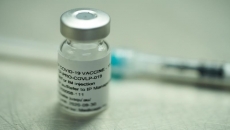
One positive report Thursday is that provinces have had no trouble getting six doses out of every vial of Pfizer instead of five. Health Canada adjusted the number of doses per vial at Pfizer's request in February, but getting the extra doses requires the use of a special syringe that lets less vaccine go to waste.
Fortin said provinces have been sent 15 million of those syringes so far, and report being able to get the sixth dose out more than 98 per cent of the time.