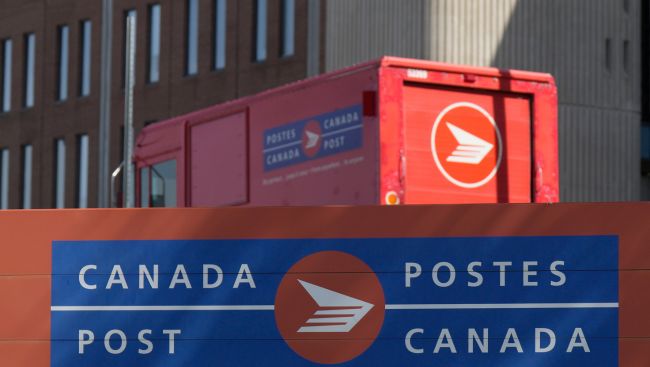
Mail service is halted at Canada Post after unionized workers announced Thursday they are on a countrywide strike — the latest eruption in a labour dispute that has been going on for nearly a year.
The move came just hours after the federal government promised a suite of changes to overhaul the Crown corporation's operations in response to significant financial losses.
Here's what you need to know about the factors affecting the Crown corporation's future.
What is Canada Post's financial situation?
The mail carrier is hemorrhaging money.
In the second quarter of this year, Canada Post recorded a loss before tax of $407 million — the Crown corporation's largest loss before tax in a single quarter. Canada Post reported a profit of $46 million in the same period a year earlier.
Canada Post lost $448 million before tax in the first half of 2025, following a loss before tax of $30 million in the first half of 2024.
Public Works and Procurement Minister Joël Lightbound said Thursday the corporation is losing about $10 million per day, despite the federal government providing a $1-billion injection earlier this year to keep it operational.
"Canada Post is now facing an existential crisis. Since 2018, the corporation has accumulated more than $5 billion in losses," he said in a media statement.
"In 2024 alone, it lost over $1 billion, and in 2025 it is already on track to lose close to $1.5 billion."
What is going to change?
The federal government is lifting a moratorium on community mailbox conversions, authorizing the mail carrier to convert the remaining four million addresses that still receive door-to-door delivery.
Ottawa says that by bringing them in line with the three-quarters of Canadians who already receive mail through community, apartment or rural mailboxes, it will save nearly $400 million annually.
The government announced it will also end a moratorium on closing rural post offices that has been in place since 1994, covering close to 4,000 locations. It said closing some of those post offices in regions that are no longer rural will reduce duplication in overserved areas.
To reflect a decline in delivery volumes — Ottawa said the average household now receives just two letters per week — non-urgent mail will be cleared to move by ground instead of air, saving Canada Post more than $20 million per year.
Ottawa said Canada Post's delivery standards are woefully outdated, with operations designed for the higher volumes of years ago. Canada Post is delivering two billion letters annually, down from 5.5 billion two decades ago.
What's the timeline?
Canada Post must come up with a plan within 45 days that outlines how it will implement these changes, the minister said.
As for making the switch from door-to-door delivery to community mailboxes, Lightbound said the full process will likely take close to a decade, though most areas will see changes much sooner.
"We're talking about four million addresses," he told a press conference.
"It'll happen over the course of the next nine years, the bulk of which will be in the next three or four years."
Wasn't there already a report that recommended changes?
After a month-long postal workers' strike during the critical holiday season last year, the labour minister launched an inquiry into the labour dispute that also looked at Canada Post's financial status and viability.
The report from inquiry head William Kaplan concluded that Canada Post was essentially bankrupt. The board's final report, tabled in May, showed Kaplan recommended an end to daily door-to-door mail delivery and an expansion of community mailboxes, among other measures to keep the postal service in business.
Some of the Kaplan report's recommended changes would fall under the bargaining process and require agreement between the company and the union.
Other measures, however, are within the government's purview and are among the changes Lightbound announced on Thursday.
What's the status of the labour dispute?
The Canadian Union of Postal Workers announced a countrywide strike Thursday evening in response to what Lightbound announced. The union has not said what that strike will entail but one union negotiator told CBC News that different units are organically organizing picket lines.
A Canada Post spokesperson said in a media statement that no new mail will be accepted during the labour disruption.
Canada Post and the union representing 55,000 postal workers have been in contract talks for almost two years over issues like wages and part-time workers.
A strike and lockout lasted more than a month in November and December 2024. It ended only after then-labour minister Steven MacKinnon declared an impasse in the talks and asked the Canada Industrial Relations Board to order an end to the work stoppage.
In early August, union members rejected what Canada Post said was its final offer after the government ordered the contract to a vote. The union put forward its latest counter-proposal on Aug. 20, which Canada Post said would add significant new costs and restrictions at a challenging time for the postal service. The Crown corporation countered with a new offer earlier this month.
The union said in a press release on Thursday it was not informed about the government's announcement ahead of time. But Lightbound said he met with union representatives last week and some of the issues they raised were reflected in the new government measures — namely, a review of management structure at Canada Post and the process for raising prices on stamps.
Picture Courtesy: THE CANADIAN PRESS/Adrian Wyld