The federal public inquiry into foreign interference is calling on the leaders of all political parties to get top-secret security clearances — a recommendation that Conservative Leader Pierre Poilievre is not following.
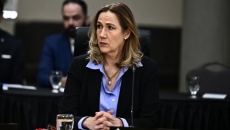
In her final report, commissioner Marie-Josée Hogue said party leaders should seek such clearance as soon as possible after they are elected. She recommended that all parties in the House of Commons ensure at least two of their members have top-secret clearance.
Poilievre is the only party leader who has not opted to get the top-secret clearance that would allow him to receive briefings from security and intelligence agencies like CSIS. His chief of staff does have clearance.
Poilievre has said getting that clearance would amount to a gag order and would prevent him from speaking publicly about what he learns in top-secret briefings.
The final report refers Prime Minister Justin Trudeau's testimony during the public hearings in October, when he said he had information about past and current Conservative members who were engaged in or vulnerable to foreign meddling.
In the House of Commons in October, Trudeau said he had asked CSIS to try to find a way to give the Opposition leader some information that was pertinent to the Conservative party.
A Conservative spokesperson said in a statement on Tuesday that the government did offer Poilievre a briefing in December under a part of the CSIS Act that deals with "threat-reduction measures."
The Conservatives said they were told the briefing would not "implicate the suitability of any current parliamentarian to remain in caucus" and would concern foreign interference directed at parliamentarians.
It said government officials also told Poilievre he would be barred from speaking to anyone other than legal counsel about the briefing and would only be able to act if authorized by the government.
"This is clearly unacceptable, and entirely contrary to the government's supposed objective of enabling the person briefed to reduce risk," Poilievre's spokesman Sebastian Skamski said in the statement.
He said that Poilievre "will not be gagged and unable to speak or act on information he may receive" in such a briefing.
Hogue's final report also calls on the government to enact recommendations made previously by the chief electoral officer, including some specific to party leadership races.
The processes for nominating candidates ahead of an election and for choosing new party leaders were found to be "potentially vulnerable to hostile state actors" by the Security and Intelligence Threats to Elections Task Force, the report said.
Hogue agreed with the chief electoral officer's argument that only Canadian citizens and permanent residents ought to be eligible to vote in nomination or leadership contests.
The Liberals are in the midst of a leadership race and party members will choose their new leader on March 9. The rules state that voting is limited to Canadian citizens and permanent residents who are over the age of 14.
Hogue's report does not address the age of voters.
Her report recommends expanding sections of the Canada Elections Act to ensure that attempts to influence someone's vote in a nomination or leadership race are treated the same as attempts to influence someone's vote in an election.
The report also called for expanding the act to ensure that things like bribery, intimidation and fraud are banned at all times, and for applying the law during nomination and leadership contests the same way it applies during an election.
Many of those changes were included in Bill C-65, which was before the House of Commons when the government prorogued — or paused — Parliament.
The bill was introduced last March and crawled through the legislative process, stalling at committee stage in the House.
For almost all of the recent fall sitting, the House of Commons was deadlocked because of a Conservative filibuster on a privilege motion related to misspending at a now-defunct green technology fund.
That legislation is now effectively dead, though it could be brought back in a new session of Parliament — something Green Party Leader Elizabeth May said she wants to see.
May said Parliament could make changes that require legislation before the next election if all parties can agree to pass legislation through unanimous consent, which would expedite the debate.
"It's not too late, if Parliament actually does reconvene," she said.
MPs are set to return to the House of Commons on March 24.
But with opposition parties saying they intend to bring down the minority Liberal government at the next opportunity, it's not clear whether any legislation will pass before the next federal election.
The new Liberal leader also could choose to call the next election before March 24.
NDP Leader Jagmeet Singh said he has instructed his party's national director to follow all the report's recommendations that relate to political parties.
He also said it's up to the Liberals to enact change.
"The recommendations are out today. There's nothing stopping them from saying, 'OK, we need to bring back Parliament and do something,'" he said.
The Liberal government said in a statement that it is carefully reviewing the recommendations. It pledged funding for the Office of the Chief Electoral Officer "to ensure a sufficient investigation capacity to protect against persistent threats to the electoral process."