Finance Minister Chrystia Freeland says federal aid programs won't last forever, making the comments on the same day the Bank of Canada targeted 2022 for an economic recovery from COVID-19.
The road to recovery is dependent on the path of the pandemic, and the central bank warned the road will be bumpy over the next two years.
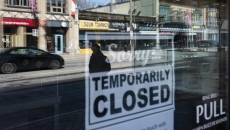
Some businesses may never reopen, while some unemployed workers won't find a new job, leaving some parts of the economy and workforce behind as conditions, hopefully, improve.
In a speech Wednesday afternoon, Freeland defended the depth of that spending, which will send the deficit to a historic level.
But she said she isn't among those who believe "that deficits don't matter for a government."
"Whether on Bay Street or Main Street, there are no blank cheques, and there are no free lunches," she says in the text of her speech.
WATCH TODAY'S VIDEO
“Our fiscally expansive approach to fighting the coronavirus cannot and will not be infinite. It is limited and temporary."
She said the federal government will impose spending limits upon itself, rather than waiting for "more brutal external restraints" from international market forces.
Freeland didn't say what those spending guardrails will be, only that she'll have more to say on it soon.
The central bank's updated economic outlook released earlier Wednesday said government aid has played a key role in providing a financial lifeline to individuals and businesses.
Changes to employment insurance and new benefit programs will increase households' disposable income, officials write, adding that the bank expects government aid to provide important support to the economy throughout the recovery.
The country has reversed about two-thirds of the economic decline seen in the first half of the year, the Bank of Canada said Wednesday, exceeding expectations.
Officials estimate the economy will still shrink by 5.7 per cent this year, but grow by 4.2 per cent next year, and 3.7 per cent in 2022, meaning gross domestic product won't rebound to pre-pandemic levels for another two years.
The road to recovery will be uneven across sectors and choppy over time, governor Tiff Macklem said, and likely to cause long-lasting damage to some people’s job prospects.
"The effects of this have been very uneven. I think that underlines the importance of the income-support programs that the government has provided to protect the most vulnerable, and that has underpinned this recovery," Macklem said.
As for how long the aid should last, Macklem said it was up to the government.
The bank held its overnight rate target at 0.25 per cent on Wednesday, which is where it will stay until the economy has recovered and inflation is back on target. The bank forecasts that annual inflation at 0.6 per cent this year, 1.0 per cent next year, and 1.7 per cent in 2022.
The bank also announced Wednesday that it intended to buy more longer-term bonds because those have a "more direct influence on the borrowing rates that are most important for households and businesses," hoping to prod consumption.
James Laird, co-founder of Ratehub.ca, said the outlook suggests low interest rates until at least 2023, which is the earliest the bank anticipates the economy would be able to handle higher rates.
The projections for growth and inflation mark a return to the bank's usual practice of giving a longer view for the economy in its quarterly monetary policy report.
The report said the six months of experience with containment measures and support programs, as well as more information on medical developments like vaccines, has given the bank a better foundation to make a base-case forecast.
Underpinning the bank's outlook are two major assumptions: that widespread lockdowns won't be utilized again and that a vaccine or effective treatment will be widely available by mid-2022.
The country has recouped about three-quarters of the three million jobs lost in March and April. Emergency federal aid has replaced lost wages for millions of workers, and provided loans and wage subsidies to struggling businesses.
The hardest-hit sectors, such as restaurants, travel and accommodations, continue to lag as the economy recuperates.
Workers in those sectors, as well and youth and low-wage workers, continue to face high levels of unemployment, the report says.
All may be hit hard again by any new rounds of restrictions, the report notes. Some areas of the country have already imposed such public health restrictions in the face of rising COVID-19 case counts.
"The breadth and intensity of reimposed containment measures, including impacts on schools and the availability of child care, could lead to setbacks," the report says.
"Long breaks in employment have the potential for longer-term impacts on the income prospects of vulnerable groups."