Alberta’s finances, tied for generations to the steep peaks and sharp valleys of oil and gas prices, are once again plunging deep into deficit, with no immediate relief in sight.
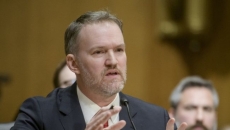
Finance Minister Nate Horner introduced a budget Thursday that projects a $5.2-billion deficit this fiscal year on total spending of $79 billion.
That represents an $11-billion swing from the current budget, which wraps up at the end of March and is on track to register a surplus close to $6 billion.
Horner said the red ink is mainly driven by three things: an expected decline in oil prices; the need to sock away money in case looming U.S. tariffs wreak havoc on the economy; and more than $1 billion to make good on a 2023 election promise to give Albertans a break on personal income taxes.
“We think it’s important right now to provide (Albertans) with some affordability tools to try and withstand this with us,” Horner told reporters before tabling the budget in the legislature.
He added that if it wasn’t for the uncertainty of tariffs, he might not have supported contributing to the deficit with a tax cut.
“We would still be in a deficit without the tariff scenario,” said Horner.
It’s the first deficit under United Conservative Party Premier Danielle Smith and the first since the COVID-19-era budget of 2020.
The province also projects the multibillion-dollar deficits will remain through to the 2027 provincial election.
The Opposition NDP slammed the budget, saying on key files like health care, spending increases don't keep up with population growth and inflation, which amounts to a cut.
The budget predicts non-renewable resource revenue — including money from the oilsands — to be just over $17 billion this year, down from $22 billion in 2024.
The government predicts the average price of West Texas Intermediate – the benchmark price for North American oil – to be US$68 a barrel.
That's down from the average price of US$74 a barrel in 2024, with each lost dollar equalling a cost of $750 million to Alberta’s treasury.
Adding to the oil concern, said Horner, are shifting promises of tariffs from U.S. President Donald Trump.
In recent months, Trump has promised different dates and prices of tariffs on Canadian products heading south. Trump has said the U.S. is being taken advantage and also wants Canada to take further action on illegal drugs crossing the border.
“I don’t know if there will be more certainty in a month or two months or three,” said Horner.
Earlier in the day, Trump said tariffs would start Tuesday and would be 25 per cent on all goods, with the exception of 10 per cent on energy products.
Horner said an extra $2 billion is to go to the province's emergency fund, doubling it to $4 billion, to deal with the potentially devastating tariffs and for potential payouts given tens of thousands of public sector workers now negotiating new collective bargaining agreements.
Because of shifting statements from the White House, the province is budgeting on a 15 per cent tariff on all goods and 10 per cent on oil.
But it acknowledges things could change rapidly, and profoundly.
If Trump brings in a 25 per cent tariff across the board long term, the province expects the deficit could approach $9 billion.
If there are no tariffs, the deficit could be a third of that, at around $3 billion.
Smith’s government has said affordability is key for Albertans and, two years after promising a massive personal income tax cut on the 2023 election campaign trail, is delivering it in the budget.
The government had put off the tax cut, saying last year it was contingent on keeping the budget balanced.
Starting this year, it means annual savings of $750 for those who earn up to $60,000.
Alberta NDP Leader Naheed Nenshi said he was "absolutely shocked" by the turnaround from a surplus to a deficit, and said the government's plan shows an unprecedented level of fiscal irresponsibility.
"Deficits are nothing but deferred taxation. They've got to get paid back," he said.
He added that the tax cut, even at its maximum, won't adequately address the province's high inflation rate, auto insurance rates or utility costs.
"But at least you'll have an extra two bucks today to deal with it," he said sarcastically.
And, he pointed to the lack of details around the province's response to potential tariffs.
"There's no plan whatsoever in here to deal with the very real threat of tariffs, not just on energy, but on agricultural products and everything else that we produce here in Alberta," he said.
While there are no new taxes, some existing taxes and fees are going up, including the education property tax billed through municipalities, fuel taxes for trains, and licence application fees for security guards and private investigators.
The NDP said the budget includes some 38 fee or tax increases that will cost millions this year.
Among the bottom-line numbers, overall spending is expected to hit $79 billion, an increase of $4.4 billion from what Alberta is on track to spend this fiscal year.
Total revenue for 2025 is to be $74 billion — a drop of $6.6 billion from the year prior.