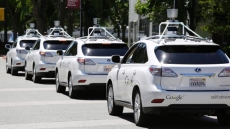
DETROIT — Computers that control cars of the future can be considered drivers just like humans, the federal government's highway safety agency has found.
The redefinition of "driver" by the National Highway Traffic Safety Administration is an important break for Google, taking it a step closer to its goal of self-driving cars without steering wheels, pedals or human drivers.
But the company still has a long journey ahead before its cars get on the road in great numbers. While the safety agency agreed with Google's "driver" reinterpretation in a recent letter, it didn't allow other concessions and said numerous federal rules would have to be changed to permit the cars.
"NHTSA will interpret 'driver' in the context of Google's described motor vehicle design as referring to the SDS (self-driving system) and not to any of the vehicle occupants," Paul Hemmersbaugh, NHTSA's chief counsel, wrote in the letter.
But the agency rejected many of Google's claims that its cars met federal auto safety standards, including a requirement for foot and hand brakes. Google said the requirement wasn't necessary because the electronic driver can stop the cars. Yet the government said regulations are clear and would have to be changed to allow that.
"In a number of instances, it may be possible for Google to show that certain (federal) standards are unnecessary for a particular vehicle design," Hemmersbaugh wrote. "To date, however, Google has not made such a showing."
Google, a subsidiary of Alphabet Inc., has suggested the cars could be ready for the public in a few years. After several years of caution, last month federal regulators said they wanted to help speed the technology's widespread adoption if it proves to be safe.

In letters over the past three months, Google asked NHTSA to interpret safety standards in ways that would ease the path for self-driving car prototypes to get into public hands.
In order to put their cars on the road, automakers must self-certify that they meet federal safety standards and get NHTSA's approval. While Hemmersbaugh's letter agrees about the computer as the driver, it says the company will have to apply for exemptions to the standards, and the agency will have to go through the cumbersome federal rule-making process in some cases to get the cars approved.
In January at the Detroit auto show, Transportation Secretary Anthony Foxx said the government wants to get autonomous cars on the road quickly and will fast-track policies and possibly even waive regulations to do it.
Foxx said NHTSA, which is part of his department, will spend the next six months developing guidance for automakers on what's expected of self-driving prototype cars and what sort of tests should be used to make sure they are safe.
The agency also will develop a model policy for states to follow if they decide to allow autonomous cars on public roads. That policy could eventually lead to consistent national regulations for autonomous cars. Right now, individual states like California, Florida and Nevada have their own regulations.
Seven states and Washington, D.C., allow autonomous vehicle testing on their roads, according to the National Conference of State Legislatures. The federal government isn't predicting when autonomous cars will be on public roads in big numbers, but some automakers have said they could be in use in limited areas by 2020 — and Google has been more bullish than that.
Foxx said the government believes self-driving vehicles could eventually cut traffic deaths, decrease highway congestion and improve the environment. He encouraged automakers to come to the government with ideas about how to speed their development.

Safety advocates worry the agency is getting too cozy with the auto industry when it comes to technology regulations.
Google spokesman Johnny Luu said the company had no comment beyond that it was reviewing the agency's response.