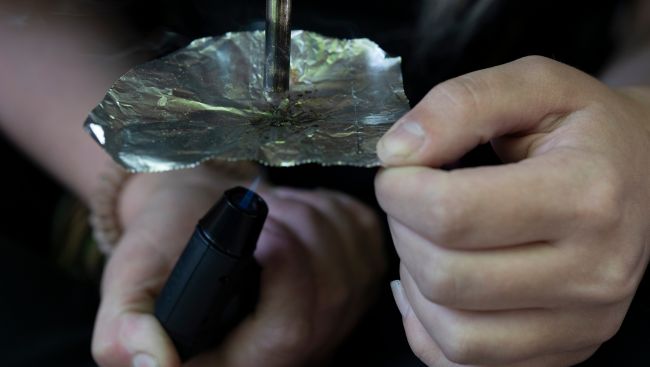
The presence of second-hand fentanyl smoke is so severe at some British Columbia supportive housing facilities that workers cannot escape "substantial exposure," even if they stay in their offices and don't venture into hallways or tenants rooms.
That is the among the findings of tests conducted at 14 British Columbia supportive housing facilities, results that contributed to the province's decision to form a working group aimed at tackling safety issues — including second-hand fentanyl exposure.
The assessments, conducted by Sauve Safety Services for BC Housing, tested facilities in Vancouver and Victoria — finding elevated levels of airborne fentanyl even in the main office of all three buildings tested in Vancouver.
In a statement, the B.C. Ministry of Housing and Municipal Affairs said it takes the concerns about possible worker exposure to airborne fentanyl seriously.
"We’ll be working with our partners to ensure providers can take fast action to protect staff and tenants in supportive housing," the statement said.
"The immediate need is to mitigate the known risks based on the exposure assessment and air quality testing that has been done."
In June, the province announced the formation of a working group to tackle safety in supportive housing, including second-hand exposure to fentanyl.
The announcement of the group came after a number of recent incidents in the housing units, including a June 11 fire at the former Howard Johnson hotel in Vancouver that injured two people.
The ministry said at the time that testing on the 14 facilities in Vancouver and Victoria showed some may be "more likely to have elevated levels of airborne fentanyl, above the limit WorkSafeBC has established."
Details can be found in more than 600 pages of assessments conducted by Sauve.
It recommended that all three Vancouver facilities improve ventilation to the main office, as well as mandating workers to wear respiratory protection in some cases and strengthening smoking policy enforcement for tenants.
In its assessment of the Osborn facility on West Hastings Street, testers found occupational fentanyl exposures over a 12-hour shift that "grossly exceeded applicable regulatory limits," including WorkSafeBC's limits.
"This trend held true across all sampled work activities, including time spent in the main office, working in the kitchen, cleaning shelter areas, and performing general duties on the shelter floor," the report said.
"At the time of assessment, none of the mental health workers were observed wearing respiratory protection."
Airborne fentanyl levels at the other facilities in Vancouver — Al Mitchell Place on Alexander Street and Hotel Maple on East Hastings — also exceeded exposure limits in office space.
The assessments also found higher concentrations in the air of fluorofentanyl, a "structurally modified" version of fentanyl that can be twice as potent as the original opioid, at all three Vancouver facilities.
"Although fentanyl levels on the second floor approached the eight-hour time-weighted average, fluorofentanyl concentrations were approximately five times higher, indicating a substantial and concerning exposure risk," the assessment for Al Mitchell Place said.
In the 11 tested Victoria facilities, some main offices were found to offer "protective environments" or had fentanyl levels below regulatory limits, while others exceeded them and created "significant health risks" for staff.
Dr. Ryan Marino, a medical toxicologist with University Hospitals in Cleveland, Ohio, is an expert on addiction medicine and the medical toxicology of opioids such as fentanyl.
He said that while he had not seen the specifics of the assessments, the main risk from fentanyl smoke is "breakdown products" that result when the substance is burned, which can be directly noxious or toxic to a person's airway surfaces.
"It's actually very similar to smog pollution and can give people pretty significant irritation, coughing," Marino said. "(It) could exacerbate asthma symptoms, that kind of thing. And so that is a very real concern, I would say."
However, he cautioned against overreacting to the threat of absorbing fentanyl or fluorofentanyl through the air, since the opioid does not suspend in an airborne fashion and any particles in the air must be carried through wind or physical motion.
"It would take a lot of physical powder to be in the air for someone to inhale a significant amount," Marino said.
"For someone who's not using drugs, not ingesting anything in any way, the risk of a second-hand exposure, toxicity, overdose, whatever you want to call it, from fentanyl is pretty close to zero."
University of B.C. adjunct Prof. Mark Haden agreed, adding that he believes the problem of tenants smoking fentanyl in supportive housing is a direct symptom of drug prohibition — a more fundamental issue that should be tackled.
"This is a completely predictable outcome of a social policy that we need to fix," said Haden, who referred to fentanyl in a health care setting as a medicine.
"We wouldn't have people using fentanyl in their rooms if they could go downstairs to some health facility and talk to a health care worker or a nurse who provided these kind of medicines within the context of a health service."
He called supervised consumption sites a big step in addressing the issue, but not enough.
"Supervised injection sites don't provide the medicine," Haden said. "They provide a space for people to inject illegal drugs. So, what we need to do is to provide the medicines that people take in the context of health facilities."
The province has said it is working with the BC Centre for Disease Control, WorkSafeBC and BC Housing to develop new exposure reduction guidance at supportive housing facilities, and the focus is on protecting the workers and tenants in these buildings.
"We expect to have more information from WorkSafeBC and the BCCDC about actions we can take to continue to keep people safe," the statement said.
Picture Courtesy: AP Photo/Jenny Kane