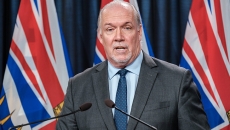
VANCOUVER - A group representing the fitness industry is hailing the reopening of gyms and other fitness facilities in British Columbia as the province's top doctor described her decision Tuesday as a "cautious step" in lifting COVID-19 restrictions.
Dr. Bonnie Henry said a proof-of-vaccination card will still be required to use gyms starting Thursday, and the facilities will need to operate under capacity limits and provide seven metres square for every person who is exercising.
Join Adrian Dix, Minister of Health and Dr. Bonnie Henry, BC’s provincial health officer for an update on COVID-19. #CovidBC https://t.co/maUSeKAPE5
— BC Government News (@BCGovNews) January 18, 2022
"Kudos to the fitness and gym communities who've really done a great job of recognizing and supporting us when this was a challenging time. And I know it's been a very challenging time for them," Henry said.
Carl Ulmer, a spokesman in B.C. for the Fitness Industry Council of Canada, said the group has been concerned about saving the industry, which was forced to close in December.
"We are business owners, and the last few weeks have been incredibly hard for all of us," he said in a statement of the industry, which sees its revenue climb each January.
Henry said other restrictions that went into effect in December will remain in place until Feb. 16 because of the high rate of COVID-19 transmission and increasing hospitalizations.
The restrictions include the continued closure of bars and nightclubs and capacity limits of 50 per cent for restaurants, theatres and stadiums.
She said B.C. is expecting to get 4,000 doses this week of the COVID-19 antiviral treatment Paxlovid, which received emergency-use authorization Monday from Health Canada for adults with mild or moderate COVID-19 if they are also at high risk of becoming more seriously ill.
"It includes those people in our community who are older, over age 70, chronically, extremely vulnerable, immune compromised, and for younger people who have additional medical conditions and don't have the protection of vaccines," Henry said.
However, she said Paxlovid, which includes two antiviral medications, including one used in HIV treatment, can involve a lot of drug interactions.
"The federal government put together a panel to look at some of these issues and we've been looking at them with an ethical lens here in British Columbia."
The limited supply of the Pfizer treatment means consideration must be given to issues like who is most at risk based on underlying illness, the number of conditions they may have, vaccination status and age, Henry said.
The drug must be started within five days of onset of COVID-19 after it's diagnosed through testing.
Limited supplies of tests also mean measures will be put in place to test people at highest risk so they can quickly begin taking Paxlovid and be prevented from needing hospital care, she said.
"We've had some terrible outbreaks in some First Nations communities and remote communities in the province, so we are working with the First Nations Health Authority and others to look at how we can have rapid access in those communities, where we know there's a higher risk of people needing care."
Henry said Health Canada is also reviewing two other vaccines for potential approval, including one made from tobacco plants.
However, she said people who are holding out for alternatives to mRNA vaccines should know they won't be available for some time as Omicron spreads quickly and is particularly affecting those who are unvaccinated.
On Monday, Henry directed the province's 60 school districts to collect information on the vaccine status of staff.
She said Tuesday that her order was aimed at supporting districts, which are employers, in making any decisions about vaccine mandates.
"It really enables the school district to make it very clear that it is a legal mandate that they are able to ask all staff in that school district to report their vaccination status. And this is a really important step in terms of determining whether they need to have a vaccine mandate in that district or not."
Health Minister Adrian Dix said scheduled surgeries were postponed at most hospitals in early January and that will continue until the end of the month at some hospitals. The health-care system overall is facing bigger challenges in smaller communities, he added.