A new study points out a serious problem that plagues research into treatments for heart disease.
It shows that only a tiny fraction of people who have had a heart attack take part in clinical trials looking at cardiac therapies.
And those who do are generally the patients who are the youngest, the healthiest and those who are at lowest risk of dying from heart disease.
The scientists say that as a consequence, the findings of trials can be skewed.
Results in this elite pool of patients can create the expectation that therapies will have more benefit than is actually seen when they are used in the broader community of heart disease patients.
The research was done by a number of Canadian and American scientists and is published in the Journal of the American Medical Association.
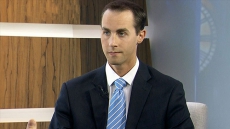
The first author of the paper is Dr. Jacob Udell, a cardiologist at Toronto's Women's College Hospital.
Udell explains that he and his colleagues used the U.S. National Cardiovascular Data Registry to explore the question.
They looked at data on patients in the registry to see which people would have been eligible for three clinical trials of clot-busting drugs that were conducted between July 1, 2008, and March 31, 2011. More than 140,000 people had a heart attack during that period and could have been considered for one of the three studies.
He and his colleagues found that about two-thirds of the patients in the registry — 68 per cent — met the eligibility criteria for the studies. But only 2.8 per cent of the people were in one of the trials.
And while the idea behind clinical trials is to test a drug in people who are like those who will eventually use the medication, the 2.8 per cent was not entirely representative of the heart attack patients.
"Trial participants were younger, with less previous cardiovascular disease, lower predicted risk of mortality, shorter hospital stays and more frequent treatment with evidence-based therapy than non-participants," Udell and his co-authors wrote.
The last point, about evidence-based medicine, suggests these patients got a higher level of care than others in the registry.
Dr. Douglas Lee says the paper is an elegant way to illustrate a real problem.
"A drug may have worked in the ideal setting of a clinical trial, but does it also work in the real world?" asks Lee, who is a senior scientist at the Institute of Clinical Evaluative Sciences and a cardiologist at the Peter Munk Cardiac Centre at Toronto's University Health Network.
"There's a threat that they" — the findings from these trials — "may be less relevant for everyone else who's not enrolled in the trial."
Udell says there are a variety of reasons more people don't take part in clinical trials.
They may not be asked; the trial leaders may attempt to cherry pick patients to get the best results. Patients may worry taking part in a study might harm their health. And for others, cost — going back and forth to a clinic, taking time off work — might be an issue if trial subjects are not reimbursed for costs.
Udell suggests big patient registries could be harnessed to more quickly and economically find potential clinical trial subjects who are more representative of the general heart attack population than has been the case up till now.