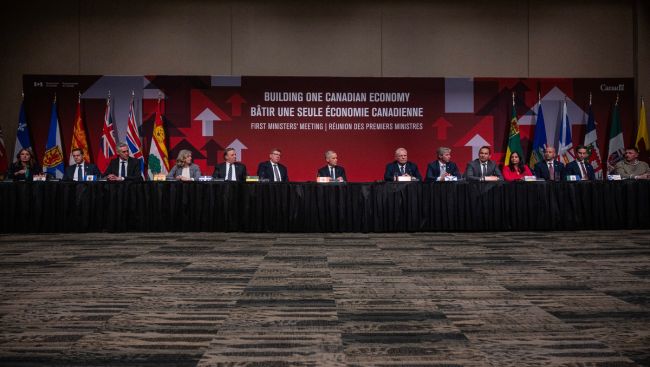
Efforts to boost interprovincial trade have kicked into high gear amid the U.S.-Canada tariff war.
Here's a look at some trade agreements, legislation and proposals among provinces and territories that are in addition to the New West Partnership between the four Western provinces that has been in place in some form since 2010.
COMPREHENSIVE AGREEMENTS
Manitoba and British Columbia: Manitoba Premier Wab Kinew announced on June 6 that his province is finalizing a memorandum with B.C. to cut trade barriers.
Ontario and Manitoba: Kinew and Ontario Premier Doug Ford signed a memorandum on May 14 to boost the movement of goods and labour between the two provinces, which would include direct-to-consumer alcohol sales.
New Brunswick and Newfoundland and Labrador: The two provinces signed a commitment to look into knocking down labour and trade barriers on April 24. Andrew Furey, then-premier of Newfoundland and Labrador, said that rules requiring provincial seafood processing plants to favour local fish are not up for discussion.
Atlantic Canada: New Brunswick Premier Susan Holt proposed on March 21 an Atlantic Canada free-trade zone for goods and services as a direct response to U.S. tariffs, saying her province is prepared to adopt similar legislation to that in Nova Scotia aimed at removing barriers.
INDUSTRY-SPECIFIC DEALS
B.C. and Alberta: B.C. Premier David Eby and Alberta Premier Danielle Smith announced a deal on wine sales in 2024. The agreement took effect this January and allows B.C. wineries to sell directly to Alberta consumers.
LEGISLATION
British Columbia: The province introduced legislation in March described as giving B.C. "new tools … to respond swiftly and nimbly" to U.S. tariffs, such as giving cabinet the ability to implement some regulations without going through the legislature. The bill, providing for the removal of interprovincial trade barriers, eventually passed without the section that would have given cabinet power to bypass the legislature.
Manitoba: The province passed a trade bill in June removing barriers in trade for some goods and services between Manitoba and other jurisdictions with similar laws.
Nova Scotia: The province tabled a bill in February aimed at eliminating trade barriers with other jurisdictions, although the legislation was later amended after concerns about powers to override regulatory bodies.
Ontario: The provincial government tabled a bill in April, which officials say would make Ontario the first Canadian government to unconditionally remove all current exceptions to interprovincial free trade. If passed, the bill would also remove barriers against people in certain jobs seeking employment in different provinces, and would allow direct-to-consumer sales of alcohol to Ontarians across provincial boundaries.
Prince Edward Island: The province introduced legislation in April for both a reduction of interprovincial trade barriers and to promote labour mobility, allowing it to accept product standards from other jurisdictions with similar trade rules in place. The bill would also allow P.E.I. to recognize licensed professionals certified in other jurisdictions within 10 business days.
Quebec: The government said in May it was planning to withdraw at least five of its exemptions to the Canadian Free Trade Agreement, including requirements on racehorses, funeral directors, real estate brokers, ferry authority board members and the sales of explosives. Quebec also says it is looking to harmonize regulations on consumer goods with other provinces.
Yukon: It said on June 24 that it is removing five exemptions under the Canadian Free Trade Agreement and reviewing others. The government says limitations on procurement, real estate licensing, forestry, fisheries and agricultural land use have are being removed for trade with other Canadian jurisdictions. It says the items were chosen because they were the least complex to remove with the least impact on local residents.
Efforts to boost interprovincial trade have kicked into high gear amid the U.S.-Canada tariff war.
Here's a look at some trade agreements, legislation and proposals among provinces and territories that are in addition to the New West Partnership between the four Western provinces that has been in place in some form since 2010.
COMPREHENSIVE AGREEMENTS
Manitoba and British Columbia: Manitoba Premier Wab Kinew announced on June 6 that his province is finalizing a memorandum with B.C. to cut trade barriers.
Ontario and Manitoba: Kinew and Ontario Premier Doug Ford signed a memorandum on May 14 to boost the movement of goods and labour between the two provinces, which would include direct-to-consumer alcohol sales.
New Brunswick and Newfoundland and Labrador: The two provinces signed a commitment to look into knocking down labour and trade barriers on April 24. Andrew Furey, then-premier of Newfoundland and Labrador, said that rules requiring provincial seafood processing plants to favour local fish are not up for discussion.
Atlantic Canada: New Brunswick Premier Susan Holt proposed on March 21 an Atlantic Canada free-trade zone for goods and services as a direct response to U.S. tariffs, saying her province is prepared to adopt similar legislation to that in Nova Scotia aimed at removing barriers.
INDUSTRY-SPECIFIC DEALS
B.C. and Alberta: B.C. Premier David Eby and Alberta Premier Danielle Smith announced a deal on wine sales in 2024. The agreement took effect this January and allows B.C. wineries to sell directly to Alberta consumers.
LEGISLATION
British Columbia: The province introduced legislation in March described as giving B.C. "new tools … to respond swiftly and nimbly" to U.S. tariffs, such as giving cabinet the ability to implement some regulations without going through the legislature. The bill, providing for the removal of interprovincial trade barriers, eventually passed without the section that would have given cabinet power to bypass the legislature.
Manitoba: The province passed a trade bill in June removing barriers in trade for some goods and services between Manitoba and other jurisdictions with similar laws.
Nova Scotia: The province tabled a bill in February aimed at eliminating trade barriers with other jurisdictions, although the legislation was later amended after concerns about powers to override regulatory bodies.
Ontario: The provincial government tabled a bill in April, which officials say would make Ontario the first Canadian government to unconditionally remove all current exceptions to interprovincial free trade. If passed, the bill would also remove barriers against people in certain jobs seeking employment in different provinces, and would allow direct-to-consumer sales of alcohol to Ontarians across provincial boundaries.
Prince Edward Island: The province introduced legislation in April for both a reduction of interprovincial trade barriers and to promote labour mobility, allowing it to accept product standards from other jurisdictions with similar trade rules in place. The bill would also allow P.E.I. to recognize licensed professionals certified in other jurisdictions within 10 business days.
Quebec: The government said in May it was planning to withdraw at least five of its exemptions to the Canadian Free Trade Agreement, including requirements on racehorses, funeral directors, real estate brokers, ferry authority board members and the sales of explosives. Quebec also says it is looking to harmonize regulations on consumer goods with other provinces.
Yukon: It said on June 24 that it is removing five exemptions under the Canadian Free Trade Agreement and reviewing others. The government says limitations on procurement, real estate licensing, forestry, fisheries and agricultural land use have are being removed for trade with other Canadian jurisdictions. It says the items were chosen because they were the least complex to remove with the least impact on local residents.
Picture Courtesy: THE CANADIAN PRESS/Liam Richards