WASHINGTON — Lost in the noise of her headline-grabbing coming-out against the Keystone XL pipeline, Hillary Clinton announced another Canada-U.S. policy this week that could affect millions of people.
She called for legalizing prescription-pill imports from Canada, becoming the second Democratic presidential candidate to adopt the position and effectively making it party policy in the 2016 election.
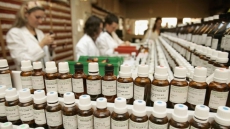
Millions of Americans who struggle with high drug prices have purchased cheaper medicine abroad since online pharmacies first opened two decades ago, with Canada pioneering that grey-market industry.
The issue has resurfaced politically as U.S. drug prices experience their biggest jump in years. One company was forced to back down last week amid news that a life-saving medicine had increased overnight from $13.50 to $750 per pill.
The same pill is available from a Canadian online pharmacy for $5.28. It's generally illegal for Americans to buy and import that medicine, but the law is rarely enforced.
Now Clinton wants to normalize the practice.
"If the medicine you need costs less in Canada, you should be able to buy it from Canada — or any other country that meets our safety standards," she told an Iowa audience the same day she announced her long-awaited pipeline position.
"When I was privileged to represent upstate New York (as a senator)... every week there would be buses of American seniors going over to Canada, to buy drugs that were American-manufactured, drugs that were invented by American companies, for a much cheaper price over the border.
"That makes no sense at all, folks ... I don't want you to have to drive to Canada. So you can order them online."
She became the latest candidate to endorse that policy. As he presented a bill this month, socialist Sen. Bernie Sanders reminded people that he helped spread word of cheaper drugs in Canada, in 1999 when he took a busload of seniors on a cross-border trip to the pharmacy.
"I will never forget the tears in the eyes of women who were able to buy the breast cancer drug tamoxifen at one-10th of the price that they were paying in the U.S.," Sanders said.
"If we can import lettuce and tomatoes from Mexico, there is absolutely no reason why we cannot import safe and affordable prescription drugs from Canada."
The issue cuts across partisan lines. There's a similar Senate bill from Republican John McCain. Republican Mike Huckabee is campaigning on the idea. A survey from the Kaiser foundation said 72 per cent of Americans support buying prescription drugs from Canada. The proportion was higher among Republicans.
Congress even passed a law allowing importation in 2000 — but the president, Clinton's husband, gutted it. George W. Bush and Barack Obama both campaigned on a policy change — it never happened.
The pharmaceutical industry has considerable pull in Washington.
It spent US$229 million lobbying Congress last year, according to the transparency site Open Secrets, and it donated $50 million in the 2012 election. For the sake of comparison, that last sum is almost as much as all the national spending allowed for political parties in Canada's current election.
As their shares dipped slightly this week, the industry blasted Clinton's speech and argued her policies would hurt companies that create new drugs.
She laid out other proposals including ending certain tax breaks, creating spending targets for research, and a $250-a-month limit on out-of-pocket expenses under insurance plans.
She accused the industry of anti-competitive behaviour and price-gouging, citing the controversial 5,000-per-cent price increase in the drug Daraprim.
Her plan proposes a crackdown on one factor believed to be driving high prices: collusion.
Like Sanders, she wants to curb the practice dubbed "pay to delay" — where drug makers pay off generic rivals to keep them from bringing cheaper alternatives to market. U.S. federal regulators have punished companies over that practice on different occasions this year alone, and Sanders proposes far more severe penalties, including stripping companies of exclusivity rights over a drug.
But how would that affect Canadians?
One health-policy researcher worries it could hurt them by causing supply shortages and driving up prices.
"The giant sucking sound that would empty our pharmacies into the U.S. would be heard across the country," said Amir Attaran, a health-policy researcher at the University of Ottawa.
"The drug shortages ... in Canada ... would be massive."
A prominent health economist is less worried. A supply crisis would be far likelier in a major outbreak or a terrorist attack, said Steve Morgan of the University of British Columbia.
But he agreed online pharmacies wouldn't solve the price problem for Americans.
He proposes a single-payer pharmaceutical system for Canada — and for the U.S., he says, greater government management would improve the system.
Right now, U.S. prices are mostly fictitious, he says. Patients with insurance providers get discounts negotiated in secret. Others use online coupons.
The net result is a system designed to make everyone pay the maximum they can afford. And those without access to insurance or discounts could be out of luck.
With a better-managed system, he said, "you would just eliminate all these games."