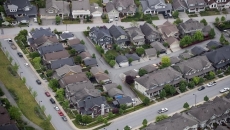
Home buyer and seller activity reached unprecedented levels across Metro Vancouver in March.
The Real Estate Board of Greater Vancouver (REBGV) reports that residential home sales in the region totalled 5,708 in March 2021, a 126.1 per cent increase from the 2,524 sales recorded in March 2020, and a 53.2 per cent increase from the 3,727 homes sold in February 2021.
Last month’s sales were 72.2 per cent above the 10-year March sales average and is the highest monthly sales total ever recorded in the region.
Demand was most pronounced in rural and suburban areas. Delta – South saw a 195.8 per cent increase in sales over 2020 – the largest increase in Metro Vancouver. This was followed by Whistler, which experienced a 194.7 per cent increase, and Squamish, which saw a 188.6 per cent increase in sales.
There were 8,287 detached, attached and apartment homes newly listed for sale on the Multiple Listing Service® (MLS®) in Metro Vancouver in March 2021. This represents an 86.8 per cent increase compared to the 4,436 homes listed in March 2020 and a 64.2 per cent increase compared to February 2021 when 5,048 homes were listed.
The total number of homes currently listed for sale on the MLS® system in Metro Vancouver is 9,145, a 4.8 per cent decrease compared to March 2020 (9,606) and a 9.4 per cent increase compared to February 2021 (8,358).
This is 18.6 per cent below the 10-year March total listings average.
“While we did see a record number of listings enter the market last month, the demand in today’s market isn’t allowing that new supply to accumulate. As a result, the overall inventory of homes for sale decreased compared to last year,” said Biggar.
For all property types, the sales-to-active listings ratio for March 2021 is 62.4 per cent. By property type, the ratio is 52.9 per cent for detached homes, 79.9 per cent for townhomes, and 65.4 per cent for apartments.
Generally, analysts say downward pressure on home prices occurs when the ratio dips below 12 per cent for a sustained period, while home prices often experience upward pressure when it surpasses 20 per cent over several months.
“Today’s activity can be attributed, in part, to an economy that’s showing signs of recovery, historically low interest rates, high demand for space, and increased household savings,” Biggar said.
The MLS® Home Price Index composite benchmark price for all residential properties in Metro Vancouver is $1,123,300. This represents a 9.4 per cent increase over March 2020 and a 3.6 per cent increase compared to February 2021.
Sales of detached homes in March 2021 reached 1,965, a 130.6 per cent increase from the 852 detached sales recorded in March 2020. The benchmark price for a detached home is $1,700,200. This represents a 17.9 per cent increase from March 2020 and a 4.9 per cent increase compared to February 2021.
Sales of apartment homes reached 2,697 in March 2021, a 128.8 per cent increase compared to the 1,179 sales in March 2020. The benchmark price of an apartment is $715,800. This represents a 3.7 per cent increase from March 2020 and a 2.6 per cent increase compared to February 2021.
Attached home sales in March 2021 totalled 1,046, a 112.2 per cent increase compared to the 493 sales in March 2020. The benchmark price of an attached home is $872,200. This represents a 10.4 per cent increase from March 2020 and a 3.9 per cent increase compared to February 2021.
Areas covered by the Real Estate Board of Greater Vancouver include: Burnaby, Coquitlam, Maple Ridge, New Westminster, North Vancouver, Pitt Meadows, Port Coquitlam, Port Moody, Richmond, South Delta, Squamish, Sunshine Coast, Vancouver, West Vancouver, and Whistler.